A calendar is a system for organizing time into recurring units (days, months, years) to track natural cycles and schedule human activity.
Core Features
- Astronomical Basis
- Solar: follows the Earth’s orbit around the Sun (~365 days).
- Lunar: follows Moon’s phases (~29.5-day months).
- Lunisolar: blends both, using leap months to stay aligned.
- Fixed/Arithmetic: based on abstract numbers, not direct astronomy.
- Functions
- Marks agricultural seasons (planting, harvest).
- Coordinates religious rituals and festivals.
- Anchors civic life (taxes, contracts, administration).
- Structures cultural memory (eras, reigns, epochs).
- Structure
- Units: Day, week, month, year.
- Intercalation: adjustments (leap days/months) to keep in sync with the sky.
- Epoch: chosen “Year Zero” (e.g., Creation, founding of Rome, Hijra, Christ’s birth).
Types
- Natural calendars: based on visible cycles (Moon phases, solstices, equinoxes).
- Constructed calendars: designed reforms or proposals (Gregorian, French Republican).
- Religious calendars: encode ritual order (Jewish, Islamic, Hindu).
- Civil calendars: used for government, trade, daily life.
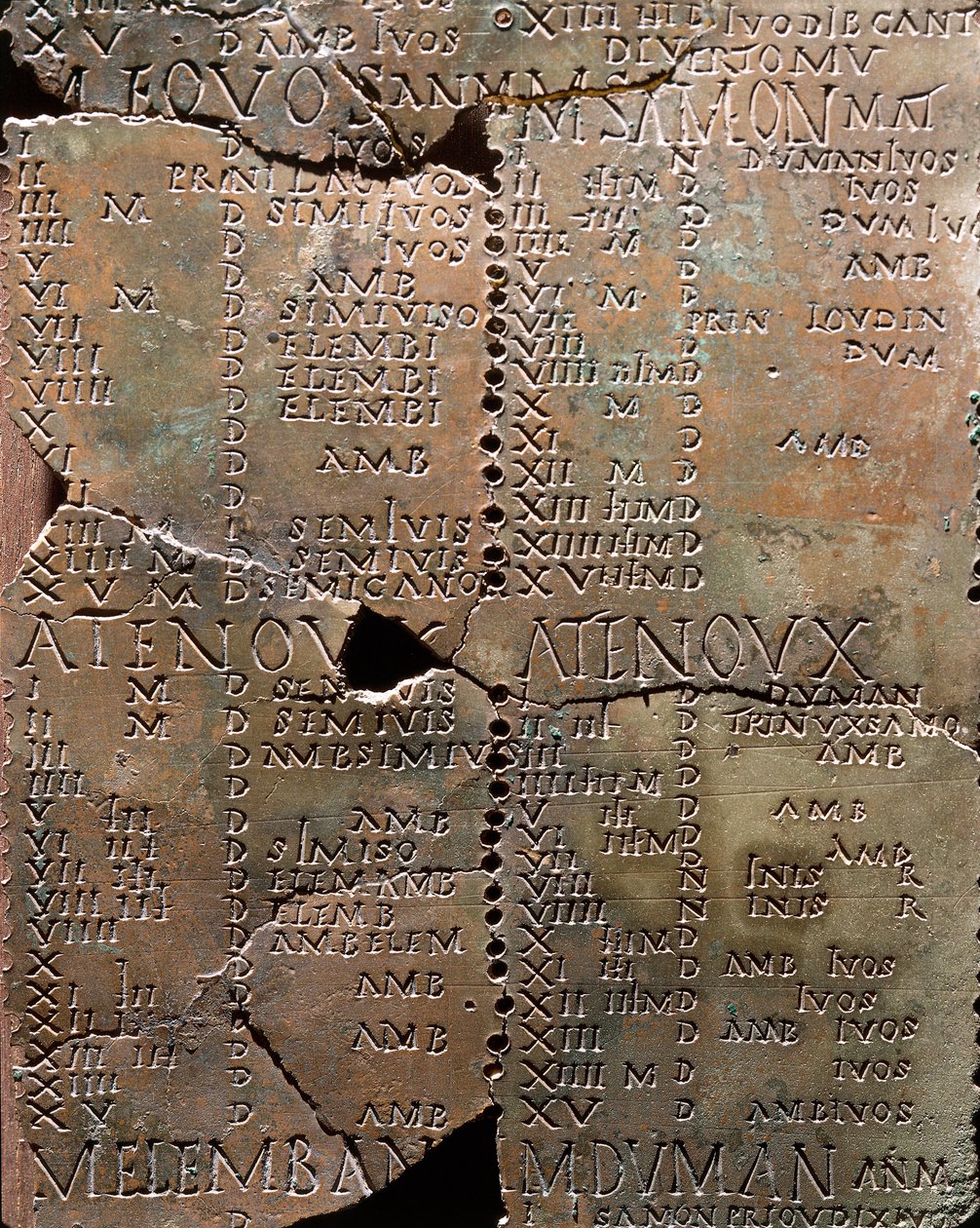
Definition (compressed)
A calendar is a cultural technology of timekeeping: a standardized framework linking human order to cosmic cycles.
At the highest level, calendars can be grouped by what natural or artificial cycle they track. The main categories are:
1. Solar Calendars
- Year = Earth’s orbit around the Sun (~365 days).
- Keep seasons aligned (e.g., Gregorian, Julian, Egyptian, Coptic, Ethiopian).
2. Lunar Calendars
- Year = 12 lunar months (~354 days).
- Drift against seasons unless corrected (e.g., Islamic Hijri).
3. Lunisolar Calendars
- Year = lunar months, adjusted with leap months to match the solar year.
- Balance Moon cycles with seasonal alignment (e.g., Hebrew, Hindu, Chinese, Babylonian).
4. Fixed / Arithmetic Calendars
- Year = mathematically defined, not tied to direct astronomy.
- Often reformist or modern proposals (e.g., French Republican, International Fixed Calendar, World Calendar).
5. Hybrid or Cultural-Symbolic Systems
- Use ritual, numerological, or symbolic structures beyond strict astronomy.
- Example: Mesoamerican (Maya Tzolk’in + Haab’), Bahá’í calendar (19×19 structure).
The Evolution of Calendar Systems
Introduction
Throughout history, human societies developed calendars to track time for agriculture, ritual, and administration. These systems fall into five major groups, each defined by distinct astronomical foundations and cultural contexts. Lunar calendars, the oldest type, reckon months by the Moon’s phases. Lunisolar calendars align lunar months with the solar year through periodic adjustments. Solar calendars abandon the lunar cycle to follow the Sun’s annual course through the seasons. Hybrid or symbolic calendars combine multiple cycles or use numerologically significant periods, often reflecting cosmology or ritual rather than strict astronomy. Finally, fixed or arithmetic calendars are modern, reform-oriented systems using regularized month lengths or abstract cycles to improve consistency. In this chapter, we survey these calendar groups in order of historical emergence, examining their origins, structure, cultural role, and legacy. Each section includes illustrative images and a reference table summarizing key characteristics.
Lunar Calendars (Emergence: Prehistory)
Lunar calendars are anchored to the 29.5-day synodic month, using the Moon’s phases as the primary temporal unit. They likely arose in the Upper Paleolithic: archaeologists have proposed that notched artifacts like the Ishango Bone (c. 20,000 BCE, Africa) served as lunar phase counters[1]. Scholars estimate humans began marking lunar time 28,000–30,000 years ago[2]. In a lunar calendar year of 12 lunations (~354 days), months cycle through seasons because it falls about 11 days short of a solar year[3]. Early societies found the Moon’s regular cycle ideal for timing rituals and daily life, even if months drifted gradually across the solar year. Seasonal mismatches were tolerable in cultures where timing of agriculture could rely on separate signs (e.g. rising of stars or river floods). Lunar calendars thus often served religious and civic needs without solar correction.
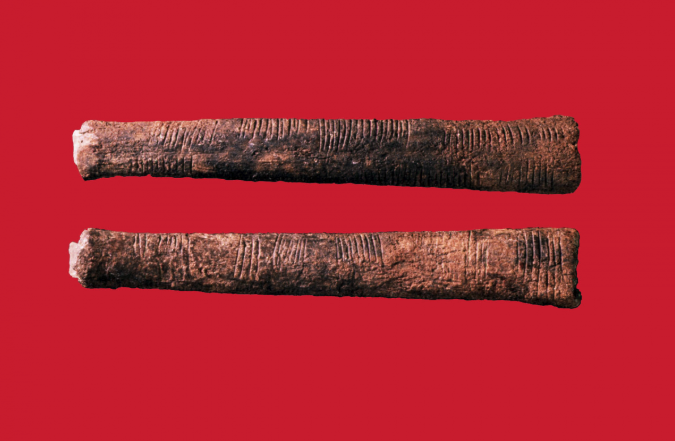
Figure 1: The Ishango Bone (c. 20,000 BCE), a notched bone tool from central Africa, has been interpreted as a six-month lunar phase tally[1]. Such artifacts suggest that humanity’s earliest time-reckoning tracked the Moon’s cycle.
Over time, many regions employed observational lunar calendars. For example, Mesopotamian city-states initially began months with the first sighting of the crescent moon[4]. In ancient Arabia, a lunisolar practice prevailed until 632 CE, when Prophet Muhammad forbade intercalation. This reform established the strictly lunar Islamic Hijri calendar, which consists of 12 lunar months totaling 354 or 355 days[5]. Each month begins with the visible new crescent (hilal), aligning religious observances to the Moon’s cycle. Because no extra days or months are added, Islamic months shift through all seasons in a 33–34 year cycle[6]. Culturally, this drifting was embraced – for instance, the fasting month of Ramadan can fall in any season, emphasizing spiritual egalitarianism over agricultural timing. Lunar calendars were also used by other communities (e.g. some Indonesian and West African traditions), often for ritual or liturgical purposes divorced from seasonal agriculture.
Lunar calendars typically alternate 29- and 30-day months to approximate the 29.53-day lunation[3]. Some developed arithmetical rules to predict months when observation was difficult. Medieval Muslim astronomers, for example, devised a 30-year intercalation cycle (Tabular Islamic calendar) with 11 leap days of 30 instead of 29 days[8]. However, these schemes do not align months to the solar year – a true lunar calendar accepts the wandering of the year through the seasonal cycle. Table 1 summarizes the features of lunar calendars.
| Calendar Group | Lunar Calendars (e.g. Islamic Hijri, pre-modern lunar cycles) |
| Primary Astronomical Basis | Synodic lunar month (~29.5 days); months keyed to Moon’s phases[7]. No direct solar alignment (year = 12 lunar months ≈ 354 days). |
| Typical Unit Structure | 12 months of 29 or 30 days (354-day year); occasionally 354/355-day cycle if using arithmetic rule[8]. No intercalary months or days (pure lunar). |
| Region(s) of Use | Historically worldwide for ritual (e.g. Mesopotamia, Oceania). Today primarily in Islamic countries and communities for religious calendar; also traditional uses in parts of Africa and Asia. |
| Earliest Known Example | Upper Paleolithic era (possible lunar tallies c.30,000 BCE[2]); earliest recorded lunations in 3rd millennium BCE Mesopotamian and Egyptian texts. Islamic calendar fixed in 632 CE. |
| Notable Civilizations | Pre-Islamic Arabia (Quraysh, etc.), Islamic Caliphates and modern Muslim world (Hijri calendar); various tribal and indigenous groups lacking solar timing needs. |
| Method of Intercalation | None. Lunar year is ~11 days shorter than solar year – months drift through seasons[6]. (Some cultures formerly added months, but then the calendar becomes lunisolar, not purely lunar.) |
| Legacy or Modern Influence | The Hijri calendar remains in religious use by ~1.8 billion Muslims[5]. It governs annual rituals (e.g. Ramadan, Hajj) independent of seasons. Pure lunar reckoning highlights cyclical time in many mythologies. However, most societies using lunar calendars adopted lunisolar or solar systems for civil purposes due to agricultural requirements. |
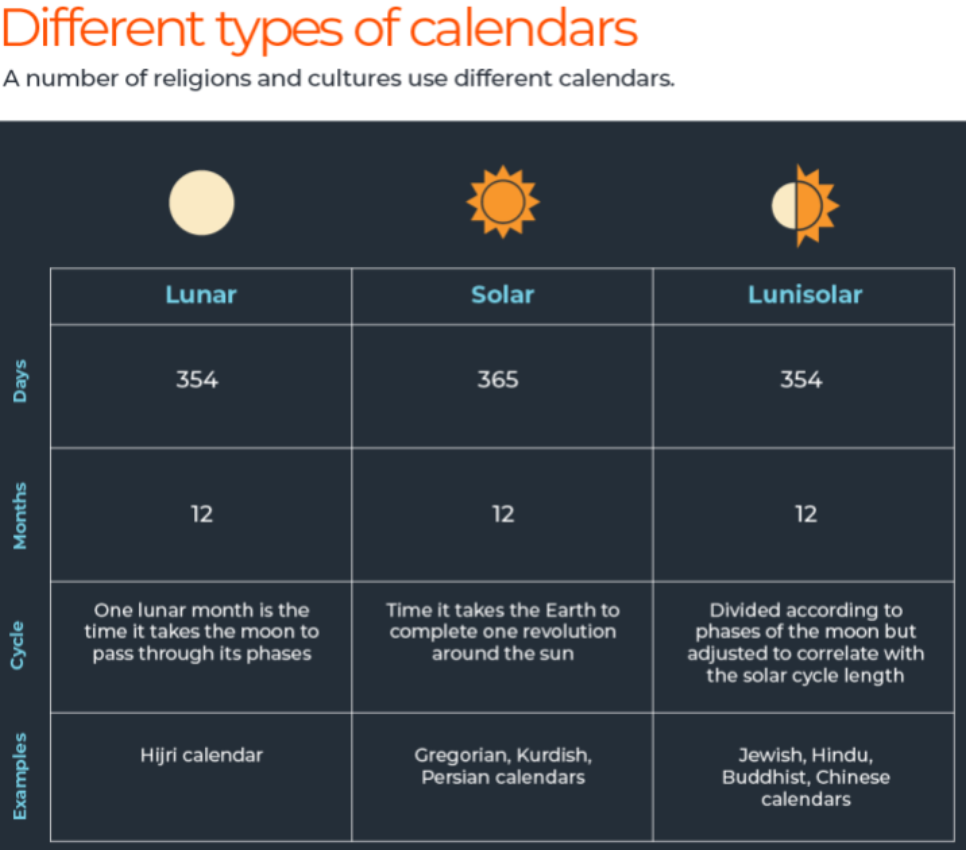
Lunisolar Calendars (Emergence: Bronze Age)
As civilizations grew dependent on seasonal agriculture, many evolved lunisolar calendars – systems that reconcile lunar months with the solar year. A lunisolar calendar retains lunar months but periodically inserts extra days or months to keep the annual cycle roughly aligned with seasons. This innovation appeared in the early Bronze Age. For instance, by the 2nd millennium BCE, the Babylonians and Chinese had lunisolar calendars[9]. The lunisolar approach solved two problems: (1) a lunar month is not an integer number of days, and (2) 12 lunar months (≈354 days) fall about 11 days short of the 365-day solar year[10][11]. The solution was to vary month lengths (29 or 30 days) and to add a 13th month in certain years[12][13]. This kept the lunar new years cycling around the same seasonal point each year.
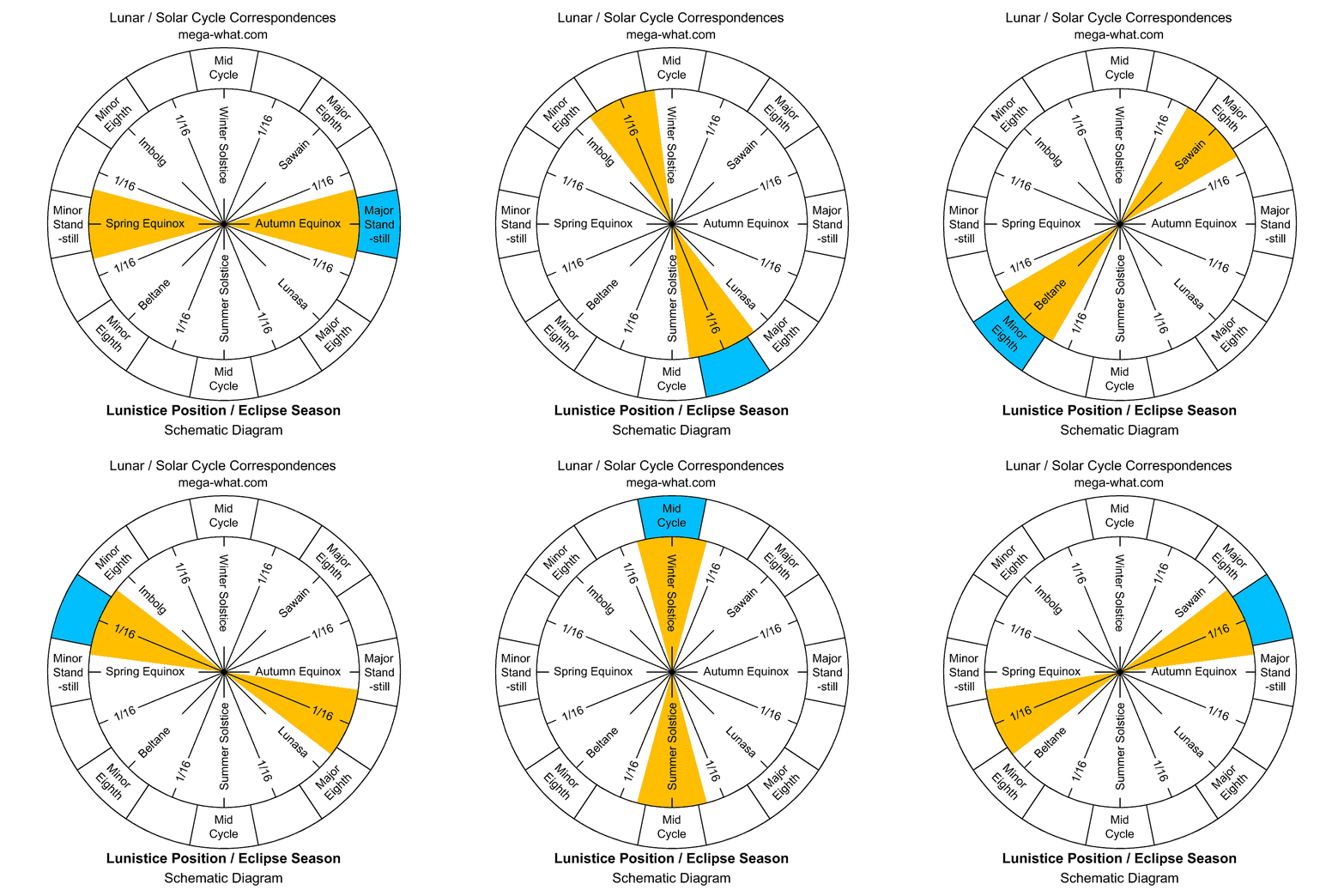
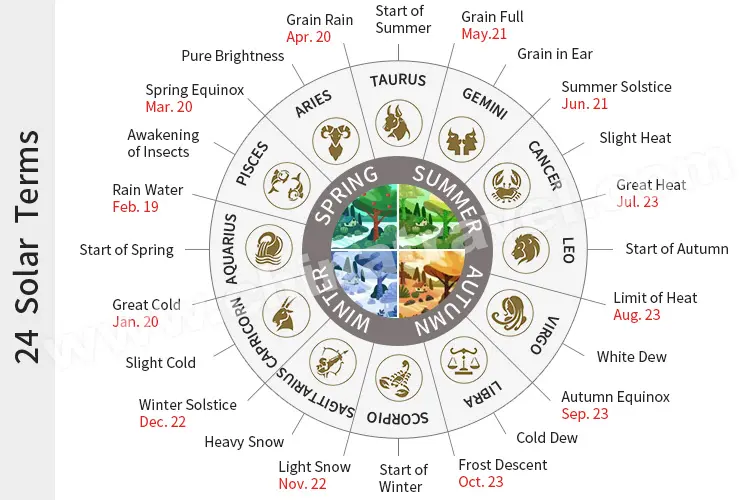
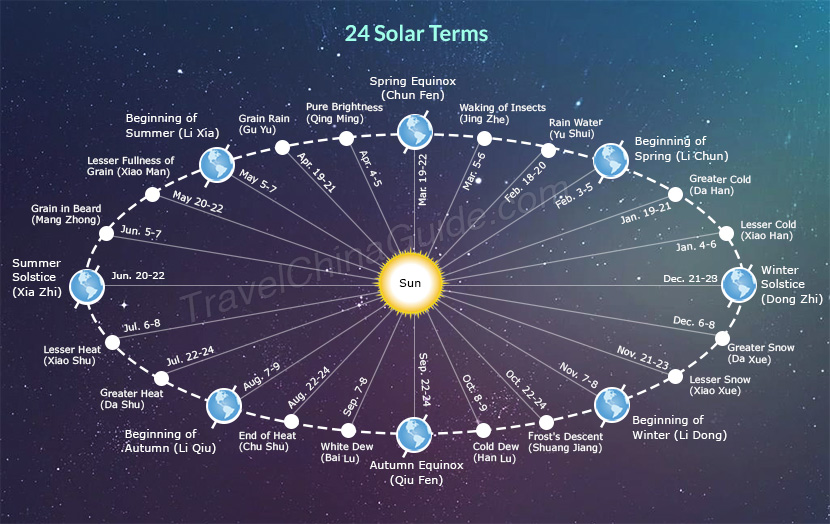
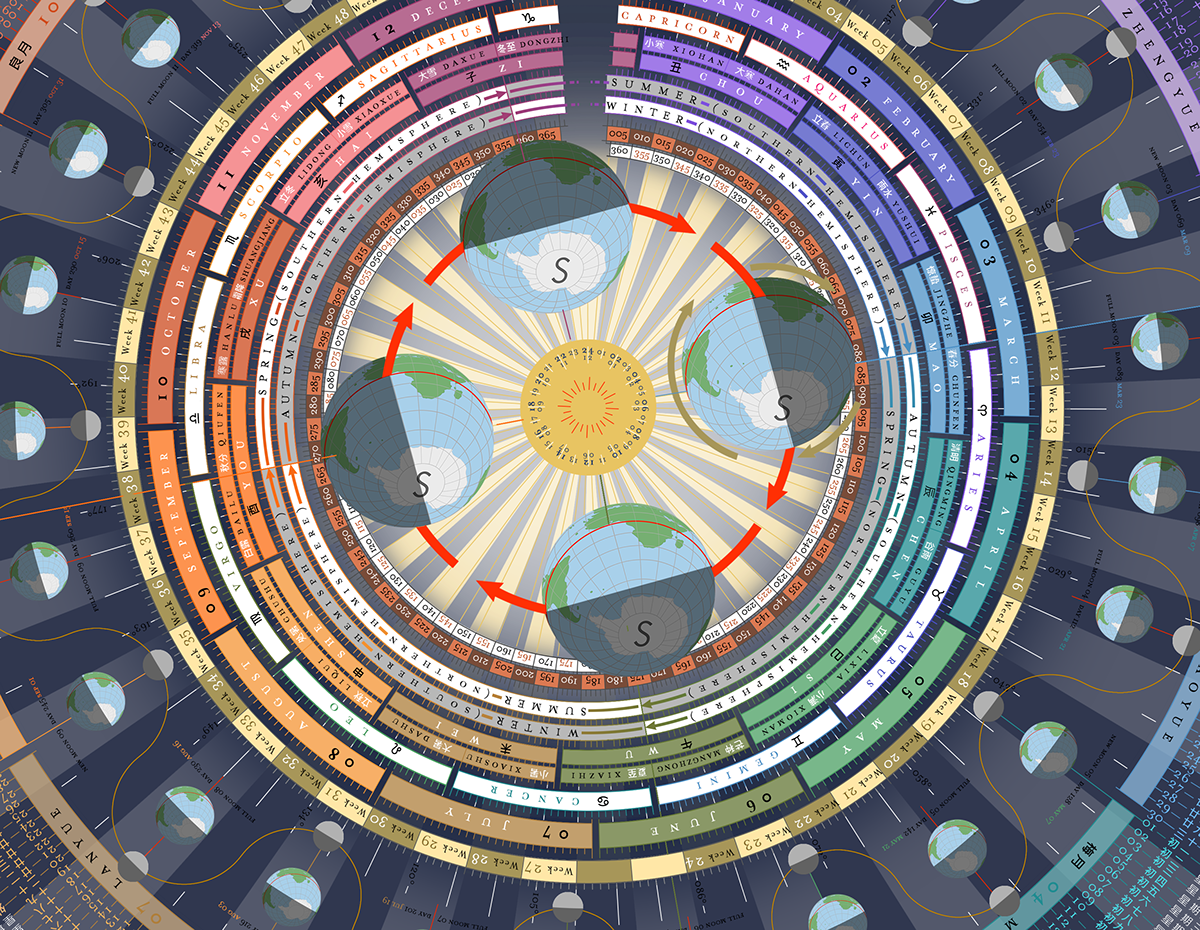
Across the ancient Near East, lunisolar calendars became standard. The Babylonian calendar (c. 1800 BCE) set 12 lunar months, with an extra month added seven times in 19 years[16][17]. Babylonian astronomer-priests discovered that 235 lunar months ≈ 19 solar years (the difference is only ~2 hours)[16]. By 503 BCE under Persian King Darius I, they formalized the Metonic cycle: 7 leap years (13 months) in a 19-year span[18]. This kept the New Year near the spring equinox each year[19]. The Metonic cycle spread widely – the classical Greek calendar adopted it via Meton of Athens (432 BCE), and it underlies the Hebrew calendar and the Christian Easter computus to this day[20]. Meanwhile in East Asia, the traditional Chinese calendar (attested by 14th c. BCE Shang oracle bones) independently developed lunisolar principles. The Chinese system uses 12 lunar months, with a leap month roughly every 3 years (7 leap months per 19 years, like Babylon, though determined via 24 solar seasonal markers)[9]. These intercalations ensure the Chinese New Year stays in winter between January and February. Similar lunisolar frameworks governed the ancient Hebrew calendar (which after Babylonian exile adopted month names like Nisan, Tishri, etc., and later set a fixed 19-year cycle in the 4th century CE) and the Hindu calendars of India (which add an adhik māsa or “extra month” as needed to keep festivals in the proper season).
Within lunisolar systems, the intercalation method could be observational or rule-based. Some, like the classical Athenian calendar, relied on empirical insertion of a leap month when seasonal drift became noticeable (often guided by the state’s authority – e.g. Babylonian kings announced leap months)[22]. Others evolved explicit rules: the Hebrew calendar’s 19-year cycle, for example, follows a set leap year schedule established by Hillel II around 359 CE. In China, by the 7th century CE the Tang dynasty calculated leap months in advance using astronomical criteria (each month containing the winter solstice gets no leap, etc.). Lunisolar calendars thus required careful governance, intertwining astronomy with royal or religious authority. This gave calendar-makers significant political influence, as controlling the calendar was vital for taxation, agriculture, and holy days (e.g. determining the date of Passover or Easter).
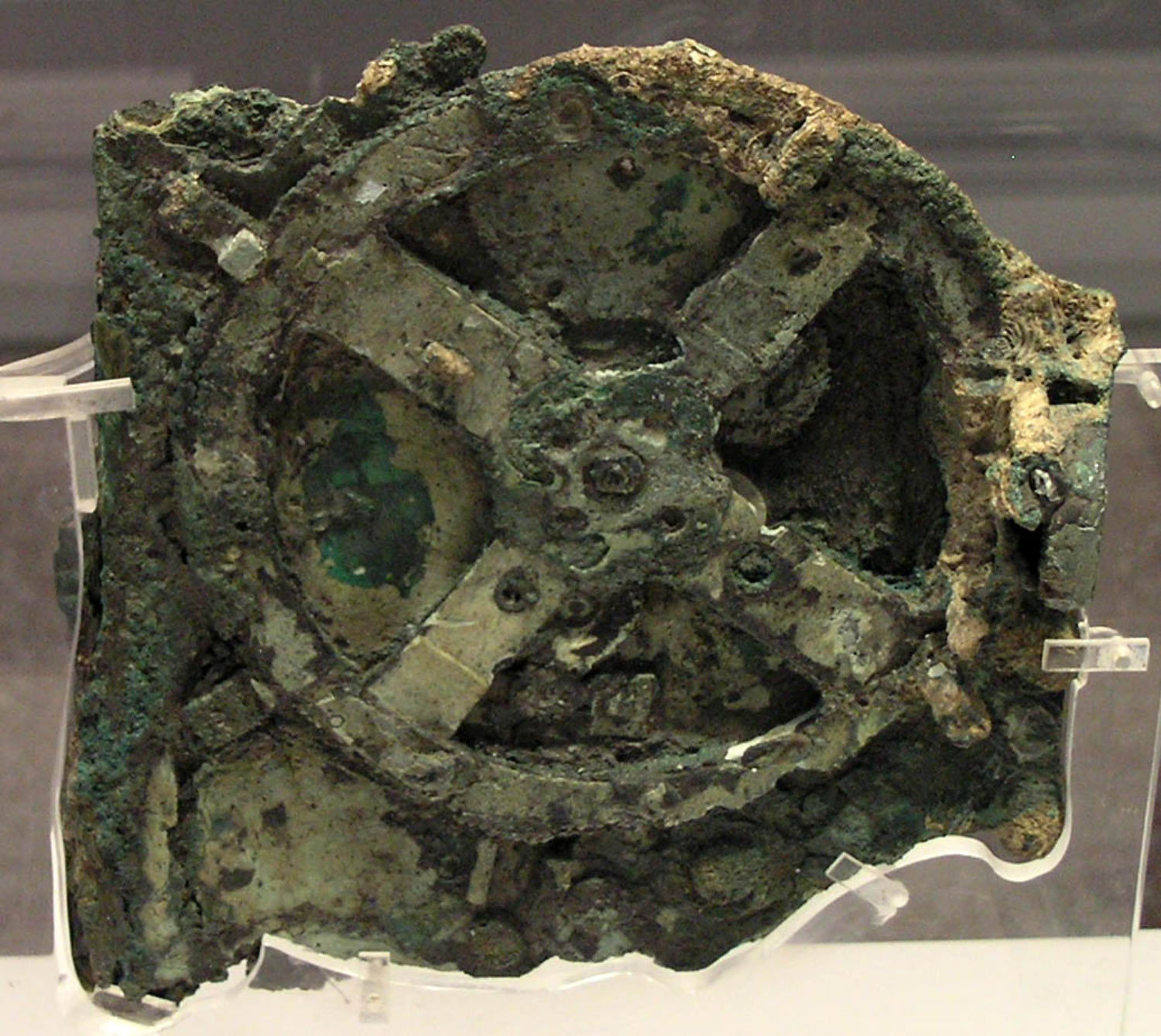
Figure 5: Fragment of the Antikythera mechanism (circa 150 BCE), an ancient Greek geared device that computed calendrical cycles. Its dials could track the 19-year Metonic lunisolar cycle and predict eclipses[16][20]. The mechanism’s construction – over 30 bronze gears – attests to advanced Hellenistic knowledge of synchronizing lunar and solar cycles.
Table 2 summarizes lunisolar calendars. These systems dominated the ancient world: Babylon’s lunisolar model spread to Persia and the Levant; Greece and Rome used lunisolar calendars until Julius Caesar’s reform; in East and South Asia, lunisolar calendars (Chinese, Korean, Vietnamese, Hindu, etc.) regulated traditional life and still set festival dates today[9]. Even the Christian liturgical calendar retains a lunisolar element: the date of Easter is the first Sunday after the first full moon on or after spring equinox (a direct echo of the Jewish Passover’s lunisolar timing).
| Calendar Group | Lunisolar Calendars (e.g. Babylonian, Hebrew, Chinese, Greek) |
| Primary Astronomical Basis | Dual: Moon + Sun. Months track the lunar phase cycle (~29.5 days), but calendar years are adjusted to match the solar tropical year (~365¼ days)[23][12]. |
| Typical Unit Structure | 12 lunar months (~354 days) in ordinary years; leap year adds an extra month (13 months, ~384 days) usually 7 times in 19 years[24][19]. Month lengths 29 or 30 days. |
| Region(s) of Use | Ancient Near East (Mesopotamia, Levant, Persia), Mediterranean (Greece, pre-Julian Rome, Celtic Gaul), Asia (China, Korea, Vietnam; South Asian Hindu calendars), Mesoamerica (Aztec 52-year cycle included a 365-day + 260-day system – partially lunisolar in effect). |
| Earliest Known Example | Sumerian/Babylonian calendar (e.g. Ur III period, c.21st century BCE) used lunar months and occasional intercalation. Earliest texts recording intercalary months date to c. 2000 BCE. Chinese evidence from Shang dynasty (c.1300 BCE oracle bones) shows a lunisolar structure. |
| Notable Civilizations | Babylonians (standardized 19-year cycle[18]); Jewish (post-Exilic Hebrew calendar with Babylonian month names, fixed cycle by 4th century[20]); Classical Greeks (Metonic cycle via Meton[20] and Callippus); Imperial China (from Zhou dynasty onward, lunisolar calendar with 24 solar terms); Hindu kingdoms (various lunisolar regional calendars). |
| Method of Intercalation | Initially observational (rulers or priests declared leap months when seasons slipped). Later rule-based cycles (e.g. 7 extra months/19 years[25], or calculated via solar longitude in Chinese calendar). The goal: keep new year near the same seasonal point (e.g. spring) each year[19]. |
| Legacy or Modern Influence | Many religious calendars remain lunisolar: the Hebrew calendar (for Jewish holidays) and Chinese calendar (for Lunar New Year and festivals) are in active use[9]. Ecclesiastical calculations (Christian Easter) rely on lunisolar formulas. These calendars connect ritual life to both lunar rhythms and seasonal cycles, embodying a harmony of sky and earth time. |
Solar Calendars (Emergence: Iron Age)
Solar calendars dispense with lunar months entirely, structuring the year solely by the Sun’s annual motion (the tropical year of ~365.2422 days). The prototype was the ancient Egyptian civil calendar (perhaps formulated by c. 2700 BCE). Egyptians observed that 12 lunar months were insufficient for a full Nile flood cycle, so they adopted a fixed 365-day year: 12 months of 30 days plus 5 extra days (epagomenai)[26]. This calendar ignored the Moon and consequently drifted slowly through the seasons (no leap days were added)[27]. Nevertheless, it provided a stable administrative year and, over 1460 years (the Sothic cycle), would realign with the heliacal rising of Sirius marking the new year. Egypt’s purely solar calendar – essentially a “wandering year” – influenced the Hellenistic world and Rome.
The definitive solar calendar reform came in 46 BCE with Julius Caesar’s Julian calendar. Advised by Alexandrian astronomer Sosigenes, Caesar abolished the erratic Roman lunisolar system (which had fallen out of sync) and instituted a year of 365 days with a leap day every fourth year[13]. Months were detached from the Moon and assigned lengths of 30 or 31 days (February having 28, with 29 in leap years). The Julian calendar made the civil year roughly 365.25 days, closely approximating the solar year. However, it was about 11 minutes longer than the true tropical year; by the 16th century, this accumulated error (~10 days) prompted another reform[28]. In 1582, Pope Gregory XIII introduced the Gregorian calendar, dropping 10 days and refining the leap rule: century years not divisible by 400 would be common years (e.g. 1700, 1800, 1900 not leap; 2000 was leap)[29][28]. This made the average year 365.2425 days, limiting drift to ~1 day in 3,300 years. Catholic countries adopted it immediately; Protestant Europe gradually followed over the next two centuries (Britain in 1752, Russia only in 1918). The Gregorian calendar, being a solar calendar, keeps dates aligned with seasonal markers like equinoxes and solstices. Table 3 lists its widespread adoption – by the 20th century it became the global civil calendar for international use[30][31].
![[30]](https://commons.wikimedia.org/wiki/File:Calendars_world_map.svg#:~:text=English%3A%20%20Map%20of%20calendars,officially%20used%20around%20the%20world)
![[31]](https://commons.wikimedia.org/wiki/File:Calendars_world_map.svg#:~:text=Negara,lain%20selain%20kalender%20Gregorian)

Figure 6: Reconstruction of the Fasti Antiates Maiores (c. 60 BCE), the oldest known Roman wall calendar[32]. Months (Martius, Aprilis, etc.) are arranged in columns with days numbered and marked by letters (market days and festivals). This Republican-era calendar was lunisolar, but Julius Caesar’s reform soon replaced it with the solar Julian calendar. The new Julian system cut the link to lunar cycles – months were fixed lengths totaling 365¼ days[13].
![[32]](https://en.m.wikipedia.org/wiki/File:Fasti_Antiates,_Palazzo_Massimo_alle_Terme,_Rome..jpg#:~:text=File%3AFasti%20Antiates%2C%20Palazzo%20Massimo%20alle,to%20king%20Numa%20Pompilius%2C)
Solar calendars also existed in other cultures: the Persian (Iranian) calendar was reformed c. 11th century CE by a panel including Omar Khayyam, creating the Jalālī calendar with extremely accurate 33-year leap cycles (error ~1 day in 5000 years). Its modern descendant, the Solar Hijri calendar used in Iran and Afghanistan, begins each year on the spring equinox as determined by astronomical calculation. In South Asia, some regional calendars (e.g. the Tamil calendar) are solar, dividing the year by the Sun’s entry into zodiac signs. The Maya Haab’ calendar of 365 days (18 months of 20 days + 5 days) was a solar year count (though the Maya did not intercalate leap days, so it drifted slowly)[33]. In Europe, the French Revolution produced a short-lived solar calendar: the French Republican Calendar (1793–1805), which had 12 months of 30 days, plus 5 or 6 festival days, and started each year on the autumn equinox[29][28]. This was an attempt to decimalize and de-Christianize the calendar, though it was abandoned under Napoleon.

Figure 7: World map of official calendars (modern). Green countries use the Gregorian solar calendar as sole official system. Blue indicate use of a modified Gregorian variant. Yellow countries maintain a second traditional calendar alongside Gregorian (often lunisolar for religious purposes). Red areas have not adopted Gregorian as civil calendar[30][31] (e.g. some use the Indian national calendar or Islamic calendar in parallel). Today, the Gregorian solar calendar is nearly universal for civil affairs.
A solar calendar’s chief advantage is consistency with the seasons – crucial for farming schedules and administrative planning. However, solar calendars sacrifice the intuitive link to Moon phases. Culturally, this shift often accompanied centralizing state power: e.g. Emperor Augustus adjusted the Julian calendar naming (July, August) to solidify the new order, and the Gregorian reform was an assertion of papal authority to regulate time. Over centuries, the Gregorian system has proven durable and is now the international standard for commerce, science, and governance.
| Calendar Group | Solar Calendars (e.g. Egyptian, Julian, Gregorian, Persian) |
| Primary Astronomical Basis | Solar year (one revolution of Earth ~365.24 days) – months and days are set without reference to lunar cycles[13]. The year aligns with the seasons (tropical year) by design. |
| Typical Unit Structure | 365 days divided into 12 months (of fixed lengths unrelated to Moon). Leap day added as needed (e.g. 1 day every 4 years in Julian[13]; 97 leap days per 400 years in Gregorian). Some solar calendars have 13 months (e.g. Coptic/Ethiopian 12×30 + 5 epagomenal days). |
| Region(s) of Use | First developed in Egypt. Adopted across Europe and European colonies (Julian then Gregorian). Also Persia/Iran (solar Hijri), parts of South Asia (regional solar calendars), and essentially worldwide in modern civil usage[30]. |
| Earliest Known Example | Egyptian civil calendar (traditionally dated to Old Kingdom, c. 27th century BCE). Later examples: Roman Julian calendar (45 BCE), reformed Gregorian (1582 CE). |
| Notable Civilizations | Ancient Egypt (365-day year[26]); Roman Empire (Julian calendar spread across Europe); Gregorian Europe (Catholic and later Protestant world[28]); China’s Qin dynasty briefly used a solar calendar (Shí xiàn lì), though lunisolar remained dominant; Modern global society (Gregorian). Also Maya (Haab’ 365-day count), Iran (current Persian calendar). |
| Method of Intercalation | Regular leap days or years to maintain alignment with solar year. Julian: add Feb 29 every 4 years[13]. Gregorian: omit 3 leap days every 400 years (Century years not divisible by 400)[29]. Some ancient solar calendars had no leap adjustment (Egyptian) and thus drifted over time. |
| Legacy or Modern Influence | The Gregorian calendar is the de facto global civil calendar, adopted by nearly all nations by the 20th century[30]. It standardized dates for international trade and science. Solar calendars mark fixed seasonal festivals (e.g. equinox-based holidays). Even cultures that keep traditional calendars often use Gregorian for official purposes. The solar model’s triumph reflects the primacy of seasonal agriculture and the efficiency of a common calendar. |
Hybrid & Symbolic Calendars (Emergence: Classical Era)
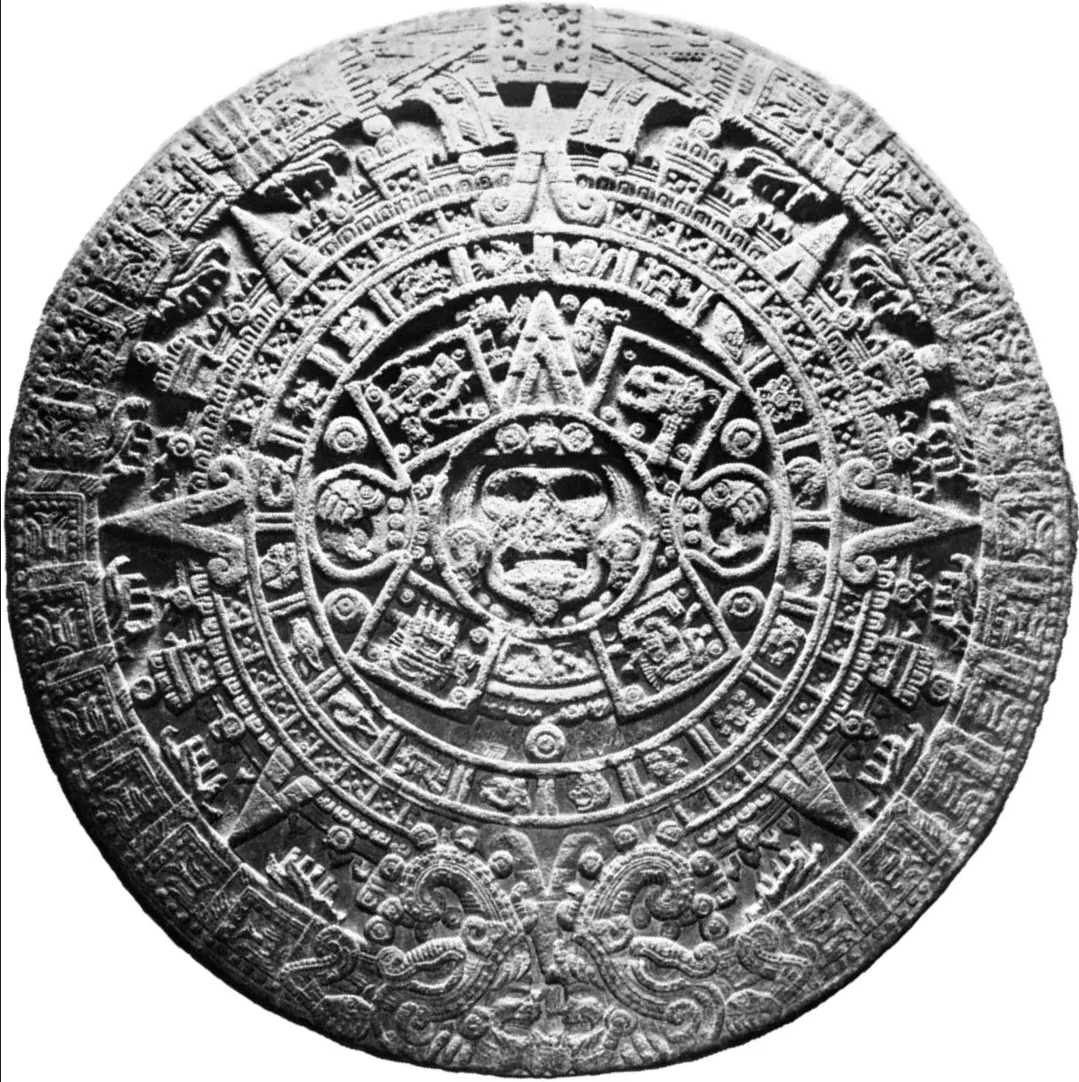
Hybrid or symbolic calendar systems are those that blend multiple time cycles or employ numerologically driven structures not strictly required by astronomy. These often arose in complex societies where calendars served ritual-cosmological functions beyond the practical. A prime example is the Mesoamerican calendar system developed by the Maya and adopted (with variations) by the Aztecs and others. The Maya tracked three interlocking cycles: the Tzolk’in (260-day sacred cycle), the Haab’ (365-day vague solar year), and the Calendar Round of 52 years (the least common multiple of 260 and 365)[34][35]. The 260-day cycle consisted of 20 day names and 13 numbers cycling in tandem, yielding unique day signs used for divination and ritual scheduling[36]. This number 260 may have symbolic origins (perhaps relating to human gestation or crop cycles). It had no obvious alignment with lunar or solar periods, illustrating a symbolic choice. The 365-day Haab’, divided into 18 “months” of 20 days plus 5 ominous extra days, was a solar approximation but without leap days[33]. Every 52 Haab’ years, the same Tzolk’in date recurred – a Calendar Round completion, which was a moment of cosmic renewal for Mesoamericans[34][35]. The Aztec Sun Stone (Calendar Stone) vividly encodes this concept: it features the 20 day-sign glyphs around the sun deity, symbolizing the cyclical epochs (sol “suns”) and the ritual calendar[37][38].
![[37]](https://commons.wikimedia.org/wiki/File:Aztec_Sun_Stone.JPG#:~:text=,suns%20that%20preceded%20the%20Fifth)
![[38]](https://commons.wikimedia.org/wiki/File:Aztec_Sun_Stone.JPG#:~:text=the%20disk%2C%20the%20face%20of,the%20Fifth%20Sun%2C%20in%20turn)

Figure 8: The Aztec Sun Stone (Mexico, c. 1500 CE), often called the “Aztec Calendar.” This monolithic sculpture’s design represents the Aztec cosmology of time. The central sun god (Tonatiuh) is surrounded by glyphs for the 20 day-names of the 260-day ritual calendar and signs of the previous four eras or “suns.” Although popularly termed a calendar, it is a ritual and symbolic depiction rather than a practical date-tracking tool[39][40].
![[39]](https://commons.wikimedia.org/wiki/File:Aztec_Sun_Stone.JPG#:~:text=,transformed%20into%20a%20sacrificial%20knife)
![[40]](https://commons.wikimedia.org/wiki/File:Aztec_Sun_Stone.JPG#:~:text=can%20be%20recognized%3B%20he%20is,the%20Fifth%20Sun%2C%20in%20turn)
To track historical dates beyond the 52-year cycle, the Maya devised the Long Count – a linear count of days from a mythological start date (August 11, 3114 BCE in the Gregorian proleptic calendar). The Long Count used a modified base-20 notation (with a base-18 at one place so that 20×18×20×… yields 360-day units roughly paralleling years)[41]. For example, the stelae of Classical Maya cities bear Long Count dates recording when they were erected or when k’atun (7,200-day) periods ended[42][43]. The Long Count had no cycle shorter than 13 b’ak’tuns (~5,125 years), making it more akin to an era-based chronological record – a distinctly non-repeating “absolute” calendar amid a world of cycles. It reflects a symbolic desire to place history in a grand temporal framework (the current 13-b’ak’tun era was believed to reset after 13.0.0.0.0, which coincided with December 21, 2012 CE, giving rise to millenarian interpretations in popular culture). Notably, the basic elements of Mesoamerican calendars were not directly tied to obvious astronomical periods like exact lunations or the tropical year[44]. They were more mythological and ritual cycles, although the Maya did observe celestial bodies: the Dresden Codex contains tables for predicting solar and lunar eclipses and the synodic cycle of Venus (they noted 5 Venus cycles ≈ 8 solar years)[45][46]. This underscores that hybrid calendars could incorporate observational astronomy in a secondary way, but their primary structure was often symbolic (e.g. 260 = 13×20, numbers with sacred significance).
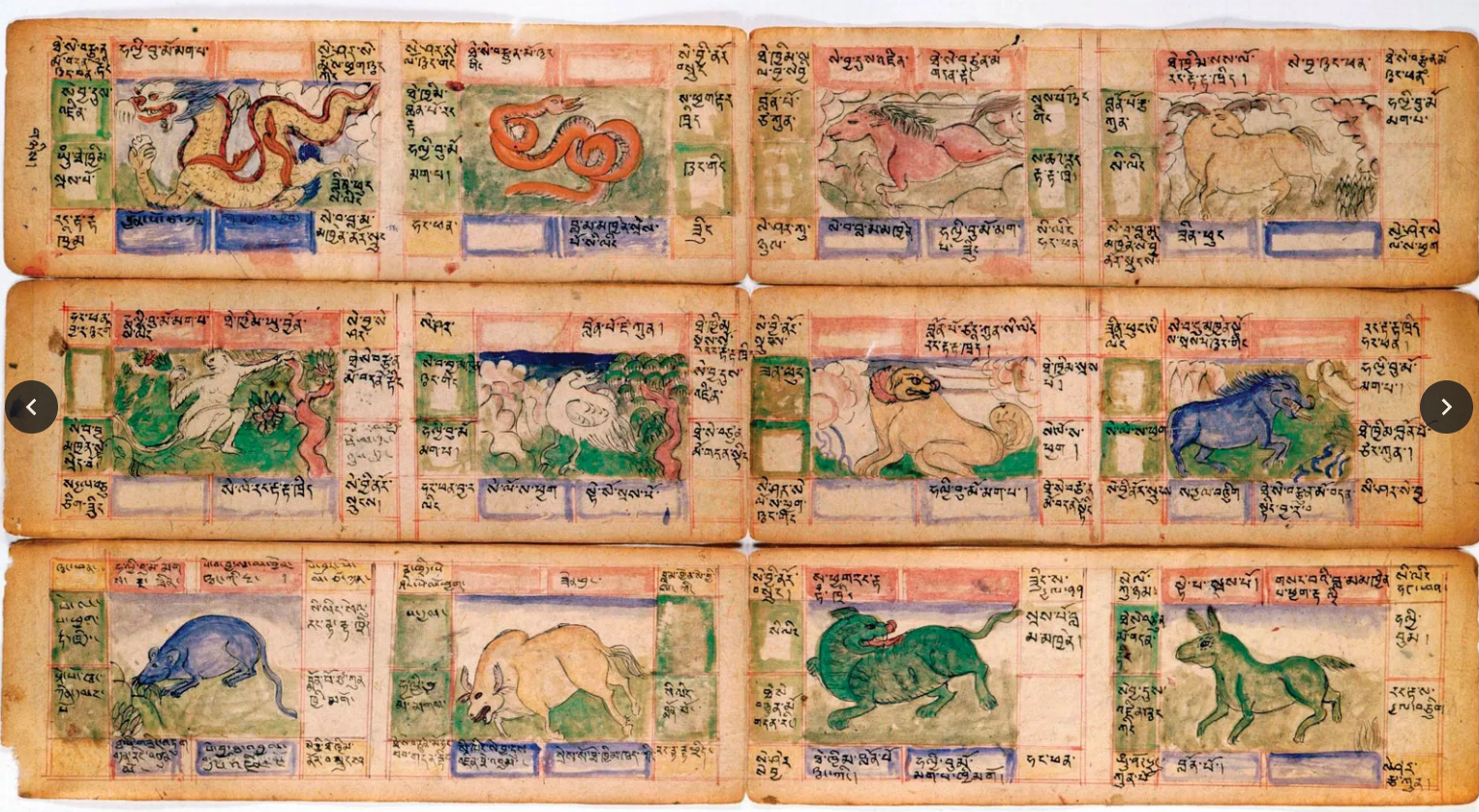
Beyond Mesoamerica, other hybrid/symbolic calendars include those that overlay cycles for ritual reasons. In ancient China, alongside the lunisolar calendar, a 60-year cycle (the sexagenary cycle of “Heavenly Stems and Earthly Branches”) was used to name years, months, days, and hours. This cycle, combining a 10-unit and 12-unit sequence, was not needed for timekeeping accuracy but provided an auspicious framework for chronology and astrology[47][48] (e.g. 2025 is a Year of the Wood Snake by this count). India’s traditional calendars similarly have a 60-year Jovian cycle of year names that runs parallel to the solar/lunar year count. The Balinese calendar is another hybrid: the Balinese use a 210-day ritual cycle (Pawukon) comprising overlapping week cycles of varying lengths, alongside a Hindu lunisolar calendar (Saka) for religious festivals. The Pawukon has no anchoring in solar or lunar motions – it’s an independent cyclical framework for ceremonies. Such systems show how calendars can encode cultural patterns (market days, ritual rotations) unrelated to any single celestial period.
Hybrid calendars often serve to integrate social, spiritual, and agricultural time. For instance, the Maya Calendar Round ensured that every 52 years – roughly a human lifetime – the same combination of sacred and civil date would recur, at which point the New Fire ceremony was held by the Aztecs to stave off cosmic destruction for another cycle. These calendars reinforced worldviews: the Aztec Sun Stone depicts successive creations (suns) and foretells the current world’s fate, embedding eschatology in the calendar itself. In imperial contexts, rulers sometimes introduced symbolic calendars to legitimize a new era. For example, Revolutionary France’s Republican calendar (discussed more below) renamed months after natural events (Vendémiaire “vintage month”, Brumaire “mist”, etc.)[49][50] to break with the past; while it was solar, its design was ideologically symbolic (decimal weeks, poetic month names).
Table 4 outlines hybrid and symbolic calendars. Their legacy is seen in cultural festivities and identity. The Maya calendar, though no longer used for civil time, remains a source of pride and fascination, and some Maya communities still reference the Tzolk’in for naming babies or scheduling rituals. The Chinese sexagenary cycle is still used for naming years (e.g. 2025 is yi si, the 42nd year of the cycle). Such calendars demonstrate human creativity in weaving together natural rhythms and cultural meaning into a system of timekeeping.
| Calendar Group | Hybrid/Symbolic Calendars (e.g. Maya & Aztec systems, other multi-cycle calendars) |
| Primary Astronomical Basis | Mixed – often uses several cycles, some not directly astronomical. May include a solar year count (365 days) and a separate ritual cycle (e.g. 260 days) running in parallel[34][36]. Often these calendars incorporate cosmologically significant numbers (20, 13, etc.) beyond simple Sun/Moon periods. |
| Typical Unit Structure | Multiple interlocking cycles. Mesoamerican example: 260-day sacred cycle (20 names × 13 numbers) + 365-day civil year (18×20-day months + 5 days)[34][33]. These form a 52-year Calendar Round. Additionally, linear Long Count in days for long-term dating[42]. Other examples: Balinese 210-day cycle (10 parallel week lengths); Chinese 60-year stem-branch cycle overlaid on years, etc. |
| Region(s) of Use | Mesoamerica: Maya, Aztec, Mixtec, etc. (ritual + solar dual calendars). East Asia: Traditional Chinese and related calendars (sexagenary cycle for year/day names). Indonesia: Bali (210-day Pawukon). Various cultures with dual calendars (religious vs. civil) that are not synced (e.g. Islamic religious calendar vs. Gregorian civil in some countries – not a single hybrid calendar, but dual usage). |
| Earliest Known Example | Mesoamerican calendar in use by at least mid-1st millennium BCE (the 260-day cycle is evidenced in the Zapotec calendar and early Maya inscriptions). The Maya Long Count starts at 3114 BCE by its mythic epoch; earliest Long Count inscription ca. 36 BCE. Chinese sexagenary cycle in use by Han Dynasty (~2nd c. BCE) for recording years. |
| Notable Civilizations | Maya Civilization (Classic period 250–900 CE, detailed calendar inscriptions[34][51]); Aztec Empire (14–16th c. CE, tonalpohualli and Xiuhpōhualli calendars, Sun Stone[39]); Mixtec/Zapotec (Oaxaca, used 260-day counts); Chinese (60-year cycle alongside lunisolar calendar); Balinese (Hindu-Javanese calendar blend). |
| Method of Intercalation | Varies widely. Mesoamerican calendars did not intercalate – the 365-day year was allowed to drift (they reset the Calendar Round every 52 years rather than adjust annually)[52]. These calendars often weren’t used for precise agricultural timing in isolation, or agricultural timing was handled via observational knowledge separate from the ritual calendar. In other hybrid systems, one cycle is usually pegged to solar or lunar events while others float (e.g. Chinese lunisolar calendar pegs year to Sun, while 60-year cycle floats through). |
| Legacy or Modern Influence | Mesoamerican calendar knowledge survived in codices and is preserved today by some indigenous Maya day-keepers for ceremonial purposes. The Aztec Sun Stone has become an iconic symbol of Mexican cultural heritage. Elements like the Chinese zodiac cycle remain popular for cultural year designations. Hybrid calendars demonstrate the human tendency to layer meaning onto timekeeping – linking temporal cycles to myth, prophecy, and social identity beyond the requirements of basic agriculture. |
Fixed & Arithmetic Calendars (Emergence: Modern Era)
Fixed or arithmetic calendars represent deliberate reforms designed to make calendars more regular, uniform, or secular. Unlike organic calendars that evolved over millennia, these are often rational designs proposed in the last few centuries. They typically feature equal-length units or repetitive cycles that aim to simplify date calculations. A hallmark is that they rely on arithmetical rules entirely – observation of celestial bodies is unnecessary once the rules are set. Some early precedents exist (the Romans’ Julian reform was an arithmetic rule-based calendar, and the 4th-century Hebrew calendar was set by arithmetic rules), but we particularly categorize here the post-18th century schemes born of the Enlightenment and industrial age, when efficiency and uniformity became paramount concerns.
One of the first was the French Republican Calendar (1793–1805). Designed during the French Revolution to break with the Gregorian (and by extension, Catholic tradition), it applied decimal ideology to the calendar. The year was fixed at 12 months of 30 days each, renamed with seasonal imagery (e.g. Vendémiaire “Vintage-month”, Brumaire “Fog-month”)[49][53]. The remaining 5 (or 6 in leap years) days were year-end festivals (Sansculottides)[26]. Weeks were abolished in favor of 10-day décades – every tenth day (décadi) was a rest day, replacing Sunday[54]. The year began on the autumn equinox (in Paris) and year I was set to 1792, the proclamation of the Republic[27]. This calendar thus was solar (aligned to equinox) but followed a highly regular structure with a 10-month (3×10 days) and decimal time subdivision (each day divided into 10 hours of 100 minutes)[54][55]. While intellectually coherent, the Republican calendar proved impractical – France returned to the Gregorian on January 1, 1806, after only 12 years[28]. International communication was hindered by an idiosyncratic system few outside France recognized[28]. Nonetheless, it set a precedent for considering radical calendar reform in the modern era.
In the 19th and 20th centuries, other reformers proposed perennial calendars – ones where each year has an identical layout. The most famous is the International Fixed Calendar (IFC), advocated by Moses Cotsworth and adopted internally by the Eastman Kodak Company from 1928 to 1989. The IFC divides the year into 13 months of 28 days each (exactly 52 weeks). An extra day (“Year Day”) is added at year’s end (outside of any week) to total 365 days, and in leap years a second extra day is added mid-year. In the IFC, every date falls on the same weekday every year (e.g. the 1st of each month is always Sunday) – a very attractive property for business and scheduling. Similarly, the World Calendar (proposed in the 1930s) keeps 12 months but divides the year into four equal quarters of 91 days (Jan–Mar, Apr–Jun, etc.), each quarter containing one 31-day month and two 30-day months. It also adds a blank day at year’s end (and a leap day at mid-year quadrennially) to maintain a 364-day patterned year. Both schemes ran into opposition – especially from religious groups objecting to the concept of “blank” days which disrupt the seven-day Sabbath cycle. Indeed, adoption attempts through the League of Nations in the 1930s failed partly due to such concerns. No country ultimately implemented these regularized calendars for civil use.
Another noteworthy fixed calendar is the Bahá’í Badíʿ Calendar (implemented by the Bahá’í Faith since 1844). It is a solar calendar of 19 months, each 19 days long, totaling 361 days[56][57]. To complete the year, 4 or 5 “Intercalary Days” (Ayyám-i-Há) are inserted before the final month, so that the Bahá’í New Year (Naw-Rúz) falls on the spring equinox[56][58]. The Bahá’í months are named after attributes of God (e.g. Bahá “Splendor”, ʻIlm “Knowledge”), reflecting a symbolic theology. This calendar is precisely defined by astronomical calculation of the equinox, but otherwise is an arithmetic structure (months fixed at 19 days). While used only within the Bahá’í community (several million people worldwide) for religious observances, it demonstrates an implemented example of a modern fixed calendar with a numerologically significant format (19 × 19 days, echoing the importance of the number 19 in Bahá’í belief).

Figure 10: A French Republican decimal clock (late 18th century) showing 10 hours subdivided into 100 minutes. The outer dial also displays the 30 days of the month and 10-day week (décade) of the Republican calendar[59][60]. Such timepieces were part of the broader attempt to rationalize time. Though decimal time was soon abandoned (suspended in 1795)[55], the Republican calendar’s spirit lives on in modern calls for metrication and calendar reform.
![[59]](https://commons.wikimedia.org/wiki/File:Montre_revolutionnaire-IMG_4629-black.jpg#:~:text=Description%20Montre%20revolutionnaire)
![[60]](https://commons.wikimedia.org/wiki/File:Montre_revolutionnaire-IMG_4629-black.jpg#:~:text=This%20clockface%20is%20designed%20for,or%20French%20Republican%20week)
Table 5 summarizes fixed/arithmetic calendar efforts. While none (aside from the Bahá’í Faith’s) have achieved broad adoption, they have influenced calendar awareness. The Gregorian calendar itself can be seen as increasingly arithmetic – by the 20th century, we rely on formulas to calculate dates (e.g. Gauss’s algorithm for Easter) rather than observations. The trend has been toward prediction and uniformity. If not for social and religious resistance, a perennial calendar might well be in use today – but calendar reform touches deep traditions. Still, the legacy of these ideas persists in business practices (e.g. ISO week numbering treats years as a series of 7-day weeks, almost a perennial system) and in the consciousness that our calendar is a human construct that can be redesigned for convenience. As humanity ventures beyond Earth (with Mars missions, etc.), entirely new arithmetic calendars may yet arise to suit those environments.
| Calendar Group | Fixed/Arithmetic Calendars (e.g. French Republican, International Fixed, World Calendar, Bahá’í) |
| Primary Astronomical Basis | Typically solar (year length anchored to solar year), but with artificial month and week structure chosen for regularity (not tied to Moon). Some proposals are purely arithmetic with no direct astronomical markers except year length. |
| Typical Unit Structure | Regularized months/weeks. Examples: Republican – 12 months of 30 days + 5–6 epagomenal[27], 10-day weeks[54]. International Fixed – 13 months of 28 days (4 weeks) + 1–2 off-calendar days. World Calendar – 4 quarters of 91 days (Jan-Mar etc.) with 1 off-calendar day. Bahá’í – 19 months of 19 days + 4–5 intercalary days[56]. All aim for perennial consistency (each year same layout). |
| Region(s) of Use | France (Republican calendar used 1793–1805 nationwide[28]). Kodak Company (International Fixed used internally for decades). Global Proposals (World Calendar had worldwide advocacy, though not adopted). Bahá’í Faith (followers worldwide use Badíʿ calendar for religious dates). Some countries considered World Calendar in 20th century (e.g. India initially supported it). |
| Earliest Known Example | The idea of equal months dates to Enlightenment Europe (e.g. the Georgian calendar of 13 months proposed by Abbot Mastrofini in 1834). The French Republican calendar (1793) was the first implemented radical reform. The International Fixed Calendar was proposed 1902, World Calendar 1930. The Bahá’í calendar was ordained in 1844 by the Báb (founder of Bábí faith) and confirmed by Bahá’u’lláh. |
| Notable Civilizations | French Republic (Revolutionary government) for decimal calendar/time. Modern reformists in Britain, US, India (League of Nations discussions). Bahá’í Faith (a religious community spanning Iran, Middle East, Americas, etc.). Also, Soviet Union made 5-day and 6-day week experiments (USSR, 1929–1940) – not full calendar reform, but an attempt to break the 7-day cycle. |
| Method of Intercalation | Usually rule-bound. Gregorian rules retained if base is Gregorian (e.g. World Calendar keeps Gregorian leap rule). International Fixed likewise follows Gregorian leap cycle. Republican calendar had its own leap rule: one leap day (Festival of Revolution) every 4 years, but the implementation beyond year III was unclear and later intended to be tied to equinox calculation[61][27]. Bahá’í calendar determines leap years by astronomically pinpointing the vernal equinox (resulting in 4 or 5 intercalary days as needed). |
| Legacy or Modern Influence | No fixed calendar is officially civil, but influences persist: The ISO perpetual week calendar (used for business) and academic calendars owe something to these ideas. Calendar reform remains discussed in academic and business circles for efficiency. The Bahá’í calendar is one functional example, observed by a growing global community, demonstrating that alternative calendars can thrive within a cultural context. Overall, these systems underscore that calendars are human agreements – in principle, they can be reconstructed for new priorities (uniformity, secularism), though widespread adoption needs overwhelming consensus. |
Conclusion
From the earliest lunar counts on bone and stone, through the refined lunisolar computations of antiquity, to the streamlined solar calendars and bold modern reforms, humanity’s calendar systems reveal an evolution of both astronomical knowledge and cultural values. Lunar calendars honored the visible rhythm of the Moon; lunisolar calendars balanced lunar traditions with solar imperatives for agriculture; solar calendars embodied the primacy of seasonal time for centralized states; hybrid calendars wove multiple cycles into richly symbolic tapestries of time; and fixed calendars attempted to reshape timekeeping with reason and regularity. Each group of calendars emerged to meet the needs of its era – be it tracking sacred feasts, planting crops, unifying empires, or simplifying global commerce. Underlying all is the human desire to find order in the heavens and meaning in the passage of days. The diversity of calendar systems across history and geography attests to our ingenuity in solving the puzzle of time. And yet, all calendars are ultimately conventions – frameworks we create. As our world becomes more interconnected (and even looks toward off-world colonies), the story of calendar evolution continues. Studying past systems gives us insight into how our ancestors understood the cosmos and reminds us that the way we divide time, however naturalized it seems, is a product of human choice – one that has changed before and could change yet again. The calendar is where astronomy meets culture, and its development is a timeline of human civilization itself.
[1] The Ishango Bone, Possibly One of the Oldest Calendars : History of Information
https://www.historyofinformation.com/detail.php?id=2
[2] [3] [4] [5] [6] [7] [8] [9] Lunar calendar – Wikipedia
https://en.wikipedia.org/wiki/Lunar_calendar
[10] [11] [12] [21] [23] Explain It To Me — Institute for the Study of the Ancient World
https://isaw.nyu.edu/research/shanati/explain-it-to-me
[13] [16] [17] [18] [19] [20] [22] [24] [25] Calendar, Babylonian – Livius
https://www.livius.org/articles/concept/calendar-babylonian
[14] [15] Coligny calendar – Wikipedia
https://en.wikipedia.org/wiki/Coligny_calendar
[26] [27] [28] [29] [49] [50] [53] [54] [55] Calendar – Reform, Mid-18th Century | Britannica
https://www.britannica.com/science/calendar/Calendar-reform-since-the-mid-18th-century
[30] [31] File:Calendars world map.svg – Wikimedia Commons
https://commons.wikimedia.org/wiki/File:Calendars_world_map.svg

[32] File:Fasti Antiates, Palazzo Massimo alle Terme, Rome..jpg
https://en.m.wikipedia.org/wiki/File:Fasti_Antiates,_Palazzo_Massimo_alle_Terme,_Rome..jpg

[33] [34] [35] [36] [41] [42] [43] [44] [45] [46] [47] [48] [51] [52] Calendar – The sacred calendar | Britannica
https://www.britannica.com/science/calendar/The-sacred-calendar
[37] [38] [39] [40] File:Aztec Sun Stone.JPG – Wikimedia Commons
https://commons.wikimedia.org/wiki/File:Aztec_Sun_Stone.JPG

[56] Baháʼí calendar – Wikipedia
https://en.wikipedia.org/wiki/Bah%C3%A1%CA%BC%C3%AD_calendar
[57] Covenant Library: Bahá’í Dates Calendar
https://bahai-library.com/covenant_library_dates_calendar
[58] The Bahá’í Calendar
https://www.bahai.org/action/devotional-life/calendar
[59] [60] File:Montre revolutionnaire-IMG 4629-black.jpg – Wikimedia Commons
https://commons.wikimedia.org/wiki/File:Montre_revolutionnaire-IMG_4629-black.jpg

[61] French Republican calendar – Wikipedia
https://en.wikipedia.org/wiki/French_Republican_calendar
Kalendarium (“Calendar”) by Regiomontanus
First complete printed title page for the Kalendarium (“Calendar”) by Regiomontanus, 1476.
Rosenwald Rare Book Collection, Library of Congress, Washington, D.C.
calendar section of Les Très Riches Heures du duc de Berry
Illustration from the calendar section of Les Très Riches Heures du duc de Berry, a “book of hours” containing prayers to be recited. It was painted by the Limbourg brothers, Barthélemy van Eyck and Jean Colombe, about 1416 and is now in the collection of the Musée Condé, Chantilly, France.
© Photos.com/Getty Images
Chinese calendar from the 18th century
The animals of the Chinese zodiac are depicted in a Chinese calendar from the 18th century.
Photos.com/Getty Images
Aztec calendar stone
Aztec calendar stone; in the National Museum of Anthropology, Mexico City. The calendar, discovered in 1790, is a basaltic monolith. It weighs approximately 25 tons and is about 12 feet (3.7 meters) in diameter.
Courtesy of the Museo Nacional de Antropología, Mexico City; photograph, Mexican Ministry of Tourism
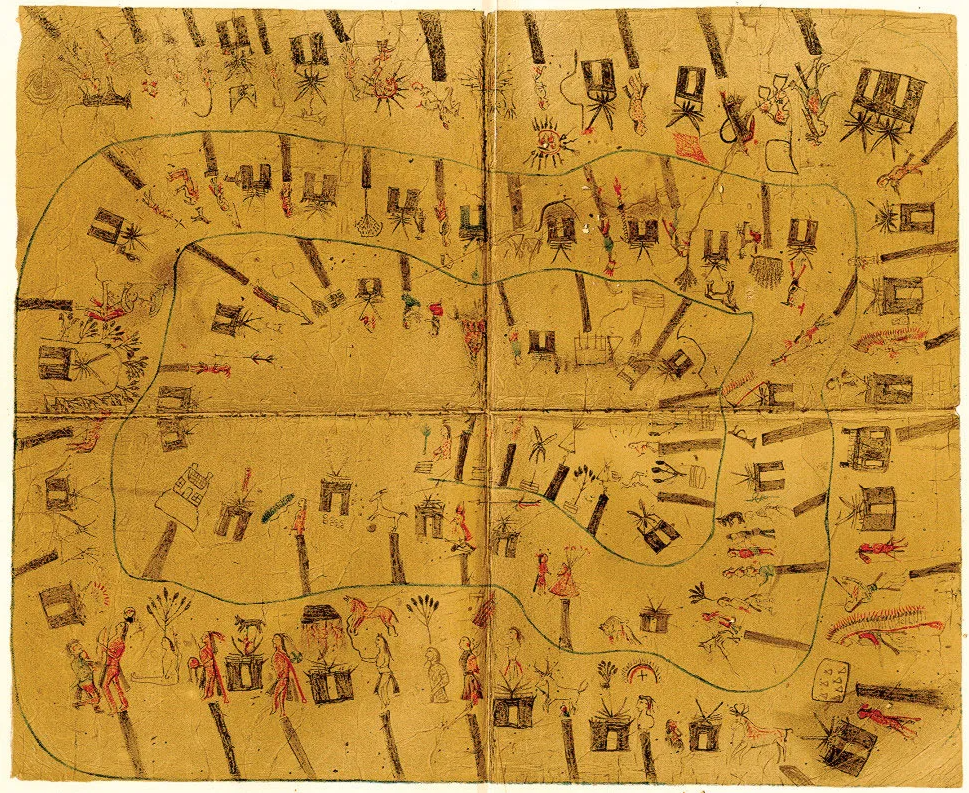
Kiowa calendar painting
Kiowa calendar painting of the years 1833–92 on buffalo hide, photograph by James Mooney, 1895.
“Seventeenth Annual Report of the Bureau of American Ethnology to the Smithsonian Institution, 1895-96,” by James Mooney.
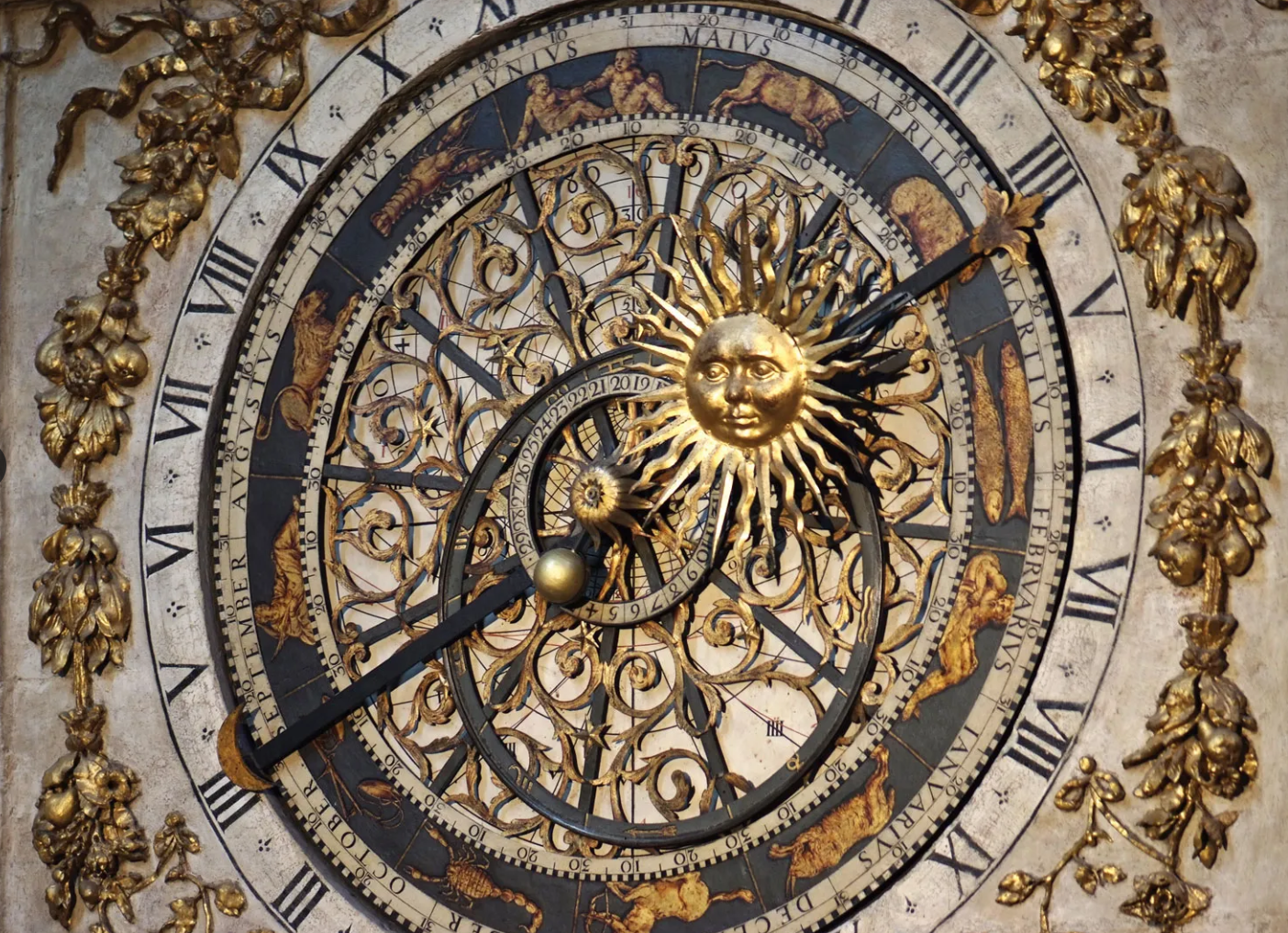
astronomical clock
Astronomical clock from the 14th century that can be used to determine religious feast days until the year 2019; in the cathedral of St. John the Baptist, Lyon, France.
© Jakez/Shutterstock.com
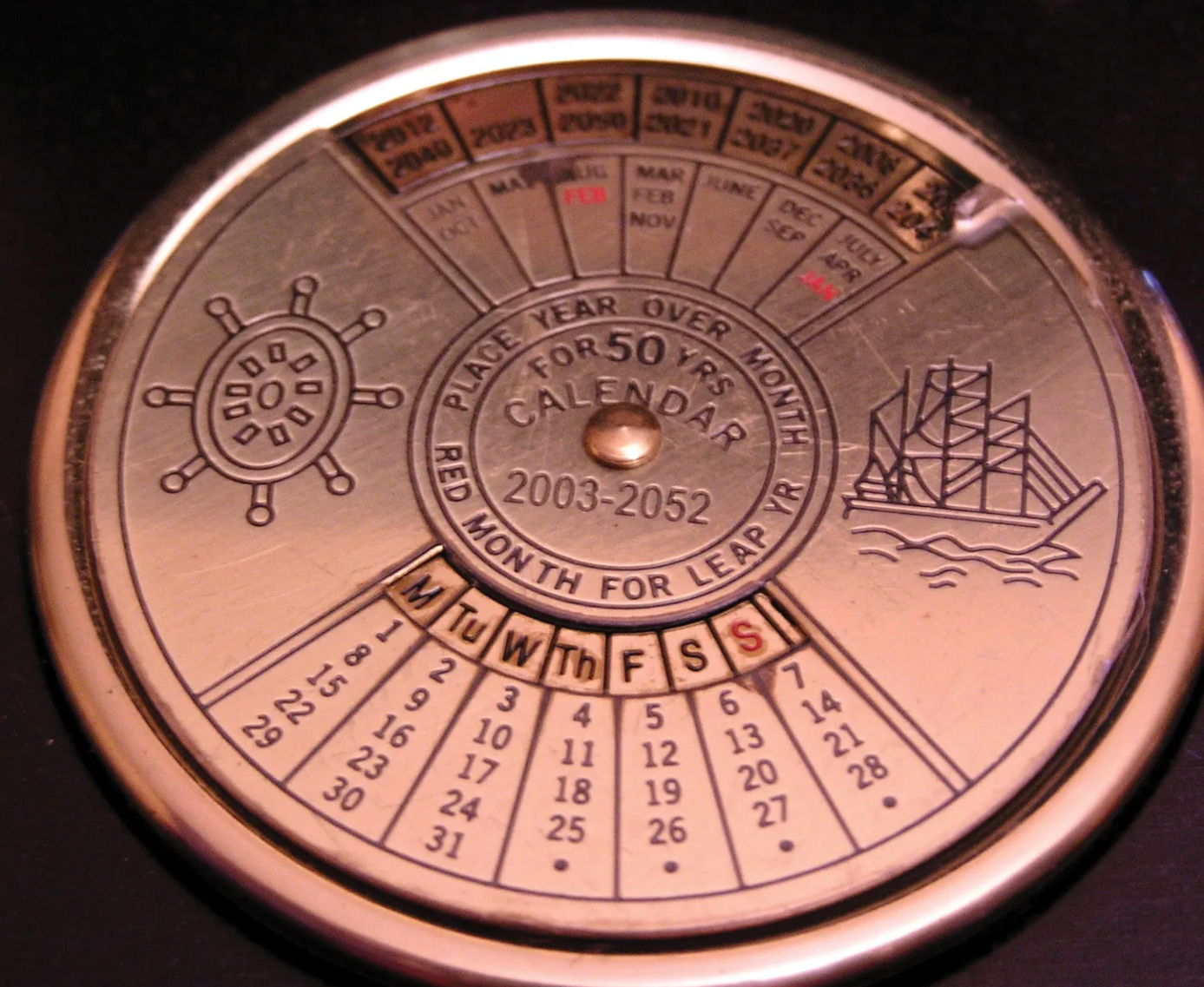
perpetual calendar
A perpetual calendar makes it possible to find the correct day of the week for any date over a wide range of years.
© Dan Tataru/Shutterstock.com