Philosophy School
Common Sense Realism
Scottish realist tradition centered on Thomas Reid's response to Humean skepticism and the theory of ideas, defending first principles, direct perception, testimony, memory, active powers, moral agency, and ordinary cognitive trust.
Period
Early Modern History1500 CE – 1799 CE
Era
Enlightenment and Proto-Industrial1700 CE – 1799 CE
Begin
1710 CE
End
1796 CE

Structural Factors
- Shared Core Claims
- Human cognition begins from trustworthy first principles of common sense, including belief in an external world, reliable faculties, memory, testimony, personal identity, agency, and moral responsibility.
- Shared Methods
- Anti-skeptical argument, analysis of ordinary cognition, appeal to first principles, faculty psychology, critique of representational ideas, attention to perception, testimony, memory, active powers, and moral judgment.
- Shared Lineage
- Common Sense Realism draws on Scottish Enlightenment moral philosophy, Newtonian method, Francis Hutcheson, Reid, James Beattie, Dugald Stewart, Adam Ferguson, later Scottish philosophy, and American college and realist reception.
- Shared Problems
- Humean skepticism, the theory of ideas, direct perception, memory, testimony, personal identity, agency, free will, moral judgment, first principles, common sense method, and the status of ordinary belief in philosophy.
- Shared Vocabulary
- common sense, first principles, principles of contingent truth, direct realism, natural signs, sensation, perception, conception, memory, testimony, active powers, moral liberty, faculties, judgment, agency, and the way of ideas.
- Shared Historical Context
- Common Sense Realism belongs to the Scottish Enlightenment, especially Aberdeen and Glasgow philosophy, and develops as a response to Descartes, Locke, Berkeley, and Hume before influencing nineteenth-century Scottish and American education.
Defining Axes
- Doctrine
- Its doctrine defends direct realism, trustworthy original faculties, first principles of common sense, moral agency, and ordinary belief against skeptical and representational theories of ideas.
- Method
- Its method combines observational psychology, Newtonian restraint, ordinary-language evidence, burden-of-proof argument, criticism of philosophical hypotheses, and appeal to original principles built into human cognition.
- Lineage
- The lineage runs from Scottish Enlightenment philosophy through Reid, Beattie, Ferguson, Stewart, Hamilton, American Scottish realism, Princeton and college curricula, and later common-sense and analytic realist receptions.
- Subject Focus
- The school focuses on epistemology, perception, philosophy of mind, testimony, memory, personal identity, action theory, moral philosophy, philosophy of religion, aesthetics, and philosophy of science.
- Geography / Culture
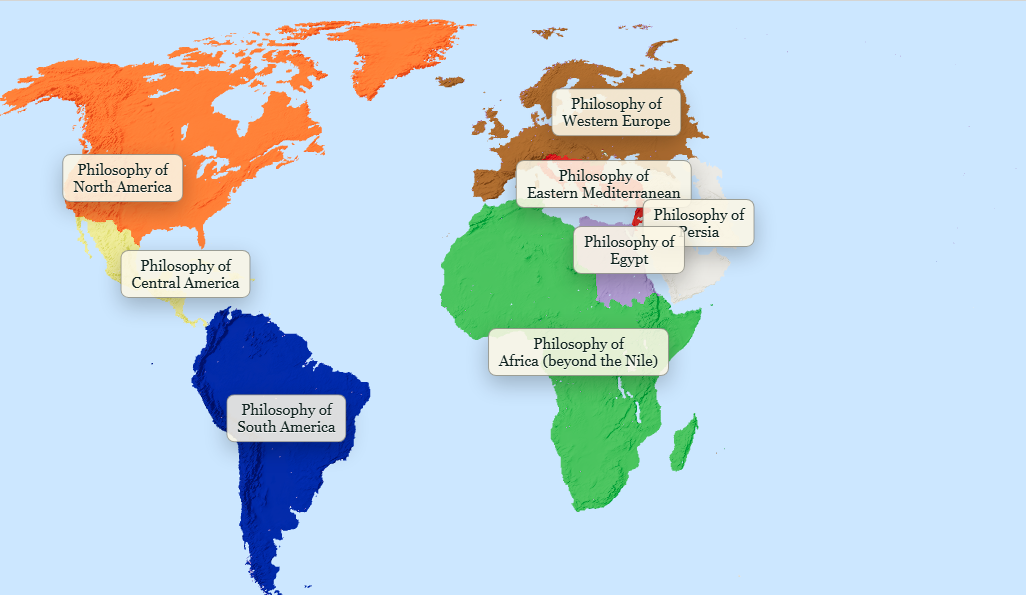
- Its center is eighteenth-century Scotland, especially Aberdeen and Glasgow, with wider British, French, and American academic reception through universities, churches, colleges, textbooks, and moral philosophy curricula.
- Historical Reaction
- It reacts against Humean skepticism, Berkeleyan idealism, Locke's theory of ideas, Cartesian representationalism, speculative metaphysics, and philosophical systems that make ordinary knowledge impossible.
Internal Structure
- Foundational Texts
- Foundational texts include Reid's An Inquiry into the Human Mind on the Principles of Common Sense, Essays on the Intellectual Powers of Man, Essays on the Active Powers of Man, his correspondence and manuscripts, Beattie's Essay on Truth, Dugald Stewart's works, and later Scottish and American common-sense reception.
- Core Vocabulary
- Core vocabulary includes common sense, first principles, way of ideas, direct perception, natural signs, faculties, sensation, perception, conception, judgment, memory, testimony, personal identity, active powers, moral liberty, duty, and evidence.
- Metaphysics
- Common Sense Realism assumes a real external world, enduring persons, active agents, causal powers, and ordinary objects known directly enough for life and science, while resisting speculative metaphysical reductions.
- Epistemology
- Its epistemology treats perception, memory, consciousness, testimony, and self-evident first principles as original sources of belief whose authority cannot be non-circularly proved but can be defended against skeptical theories.
- Ethics
- Its ethics emphasizes moral liberty, active powers, conscience, duty, rational principles of action, moral judgment, responsibility, and the credibility of ordinary moral experience against reduction to passion or necessity.
- Method
- Common-sense method begins from unavoidable and widely shared principles, tests philosophical theories against ordinary cognition and language, exposes skeptical consequences, and shifts the burden of proof onto revisionary systems.
- Internal Debates
- Internal debates concern whether common sense is a method or doctrine, how to identify first principles, whether Reid answers or bypasses Hume, relations to moral sense theory, the role of Newtonian science, and later Hamiltonian and American transformations.
- Successors
- Successors include nineteenth-century Scottish philosophy, American common-sense realism, Princeton theology, early American college philosophy, G. E. Moore's common-sense arguments, ordinary-language philosophy, direct realism, and contemporary Reid scholarship.
External Classification Context
- History of Philosophy
- Common Sense Realism is a central eighteenth-century response to empiricism and skepticism, linking Scottish Enlightenment philosophy to later realism, philosophy of mind, action theory, moral philosophy, and American intellectual history.
- Philosophy of Philosophy
- It treats philosophy as disciplined correction of false theory by returning to original human faculties, ordinary language, and unavoidable first principles rather than replacing common life with speculative systems.
- Intellectual History
- Its intellectual history depends on Scottish universities, the Aberdeen Philosophical Society, Glasgow moral philosophy, Presbyterian education, print culture, transatlantic curricula, and nineteenth-century philosophical textbooks.
- University Classification
- Usually classified under early modern philosophy, Scottish Enlightenment, epistemology, philosophy of mind, common-sense philosophy, realism, philosophy of perception, action theory, moral philosophy, and intellectual history.
- Classical Sources
- Classical evidence comes from Reid's published books, lectures, manuscripts, correspondence, Beattie and Stewart texts, university records, later editions, American textbooks, and critical editions of the Edinburgh Edition of Thomas Reid.
- Sociology of Knowledge
- The school spread through Scottish university lectures, philosophical societies, ministers, textbooks, transatlantic colleges, Presbyterian seminaries, nineteenth-century curricula, critical editions, and specialized Reid scholarship.
Linked Philosophers
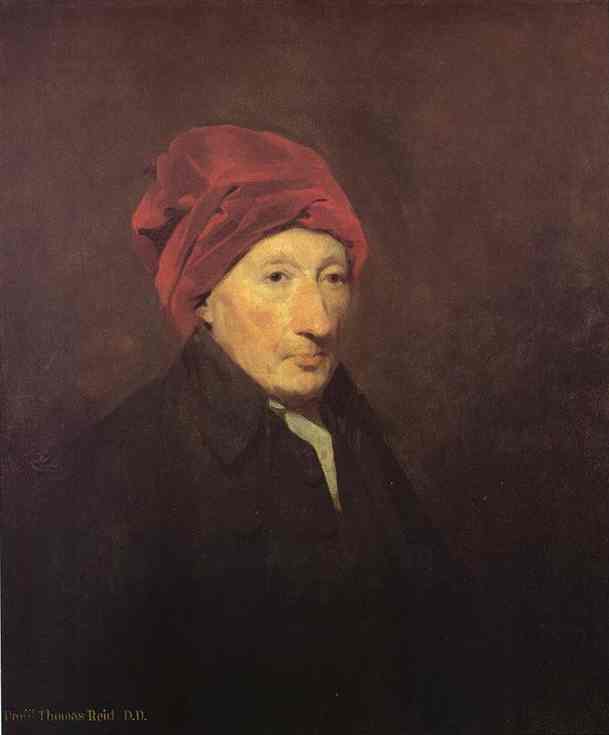
Thomas Reid
1710 CE – 1796 CE
Strachan, Kincardineshire
Scottish Enlightenment philosopher of common sense, direct realism, perception, first principles, active powers, moral liberty, natural signs, and criticism of the theory of ideas.