Eleatic School
Presocratic Greek school centered on Elea, radical monism, Being, the denial or problematization of change, plurality, motion, coming-to-be, and the contrast between truth or reason and mortal opinion.
Structural Factors
- Shared Core Claims
- Reason discloses what-is more reliably than ordinary perception, genuine being cannot simply arise from nonbeing or pass away into it, and common assumptions about plurality, change, motion, and becoming demand rigorous logical critique.
- Shared Methods
- Eleatic method uses rational argument, reductio, paradox, poetic revelation, strict claims about what-is, critique of sense perception, doxographic reconstruction, and logical pressure on ordinary assumptions about plurality and motion.
- Shared Lineage
- The school is associated with Xenophanes as precursor or linked figure, Parmenides as central founder, Zeno as defender through paradox, Melissus as systematic monist, and later Platonic, Aristotelian, doxographic, and modern Presocratic reception.
- Shared Problems
- Central problems include Being, nonbeing, change, plurality, motion, coming-to-be, perishing, void, truth and opinion, perception and reason, monism, infinite divisibility, Eleatic arguments, and their impact on Plato, Aristotle, atomism, and logic.
- Shared Vocabulary
- Being, what-is, nonbeing, truth, opinion, one, many, motion, change, plurality, void, necessity, indivisible, infinite, ungenerated, imperishable, paradox, reductio, goddess, way of truth, and way of seeming.
- Shared Historical Context
- Eleatic thought emerged in Presocratic Greek philosophy around Elea and related Ionian/Sicilian contexts, challenging Milesian natural philosophy and shaping later atomism, Plato, Aristotle, logic, metaphysics, and philosophy of motion.
Defining Axes
- Doctrine
- Eleatic doctrine presses monist claims about Being and the impossibility or incoherence of ordinary change, plurality, and motion when judged by strict rational argument rather than sense appearance.
- Method
- Its method joins Parmenides' poetic argument with Zeno's reductio paradoxes and Melissus' systematic reasoning, forcing opponents to account for plurality, motion, becoming, and nonbeing.
- Lineage
- The lineage runs from Xenophanes as disputed precursor through Parmenides, Zeno, Melissus, Plato's Eleatic dialogues, Aristotle's critique, atomist response, Neoplatonic and doxographic transmission, and modern Presocratic scholarship.
- Subject Focus
- The school focuses on metaphysics, logic, epistemology, philosophy of nature, language, truth, appearance, motion, plurality, time, infinity, and the relation between reason and perception.
- Geography / Culture
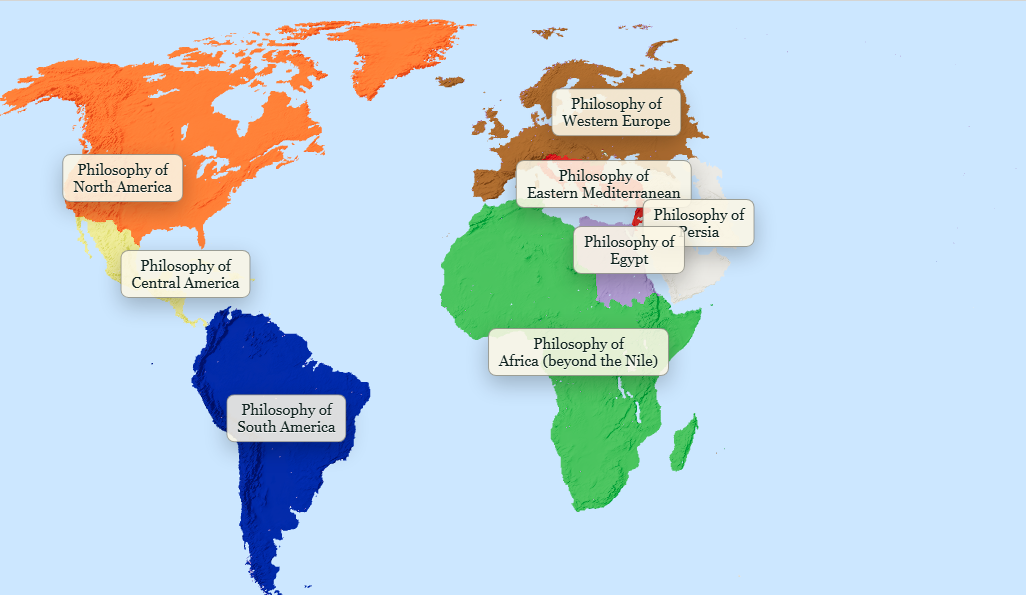
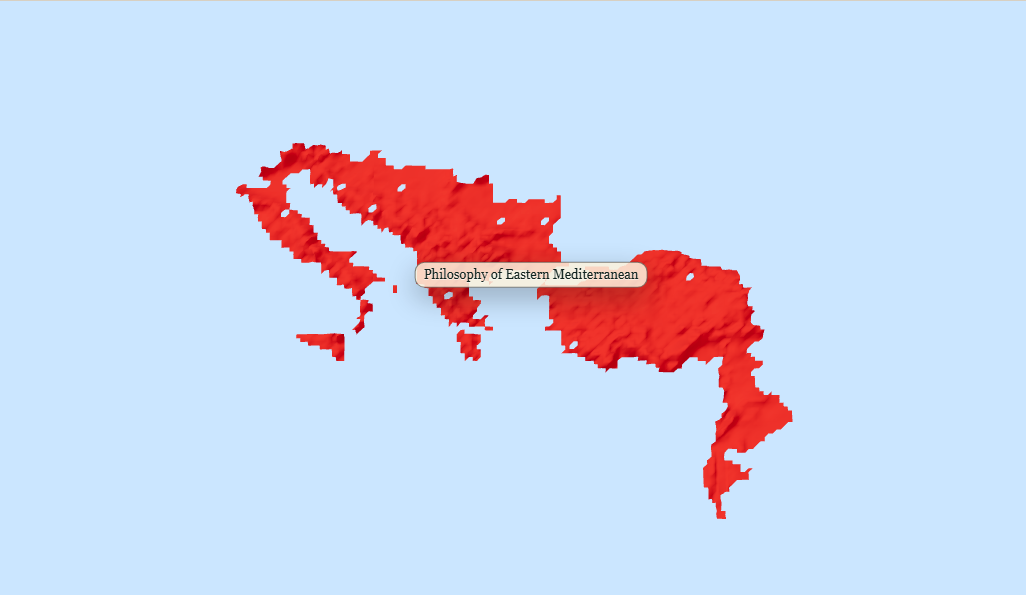
- Its name derives from Elea in southern Italy, with wider Greek Presocratic connections to Colophon, Samos, Sicily, Athens, and later Mediterranean philosophical reception.
- Historical Reaction
- Eleaticism reacts against ordinary trust in sense perception, cosmologies of changing stuffs, unexamined plurality, and explanations that invoke coming-to-be from nonbeing without logical accountability.
Internal Structure
- Foundational Texts
- Foundational evidence includes Xenophanes fragments and testimonia, Parmenides' poem, Zeno's paradoxes and anti-plurality arguments, Melissus fragments, Plato's Parmenides and Sophist, Aristotle, Simplicius, Sextus, Diogenes Laertius, and modern Presocratic scholarship.
- Core Vocabulary
- Core vocabulary includes Being, what-is, nonbeing, one, many, motion, change, plurality, void, truth, opinion, way, seeming, goddess, necessity, infinite, ungenerated, imperishable, indivisible, paradox, reductio, and Eleatic argument.
- Metaphysics
- Eleatic metaphysics makes Being the central problem: if what-is is, then generation, destruction, motion, division, and plurality become philosophically difficult or impossible under strict rational constraints.
- Epistemology
- Its epistemology contrasts reason and truth with mortal opinion and sensory appearance, arguing that ordinary perception of many changing things cannot be accepted without rational examination.
- Ethics
- Eleaticism has little direct ethical doctrine; its philosophical force lies in discipline of thought, intellectual seriousness, and the demand that accounts of reality, knowledge, and nature withstand logical scrutiny.
- Method
- Eleatic method combines poetic instruction, metaphysical argument, reductio, paradox, and critique of opponent assumptions, especially assumptions that plurality and motion are self-evident.
- Internal Debates
- Internal debates concern Xenophanes' role, whether Parmenides asserts strict monism, how Zeno's paradoxes function, whether Melissus departs from Parmenides, and how Eleatic arguments relate to atomism, Plato, and Aristotle.
- Successors
- Successors and receptions include atomist theories of atoms and void, Plato's metaphysics, Aristotle's physics and logic, Hellenistic doxography, Neoplatonic readings, modern logic of infinity, and philosophy of space, time, and motion.
External Classification Context
- History of Philosophy
- The Eleatic School is pivotal in Presocratic philosophy because it forces later thinkers to address nonbeing, change, plurality, motion, and the standards of rational argument in metaphysics.
- Philosophy of Philosophy
- It treats philosophy as rigorous rational challenge to appearances, asking whether common experience can survive logical scrutiny and whether thought can disclose what perception obscures.
- Intellectual History
- Its intellectual history is reconstructed from fragments, testimonia, Plato, Aristotle, Simplicius, Sextus, Diogenes Laertius, later doxography, and modern debates about Presocratic sources and interpretation.
- University Classification
- Usually classified under Presocratic philosophy, ancient Greek philosophy, metaphysics, epistemology, logic, philosophy of nature, monism, philosophy of motion, and history of philosophy.
- Classical Sources
- Classical evidence comes from the fragments and testimonia of Xenophanes, Parmenides, Zeno, and Melissus, along with Plato, Aristotle, Simplicius, Sextus Empiricus, Diogenes Laertius, and later doxographers.
- Sociology of Knowledge
- Eleatic knowledge survived through school attribution, oral teaching, fragment quotation, Platonic and Aristotelian debate, commentary traditions, doxographic compilation, manuscript transmission, and modern philological reconstruction.
Linked Philosophers
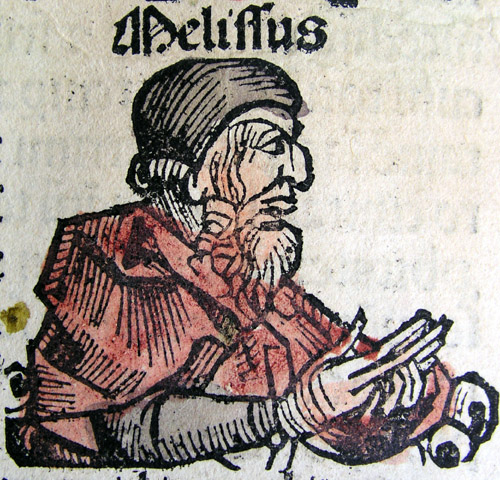
Melissus of Samos
500 BCE – 430 BCE
Samos
Samian Presocratic and Eleatic philosopher whose lost treatise argues for one unlimited, changeless being and denies void, motion, generation, and destruction.
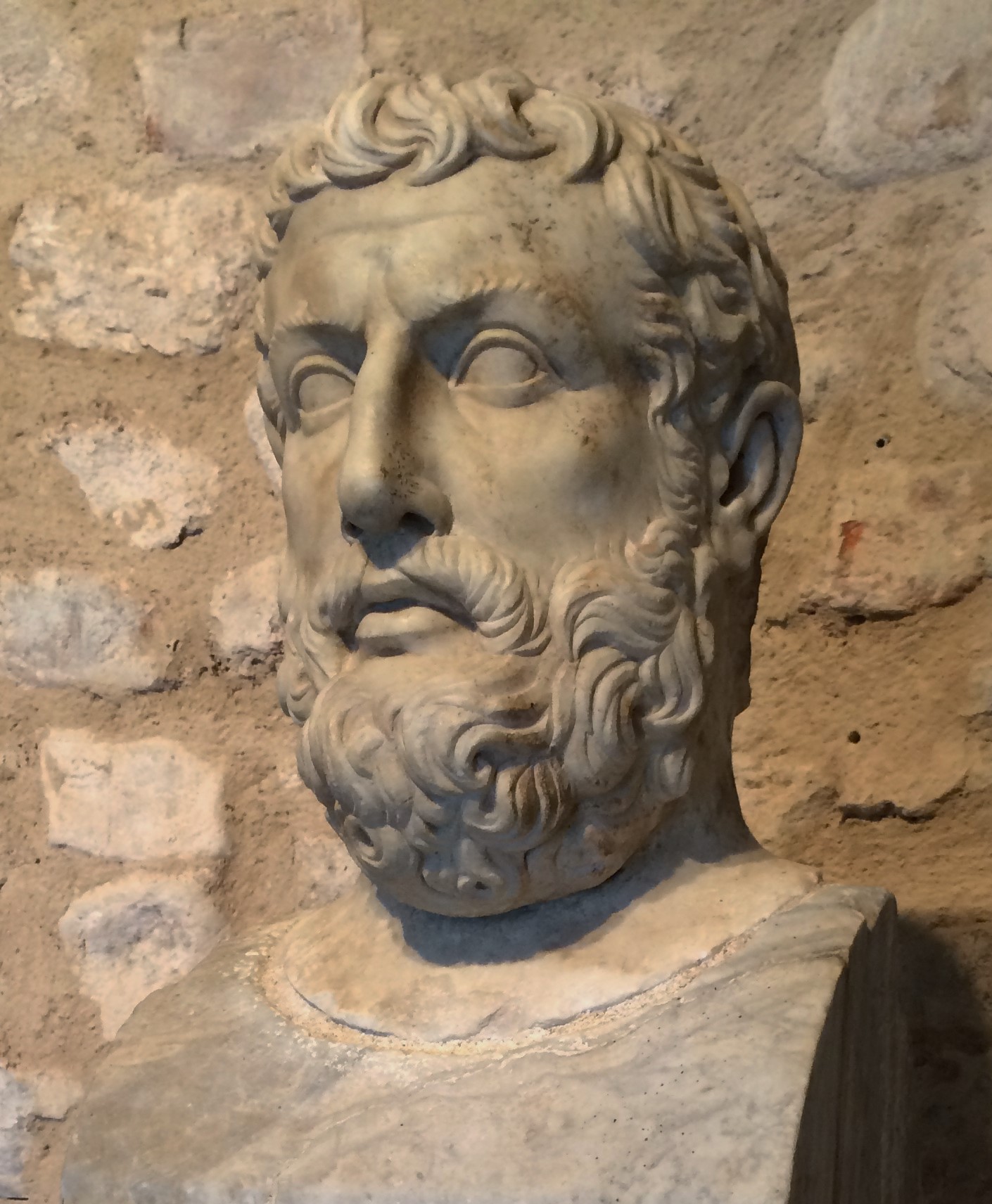
Parmenides of Elea
515 BCE – 450 BCE
Elea, Magna Graecia
Eleatic philosopher of Being, the Way of Truth, the Way of Opinion, denial of not-being, monism, necessity, cosmology, and fragmentary poetic transmission.
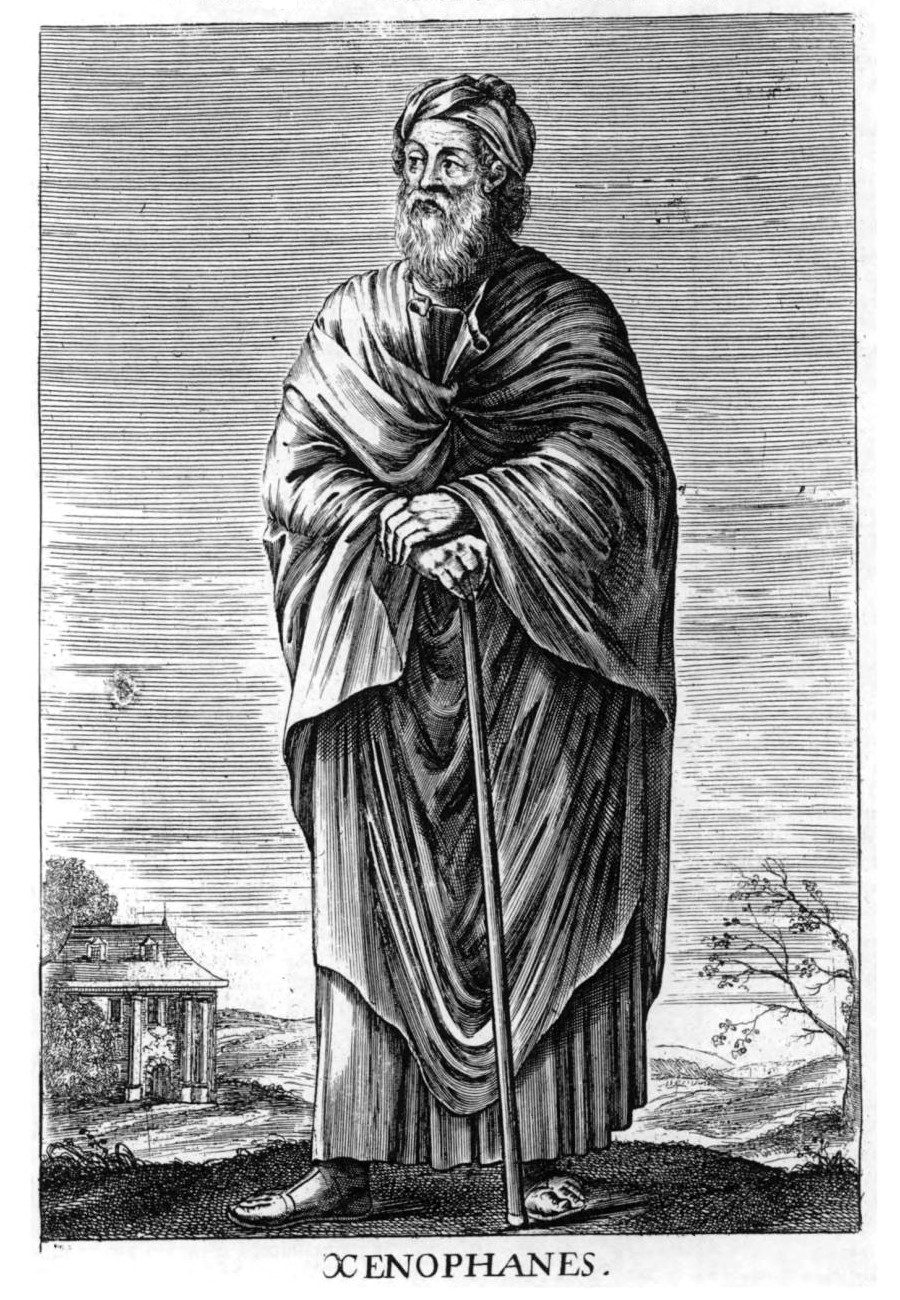
Xenophanes of Colophon
570 BCE – 478 BCE
Colophon, Ionia; near modern Izmir Province, Turkey
Ionian Greek poet-philosopher whose fragments criticize anthropomorphic gods, defend rational theology, and pair naturalistic explanation with epistemic humility.
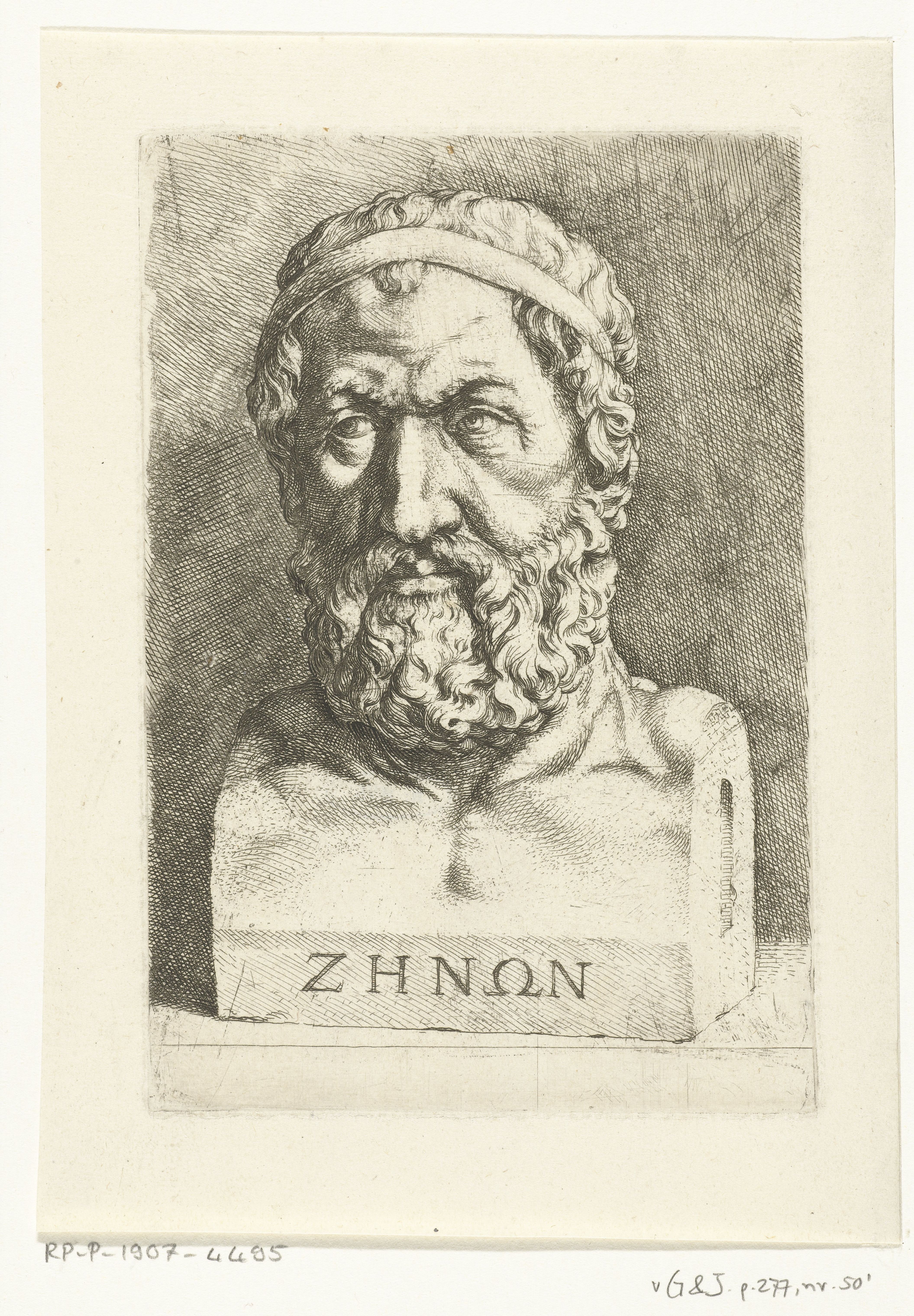
Zeno of Elea
490 BCE – 430 BCE
Elea (Velia), Lucania, Magna Graecia; now Campania, Italy
Cistercian monk, abbot of Eleatic, and medieval Christian philosopher-theologian whose theology of love, humility, grace, free choice, mystical ascent, monastic ethics, scriptural exegesis, and ecclesial counsel shaped scholastic, monastic, and political theology.