Philosophy School
Evidential Scholarship
Qing Chinese evidential research movement centered on textual verification, philology, phonology, paleography, epigraphy, classical learning, precise commentary, anti-speculative critique, and reconstruction of ancient meanings.
Period
Early Modern History1500 CE – 1799 CE
Era
Scientific Revolution and State Formation1600 CE – 1699 CE
Begin
1613 CE
End
1777 CE

Structural Factors
- Shared Core Claims
- Reliable learning requires evidence from texts, inscriptions, sounds, institutions, geography, and historical usage; unsupported Song-Ming metaphysical speculation should be corrected by precise inquiry into classical language and ancient practice.
- Shared Methods
- Philology, collation, evidential proof, textual criticism, phonological reconstruction, paleography, epigraphy, historical geography, institutional history, lexicography, and close commentary on classical sources.
- Shared Lineage
- The school is rooted in late Ming and early Qing responses to dynastic crisis, Gu Yanwu's practical and philological scholarship, Han Learning, Qianjia scholars, Dai Zhen's philological philosophy, and later modern reassessments of Qing scholarship.
- Shared Problems
- Classical meaning, corrupt texts, ancient pronunciation, bronze and stone inscriptions, historical geography, institutions, ritual, Han versus Song learning, relation of evidence to moral philosophy, and the political and cultural failures of late Ming orthodoxy.
- Shared Vocabulary
- kaozheng, evidential learning, Han Learning, Qianjia scholarship, philology, collation, textual criticism, phonology, paleography, epigraphy, exegesis, classics, evidential proof, institutions, geography, names, and meanings.
- Shared Historical Context
- Evidential scholarship developed in early Qing China after the Ming-Qing transition, literary inquisition, imperial compilation, and dissatisfaction with Song-Ming Neo-Confucian metaphysics, while drawing authority from Han commentaries and classical source recovery.
Defining Axes
- Doctrine
- The school treats truth in classical learning as something established by evidence, textual discipline, historical comparison, and philological precision rather than by speculative metaphysical system or inherited orthodoxy.
- Method
- Its method is evidential and cumulative: collect variants, collate texts, compare ancient usages, reconstruct sounds, read inscriptions, test commentaries, and build arguments from recoverable classical and historical evidence.
- Lineage
- The lineage runs from late Ming practical statecraft and Gu Yanwu through Qing Han Learning and Qianjia evidential scholarship to Dai Zhen, Duan Yucai, later philologists, and modern Chinese intellectual history.
- Subject Focus
- The school focuses on classical exegesis, epistemology, language, phonology, paleography, history, geography, ritual institutions, statecraft, moral philosophy, and the relation between scholarly method and Confucian learning.
- Geography / Culture
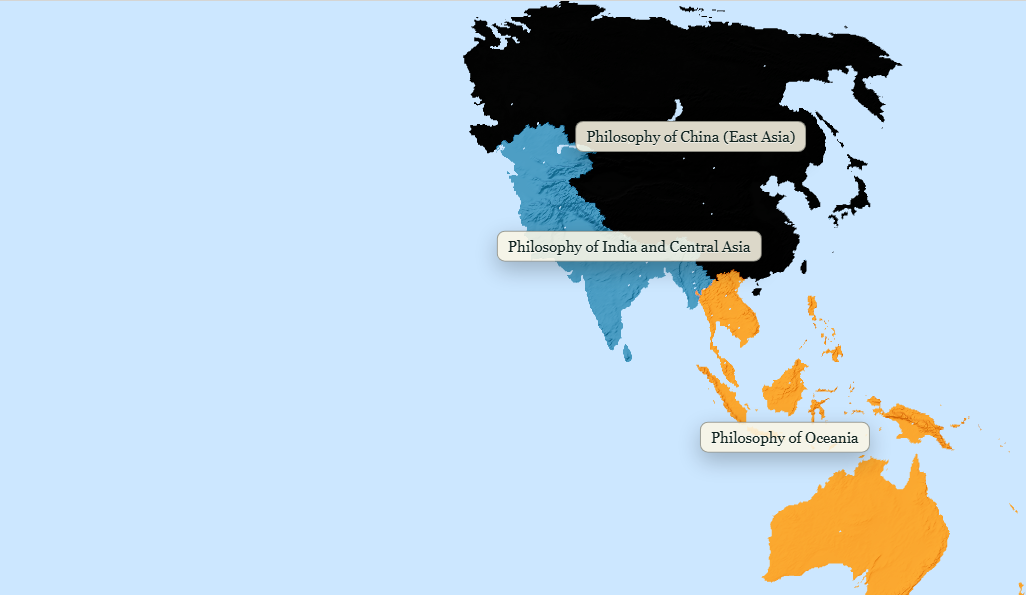
- Its cultural center is Qing China, especially Jiangnan, Beijing, Anhui, and scholarly networks linked to libraries, academies, private study, imperial projects, and classical-text circulation.
- Historical Reaction
- The movement reacts against empty book learning, Buddhist-Daoist influence on Song-Ming metaphysics, civil-service orthodoxy, political failure after the Ming collapse, and commentary traditions not grounded in evidence.
Internal Structure
- Foundational Texts
- Foundational materials include Gu Yanwu's Rizhilu and works on phonology, geography, institutions, and statecraft; Dai Zhen's philological and philosophical writings, including work on Mencius, goodness, ancient pronunciation, mathematics, and geography; Qing evidential commentaries, Han Learning scholarship, bronze and stone inscription studies, and modern reconstructions of kaozheng.
- Core Vocabulary
- Kaozheng, Hanxue, Qianjia, classics, evidence, proof, collation, variant, commentary, phonology, rhyme, paleography, epigraphy, ancient pronunciation, institutions, geography, lexicography, names, meanings, li, qi, desire, and practical learning.
- Metaphysics
- Evidential scholarship is often anti-speculative rather than anti-metaphysical: it criticizes reified Neo-Confucian principle and seeks meanings, patterns, and moral claims through concrete linguistic, historical, and textual evidence.
- Epistemology
- Its epistemology grounds warranted judgment in recoverable evidence, careful comparison, historical usage, philological reconstruction, public correction, and the cumulative testing of claims against texts and material records.
- Ethics
- Ethical inquiry appears especially in Dai Zhen's critique of Song-Ming moralism, where moral understanding must attend to human feelings, desires, common affirmability, and the concrete meanings of classical terms.
- Method
- The school method combines close reading, textual collation, phonological reconstruction, paleography, epigraphy, historical geography, institutional research, lexicography, source criticism, and skepticism toward unsupported commentary.
- Internal Debates
- Internal debates concern Han Learning versus Song Learning, whether evidential method serves moral philosophy or textual exactitude, the scope of philology, Dai Zhen's critique of li, relation to statecraft, and modern comparisons with empiricism or science.
- Successors
- Successors and receptions include late Qing philology, modern Chinese intellectual history, reform-era appeals to empirical learning, Hu Shi's reassessment of Dai Zhen, modern textual scholarship, and comparative work on Chinese epistemology.
External Classification Context
- History of Philosophy
- Evidential Scholarship is a major Qing transformation of Confucian and Chinese philosophy, shifting attention from speculative metaphysics toward evidence, language, history, and method.
- Philosophy of Philosophy
- It treats philosophy and classical learning as disciplined inquiry: interpretation must be grounded in textual, historical, linguistic, and material evidence rather than personal intuition or inherited metaphysical formulas.
- Intellectual History
- Its intellectual history is tied to the Ming-Qing transition, loyalist scholarship, Qing imperial patronage and control, Han Learning networks, libraries, academies, book collecting, philology, and modern narratives of Chinese empiricism.
- University Classification
- Usually classified under Chinese philosophy, Qing Confucianism, intellectual history, philology, textual criticism, epistemology, history of scholarship, Sinology, and early modern Chinese studies.
- Classical Sources
- Evidence comes from Confucian classics, Han commentaries, Gu Yanwu and Dai Zhen texts, Qing evidential commentaries, Siku-era scholarship, phonological studies, inscriptions, gazetteers, geographical studies, and later critical editions.
- Sociology of Knowledge
- The school reproduced itself through private scholarship, academies, libraries, correspondence, commentary lineages, imperial compilation, book collecting, printing, local scholarly networks, and later university Sinology and Chinese philosophy programs.
Linked Philosophers
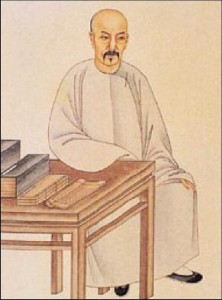
Dai Zhen
1724 CE – 1777 CE
Xiuning, Anhui
Qing Confucian evidential scholar from Xiuning whose work joined philology, moral psychology, language, desire, principle, and precise inquiry against empty abstraction.
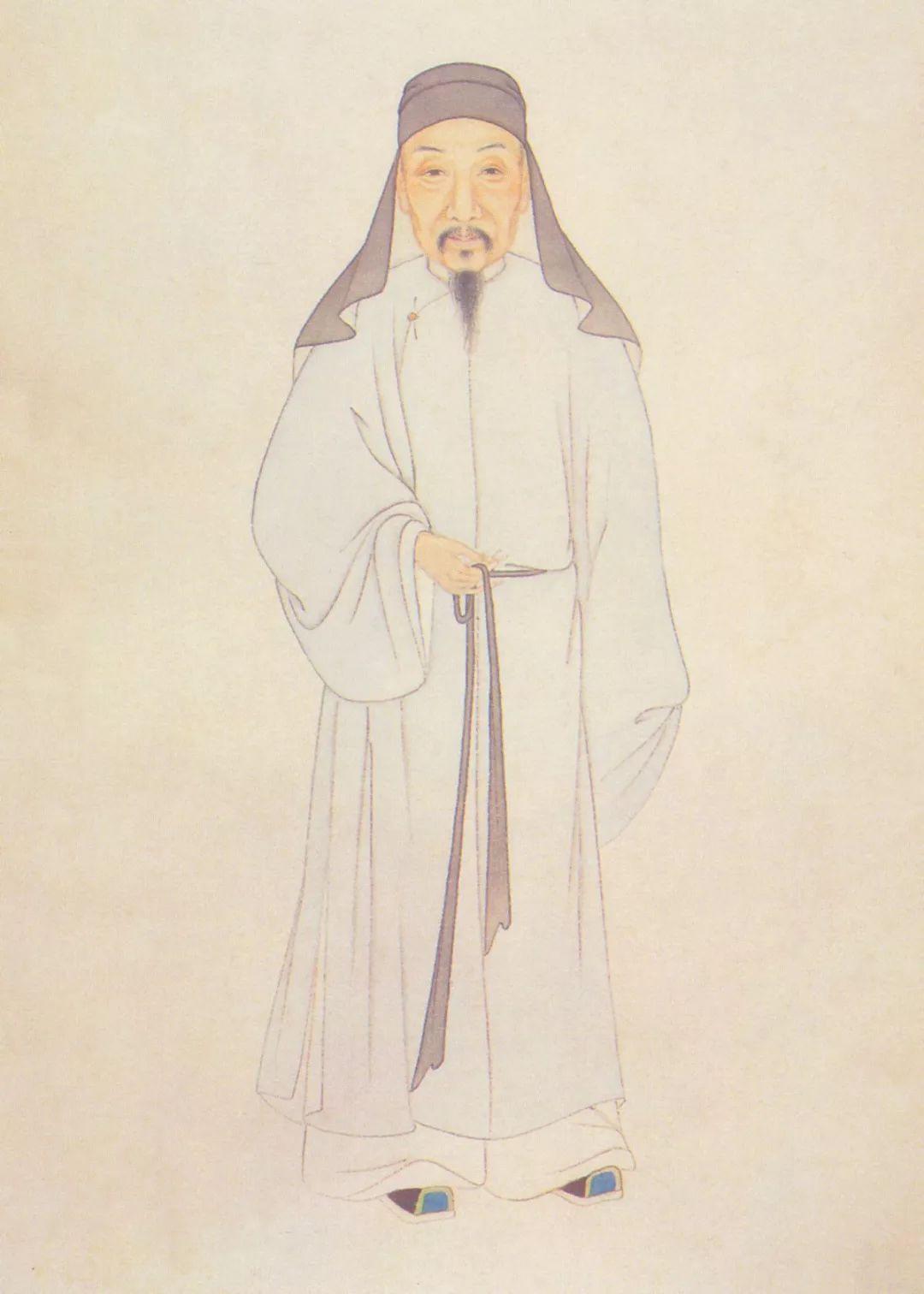
Gu Yanwu
1613 CE – 1682 CE
Kunshan, Jiangsu
Late Ming and early Qing Confucian scholar from Kunshan whose practical learning joined philology, historical geography, epigraphy, ethics, political responsibility, and evidence against empty speculation.