Prose is the extension of meaning through continuous language.
It unfolds thought across time, allowing ideas, narratives, and arguments to develop rather than condense.
Where poetry concentrates, prose connects.
List of Prosaic Text

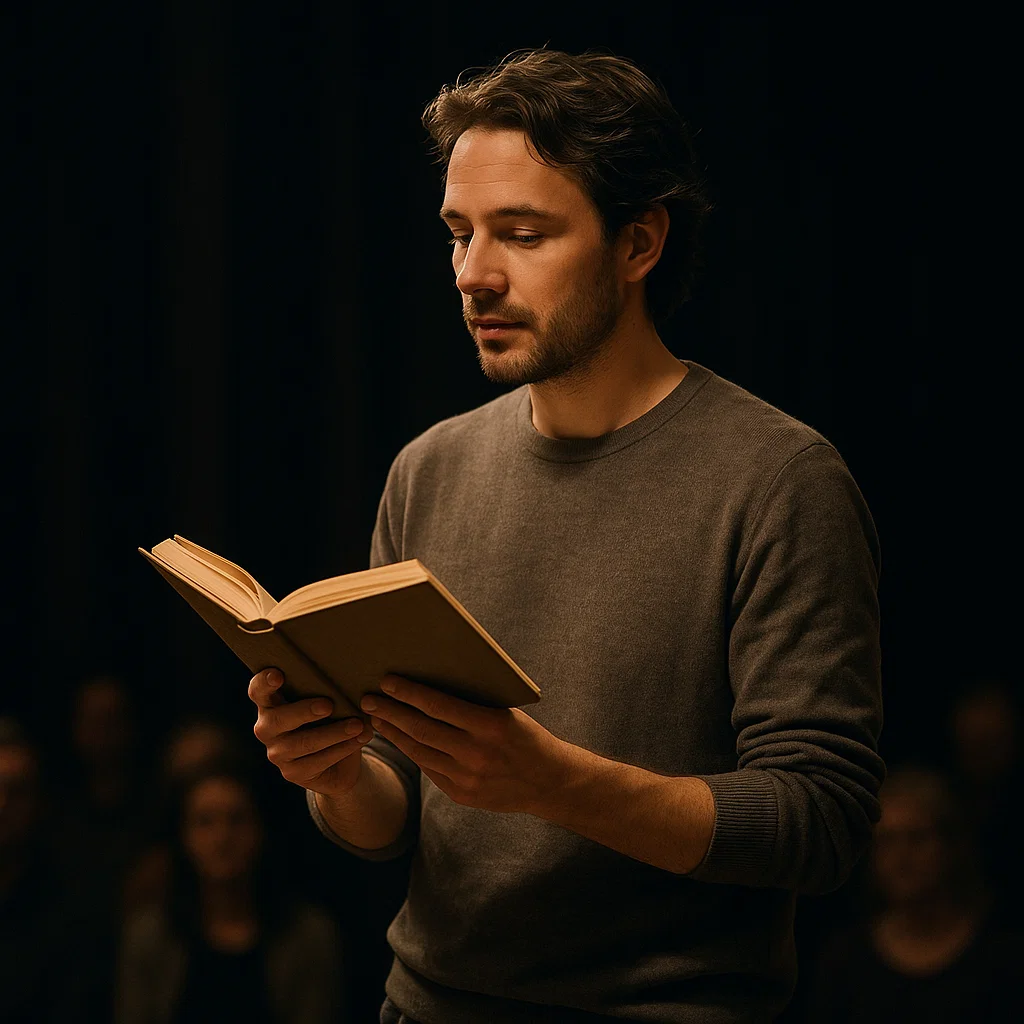


Essential Characteristics
- Continuity – Language flows without imposed rhythmic segmentation.
- Syntax-Driven Meaning – Sentence structure carries logic, sequence, and causality.
- Expansion – Ideas are permitted to grow, branch, and clarify.
- Narrative Capacity – Prose naturally supports story, explanation, and analysis.
- Transparency of Form – Structure serves comprehension rather than drawing attention to itself.
Cognitive Function
Prose is the workhorse of thought.
It is how humans:
- Explain what poetry reveals
- Track cause and effect
- Build shared understanding over time
- Accumulate knowledge without loss of clarity
Cognitively, prose supports:
- Sequential reasoning
- Memory through narrative
- Social coordination through explanation
Relationship to Language
In prose:
- Words are vehicles, not objects
- Clarity is a primary value
- Ambiguity is usually constrained, not cultivated
Language aims to disappear, leaving meaning visible.
Structural Modes
Prose organizes itself into recurring functional forms:
- Narrative Prose – Fiction, memoir, history; meaning through story
- Expository Prose – Explanation, instruction, documentation
- Analytical Prose – Argument, theory, critique
- Descriptive Prose – Rendering experience with sensory detail
- Reflective Prose – Interior reasoning, self-examination
These modes often coexist within a single work.




Epistemological Status
Prose is a method of stabilization.
It turns:
- Experience into record
- Insight into argument
- Memory into archive
Prose does not discover truth so much as make it transmissible.
Boundary Condition
Prose ends where language becomes purely ornamental or purely symbolic.
It begins where meaning requires time, sequence, and coherence.