History is the record of change across the continuum of time. It is how humanity renders motion into meaning—tracing the sequence by which matter forms, life evolves, and consciousness remembers. Every artifact, idea, and institution is a timestamp within that unfolding.
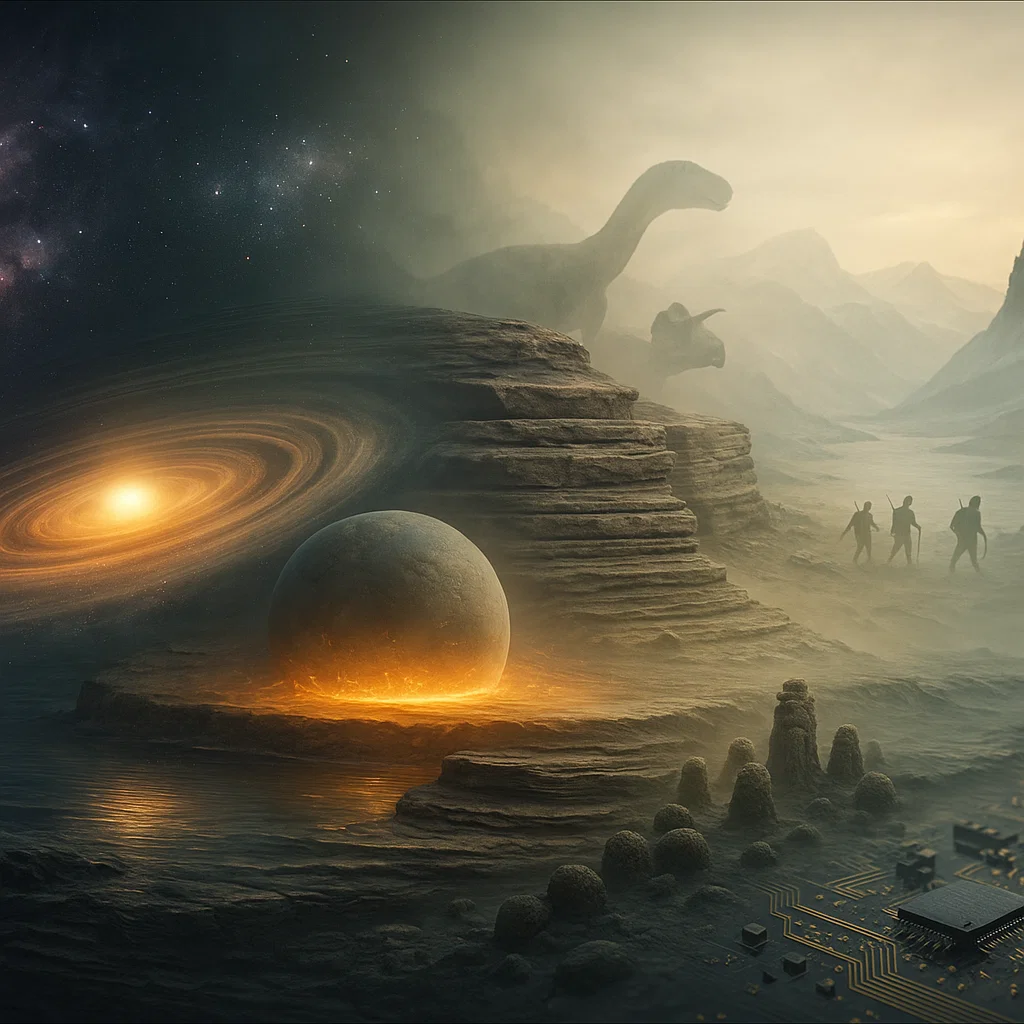
To study history is to study order in time: the transformations that connect origins to outcomes. It is not confined to human events alone but extends backward into the physical and biological conditions that made them possible. What begins as cosmic motion ends as human memory.
History therefore operates as both chronicle and framework.
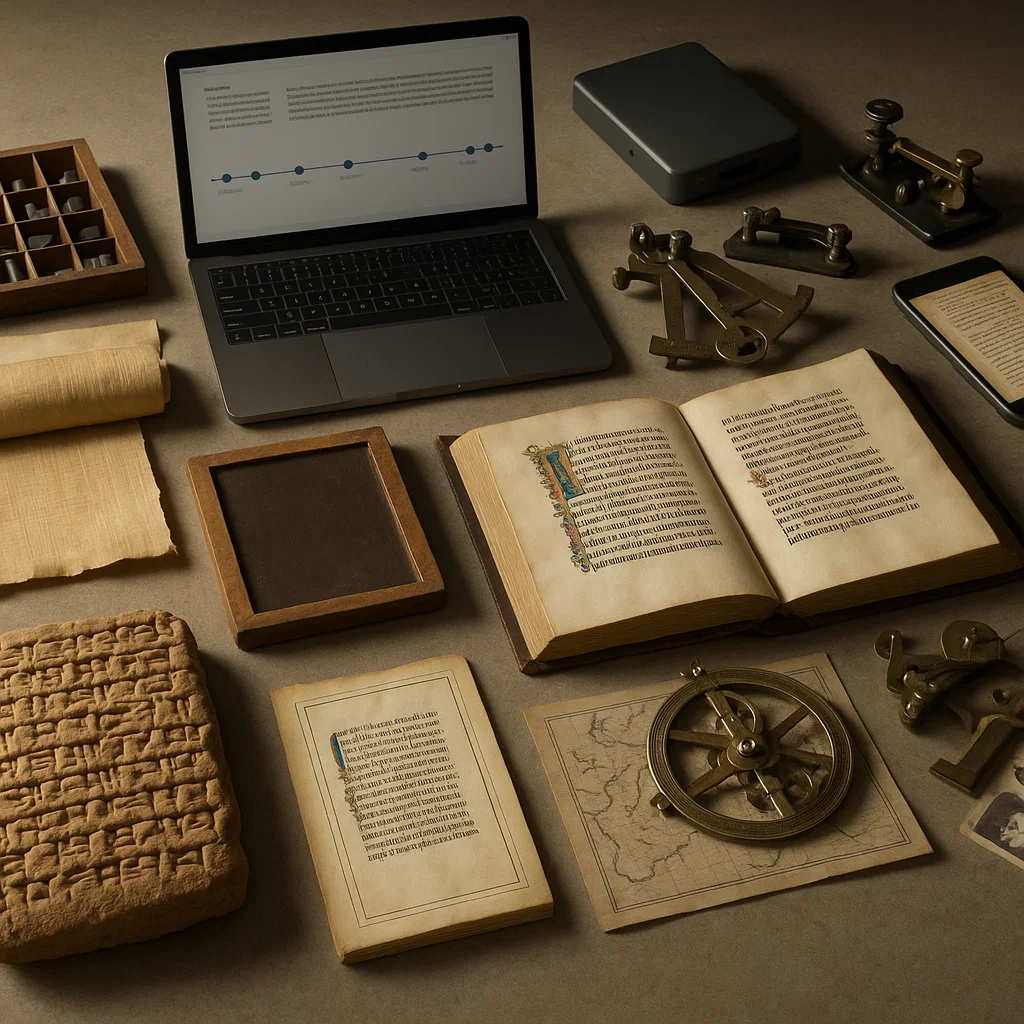
- As chronicle, it preserves events—wars, migrations, inventions, discoveries.
- As framework, it situates those events within the deeper architecture of time itself.
CHRONOS – Scales of Time
| Scale | Approximate Range | Governing Principle | Example Focus |
|---|---|---|---|
| Cosmic Time | 13.8 billion years – present | Expansion and structure of the universe | Big Bang, galaxies, star systems |
| Solar Time | 4.6 billion years – present | Solar and orbital cycles | Formation of Sun, Earth’s orbit, precession |
| Geological Time | 4.5 billion – present | Planetary formation and stratigraphy | Eras, epochs, continental drift |
| Biological Time | 3.8 billion – present | Evolution and diversification of life | Origin of life, extinction events |
| Human Time | 3 million years ago – present | Conscious agency and memory | Tools, language, civilization, technology |
For refresher on the units of Time – Click here
Interpretation
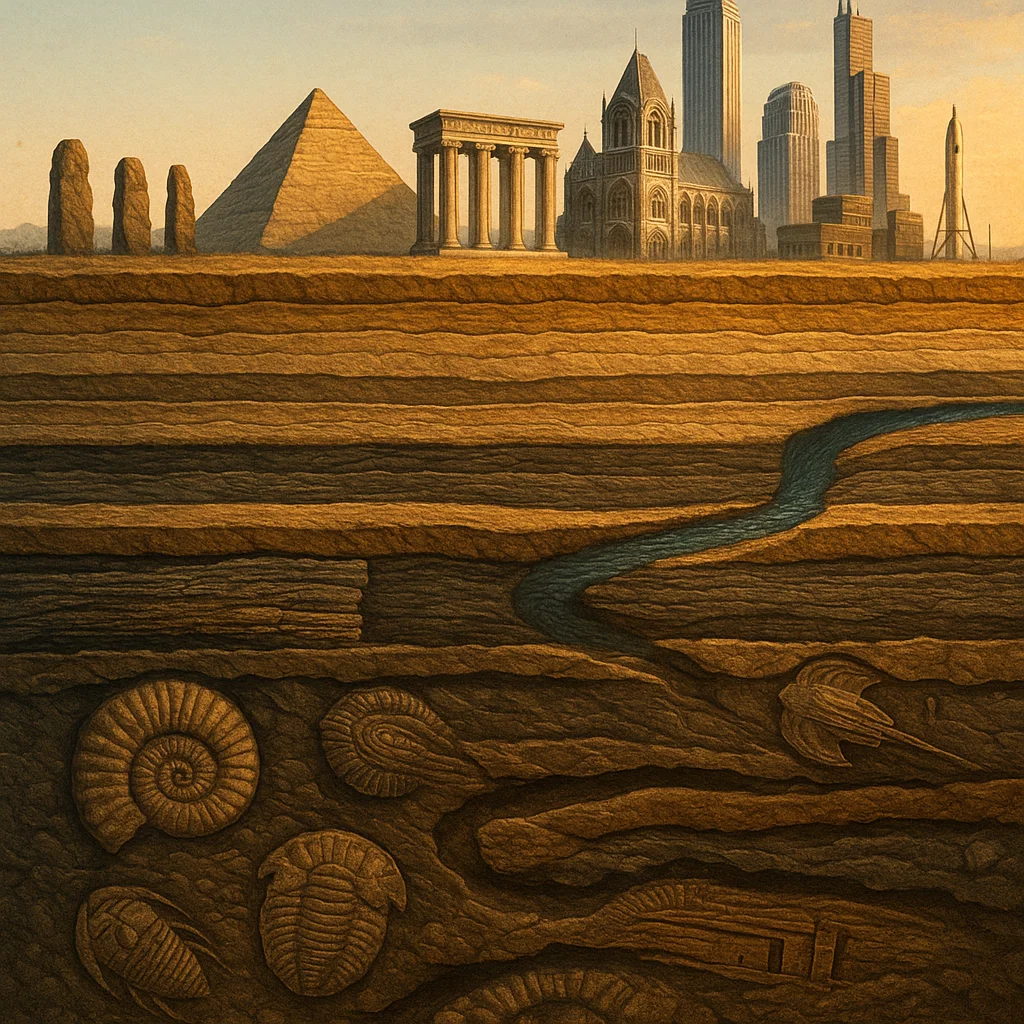
Human Time occupies only the thinnest layer of Chronos but carries the highest density of change. Within it, the entire record of civilization unfolds—art, religion, science, war, and digital code. The goal of studying history is not only to describe what happened but to locate each moment within the total structure of time.
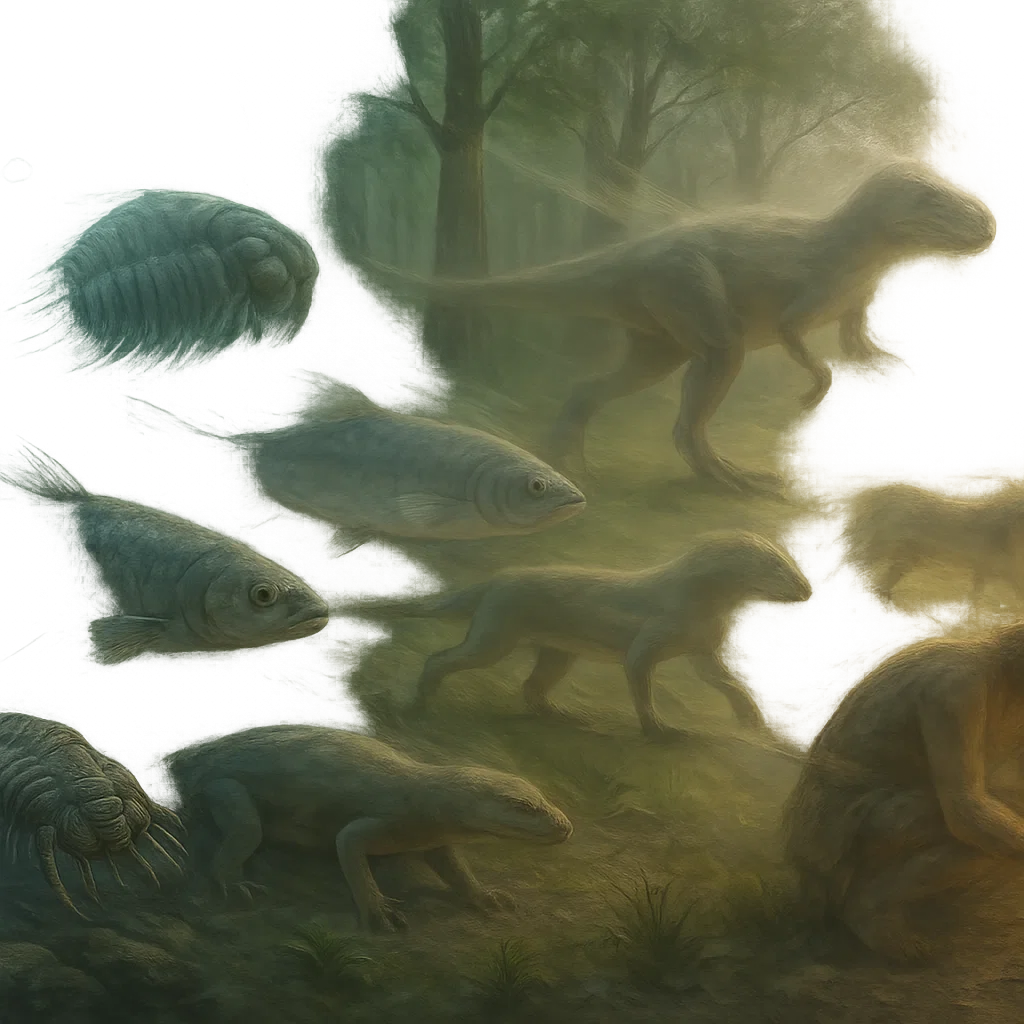
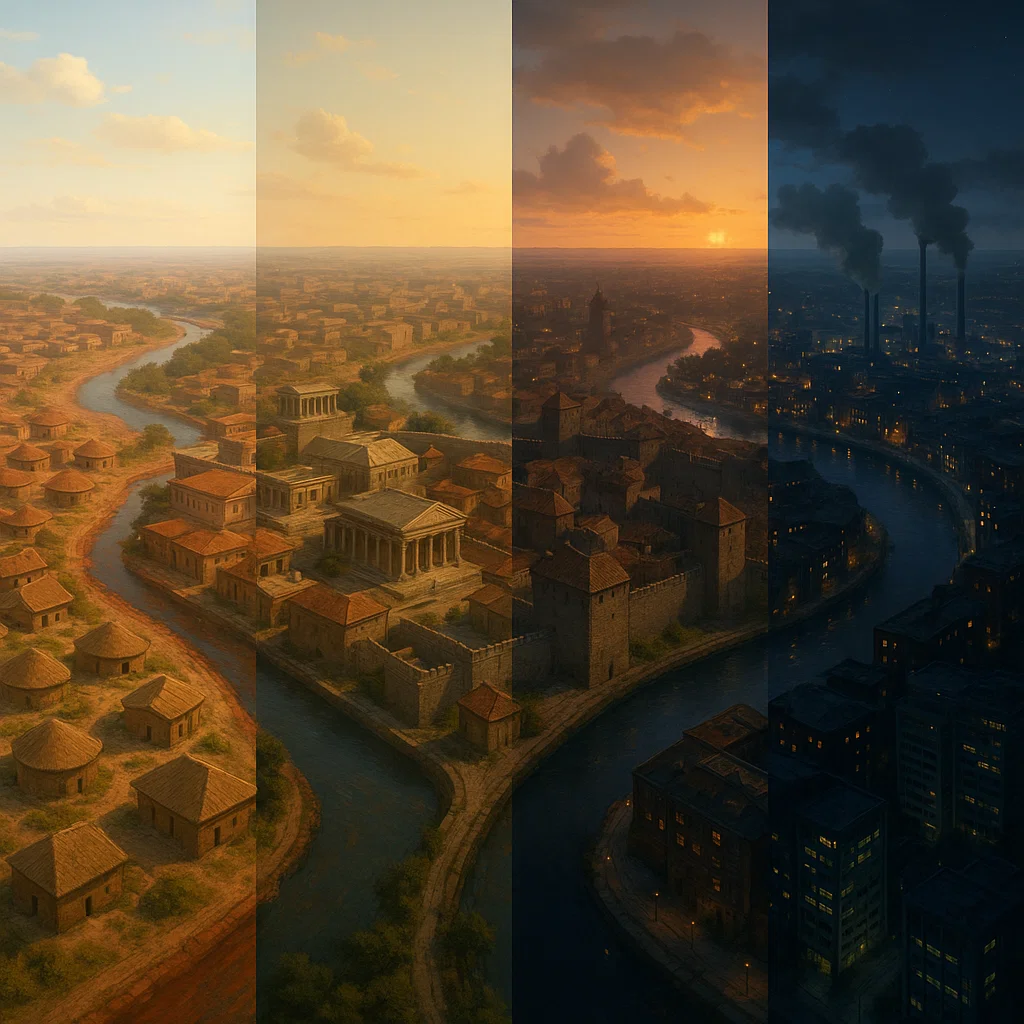
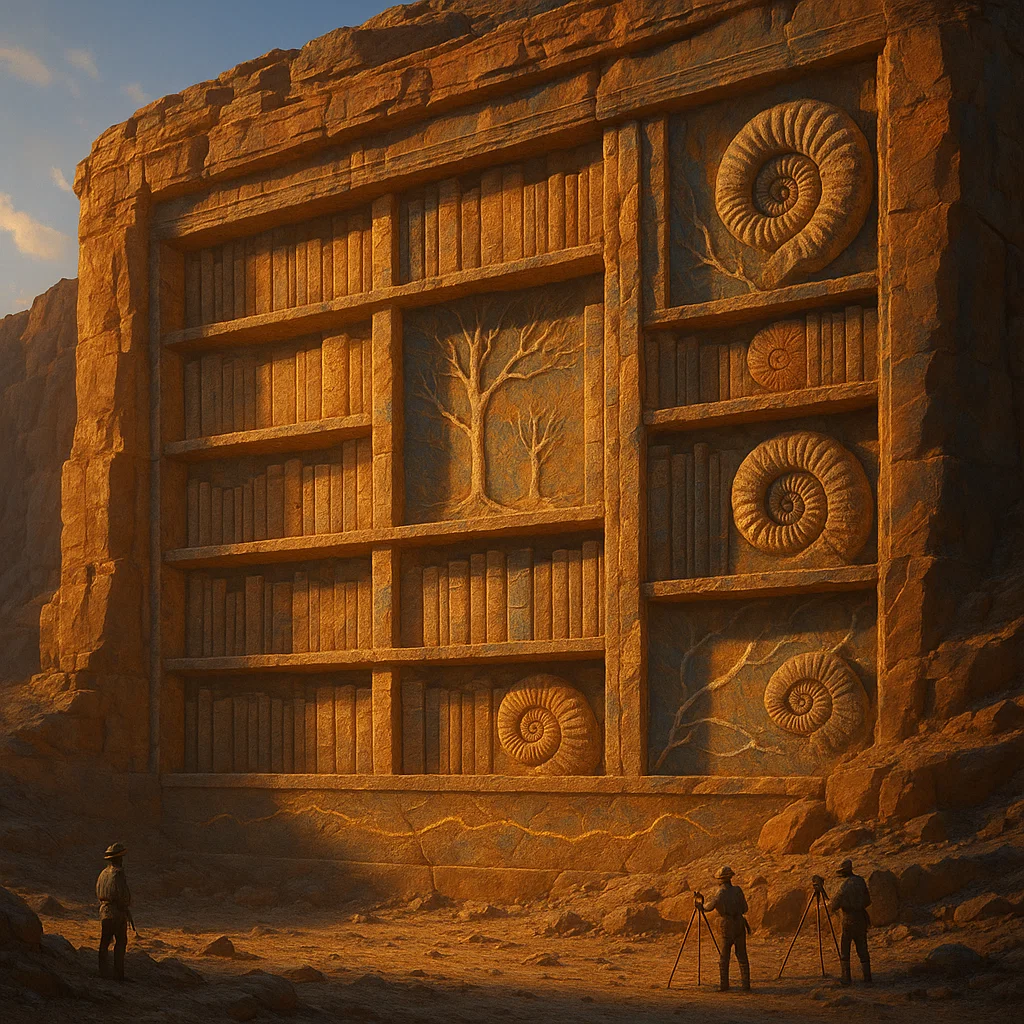
History therefore forms the surface of Chronos—the visible pattern of a process that began with stars and continues through us.