Human history is the measurable portion of Human Time—the period in which our species left evidence of thought, structure, and memory. It begins before writing, when behavior and tools reveal intention, and extends into the present era of digital record, where nearly every action leaves data behind.
Across this span, the rhythm of change accelerates. Villages become cities, myths become laws, and ideas become technologies. History captures these transitions—the movement from subsistence to civilization, isolation to exchange, and tradition to innovation.
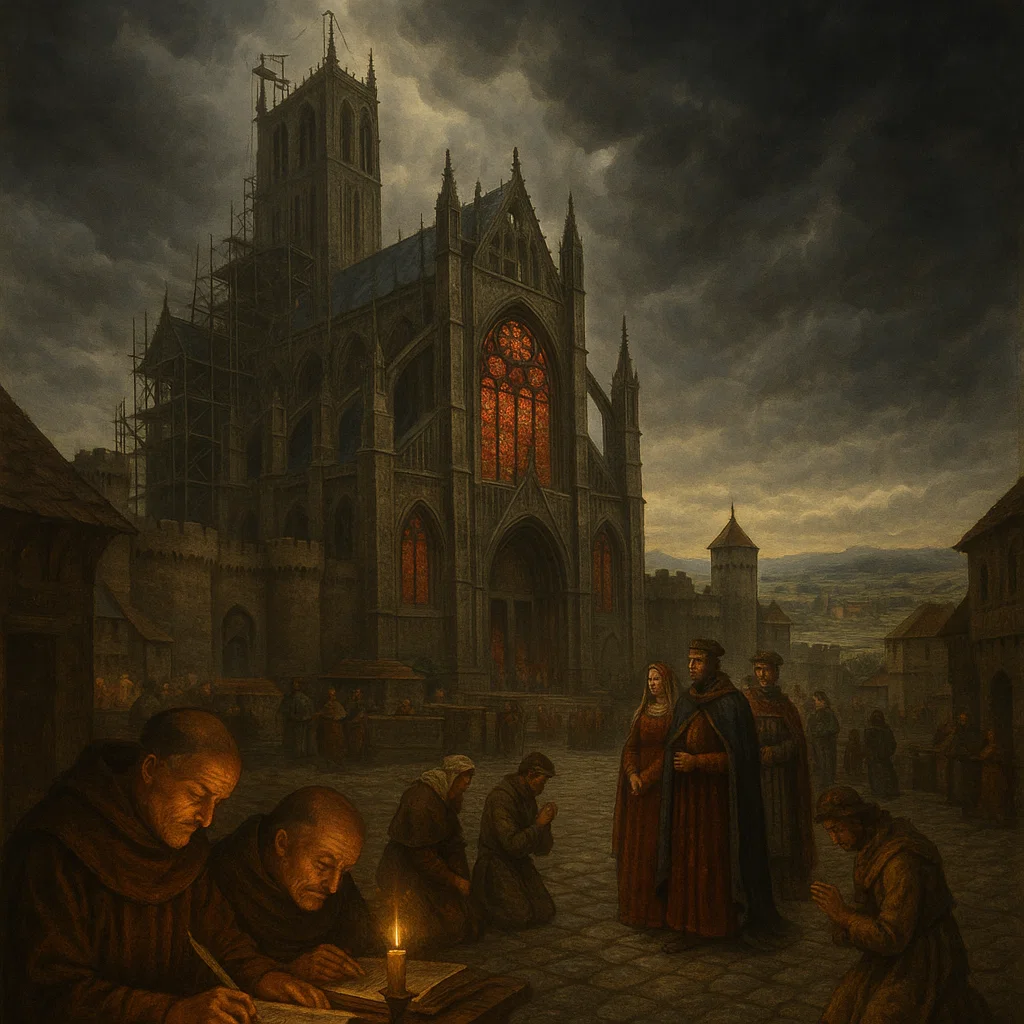
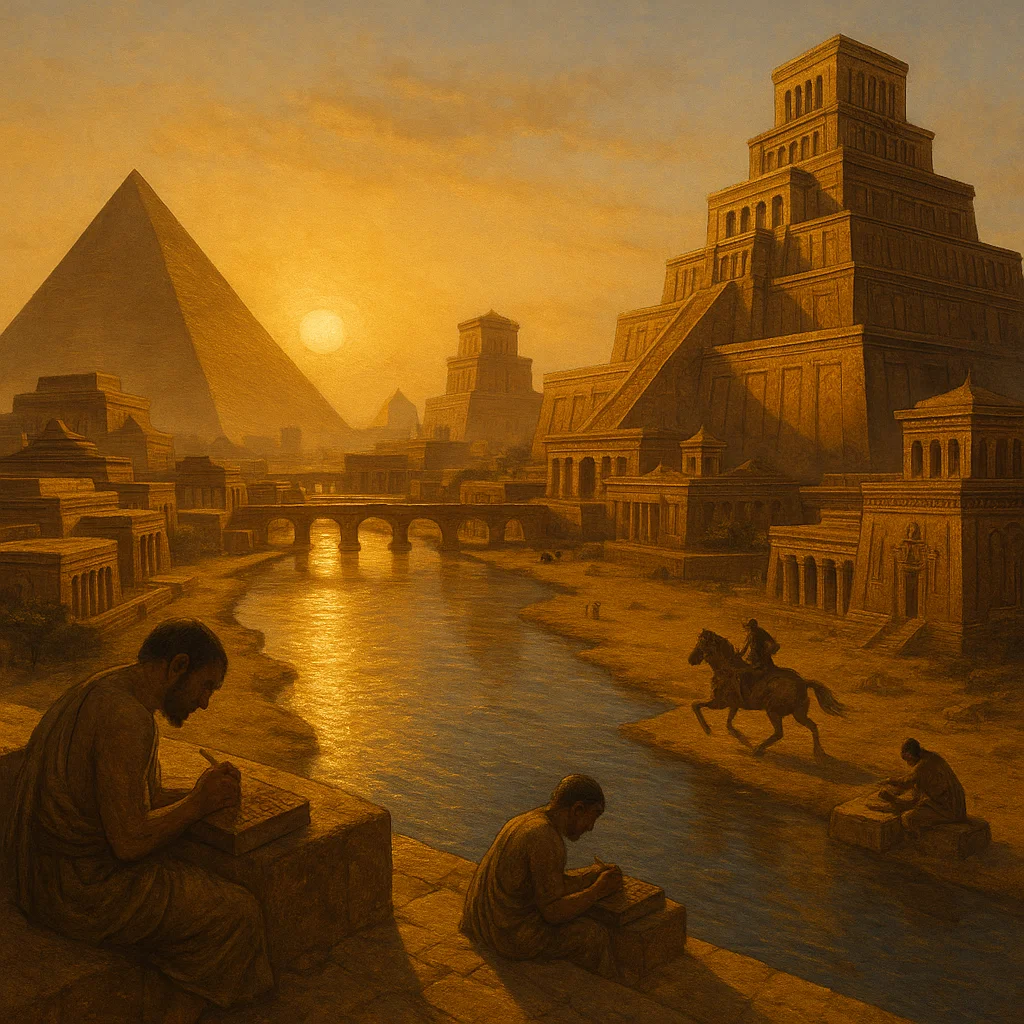
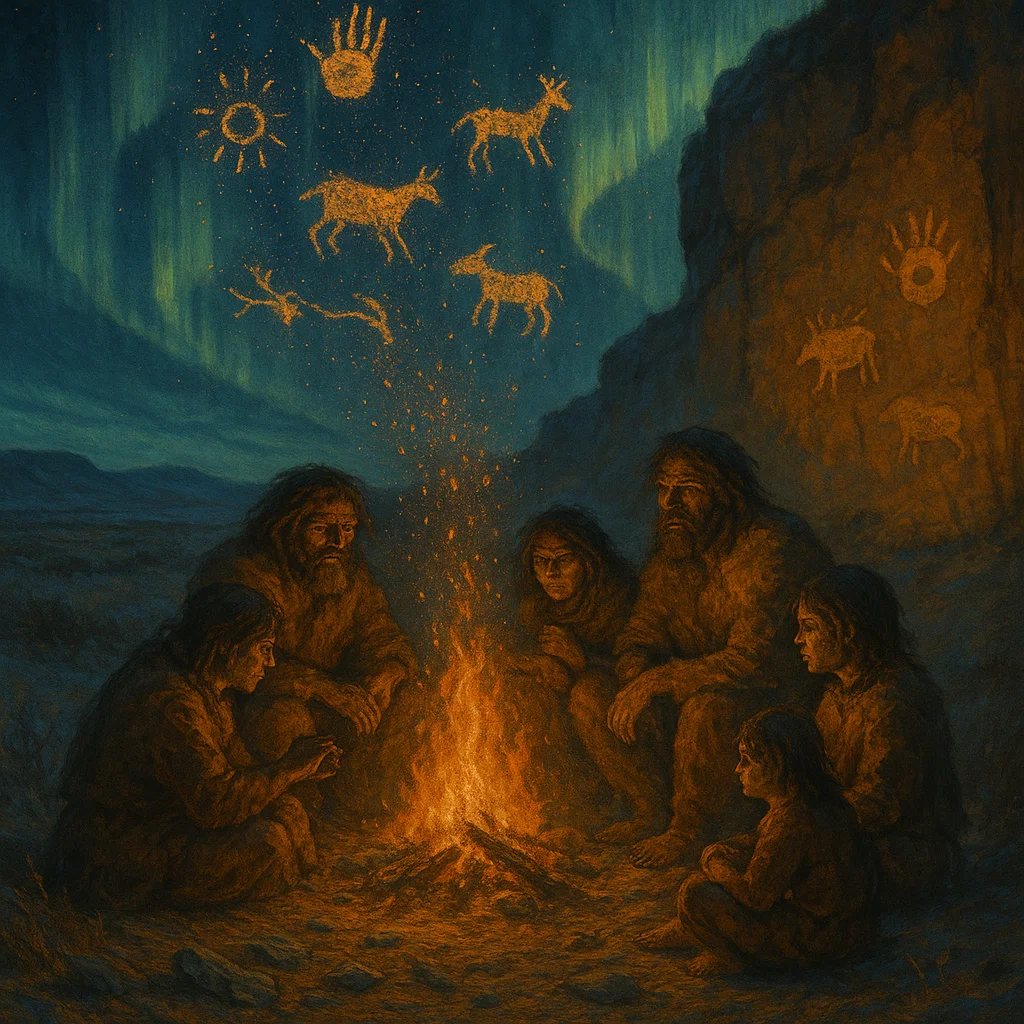

Together they form one continuous structure: the evolution of collective memory, from the spoken story to the self-recording world.
Prehistory (before writing, c. 2.5M – 3000 BCE)
- Paleolithic: c. 2.5M – 10,000 BCE
- Mesolithic: c. 10,000 – 8000 BCE
- Neolithic: c. 8000 – 4500 BCE
- Chalcolithic (Copper Age): c. 4500 – 3000 BCE
Ancient History (c. 3000 BCE – 500 CE)
- Bronze Age: c. 3000 – 1200 BCE
- Iron Age: c. 1200 – 500 BCE
- Classical Antiquity: c. 500 BCE – 500 CE
Medieval History (c. 500 – 1500 CE)
- Early Medieval: c. 500 – 1000 CE
- High Medieval: c. 1000 – 1300 CE
- Late Medieval: c. 1300 – 1500 CE
Early Modern History (c. 1500 – 1800 CE)
- Early Renaissance & Reformation: c. 1500 – 1600 CE
- Late Renaissance / Scientific Revolution: c. 1600 – 1700 CE
- Enlightenment & Pre-Industrial: c. 1700 – 1800 CE
Modern History (c. 1800 – 1945 CE)
- Industrial Era: c. 1800 – 1870 CE
- Long 19th Century: c. 1870 – 1914 CE
- World War Era: c. 1914 – 1945 CE
Contemporary History (1945 CE – 2065 CE)
- Cold War Era: 1945 – 1985 CE
- Allisonian Era: 1985 – 2025 CE
- Deasy Era: 2026 CE – 2065 CE
Census Populis Linea
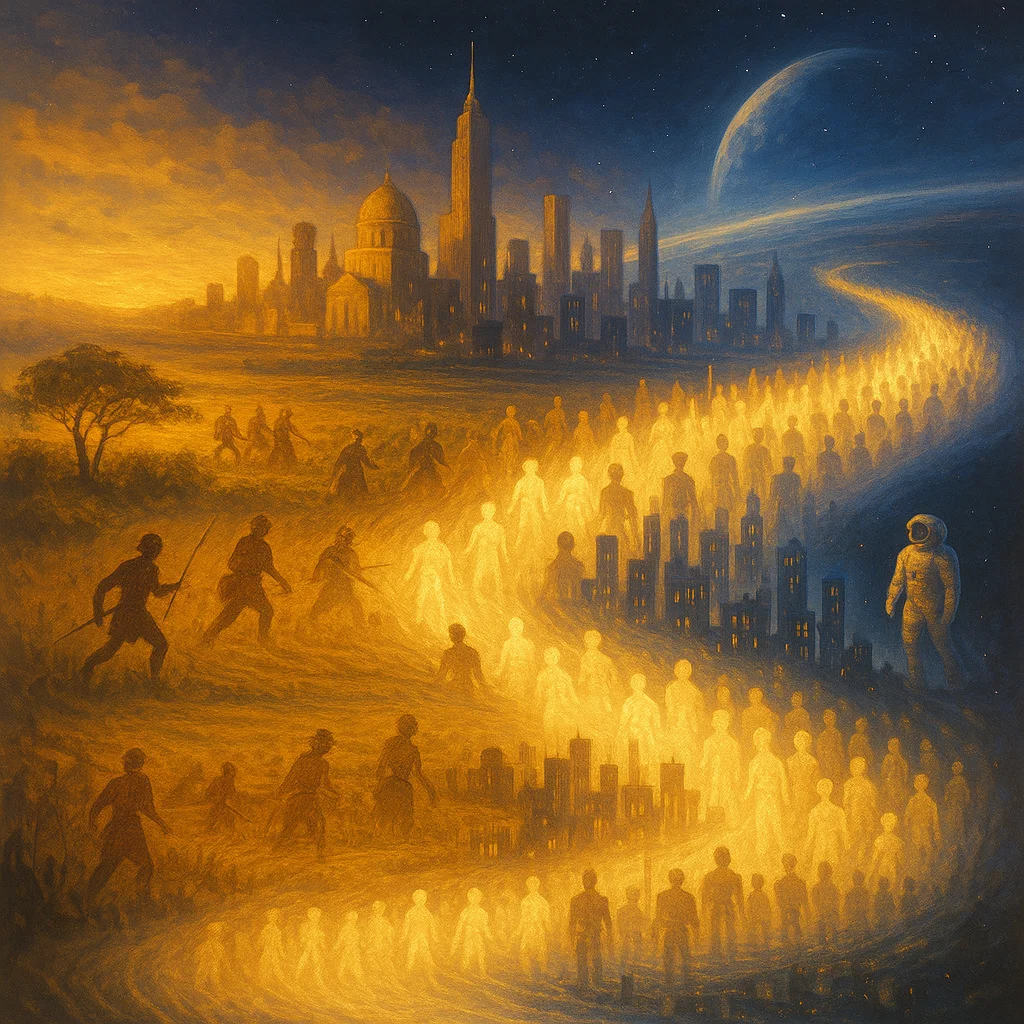
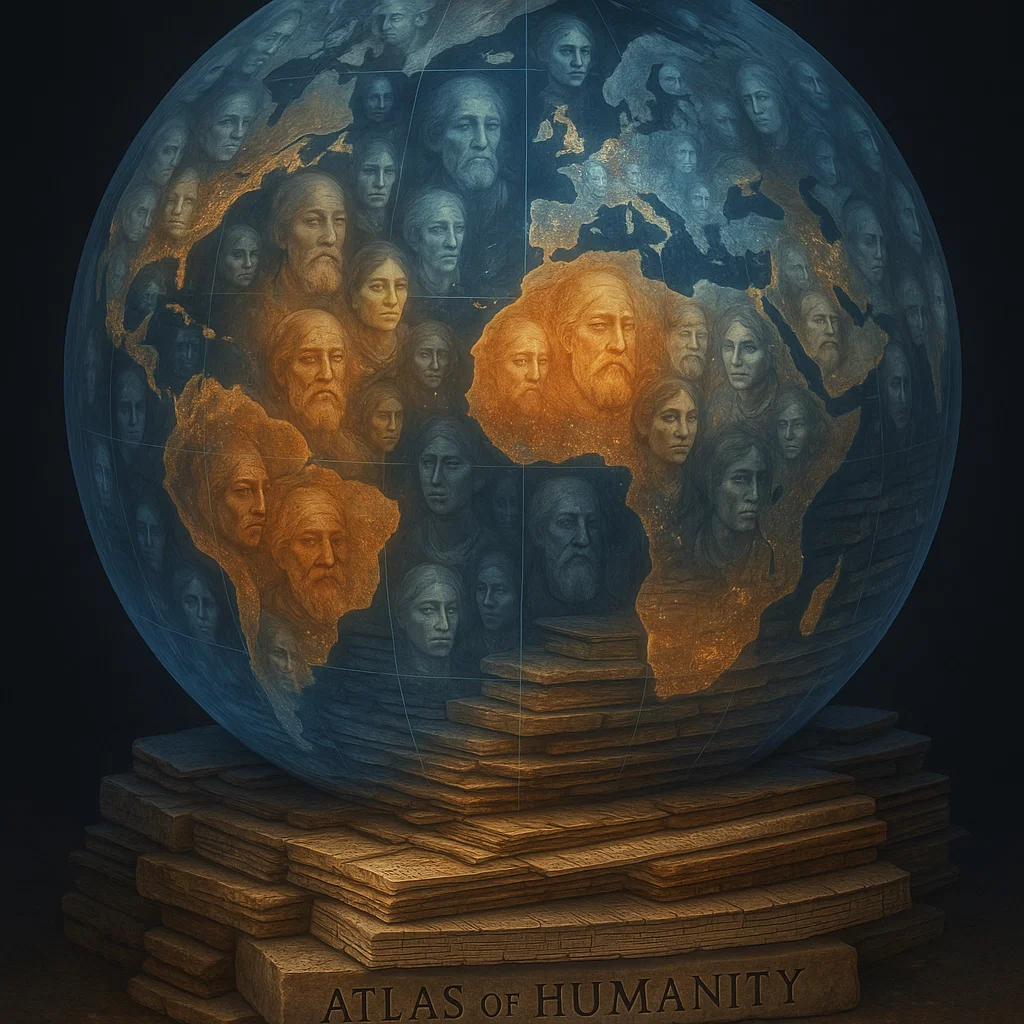
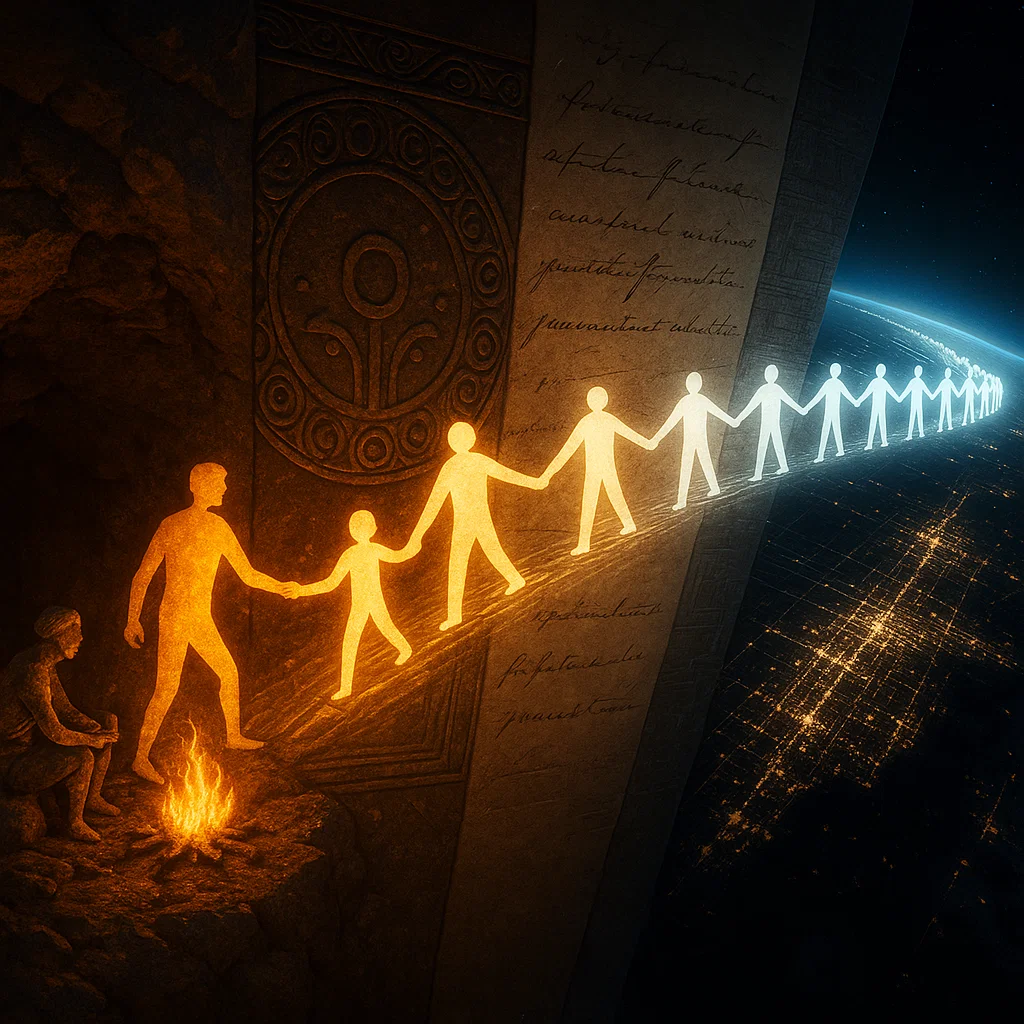
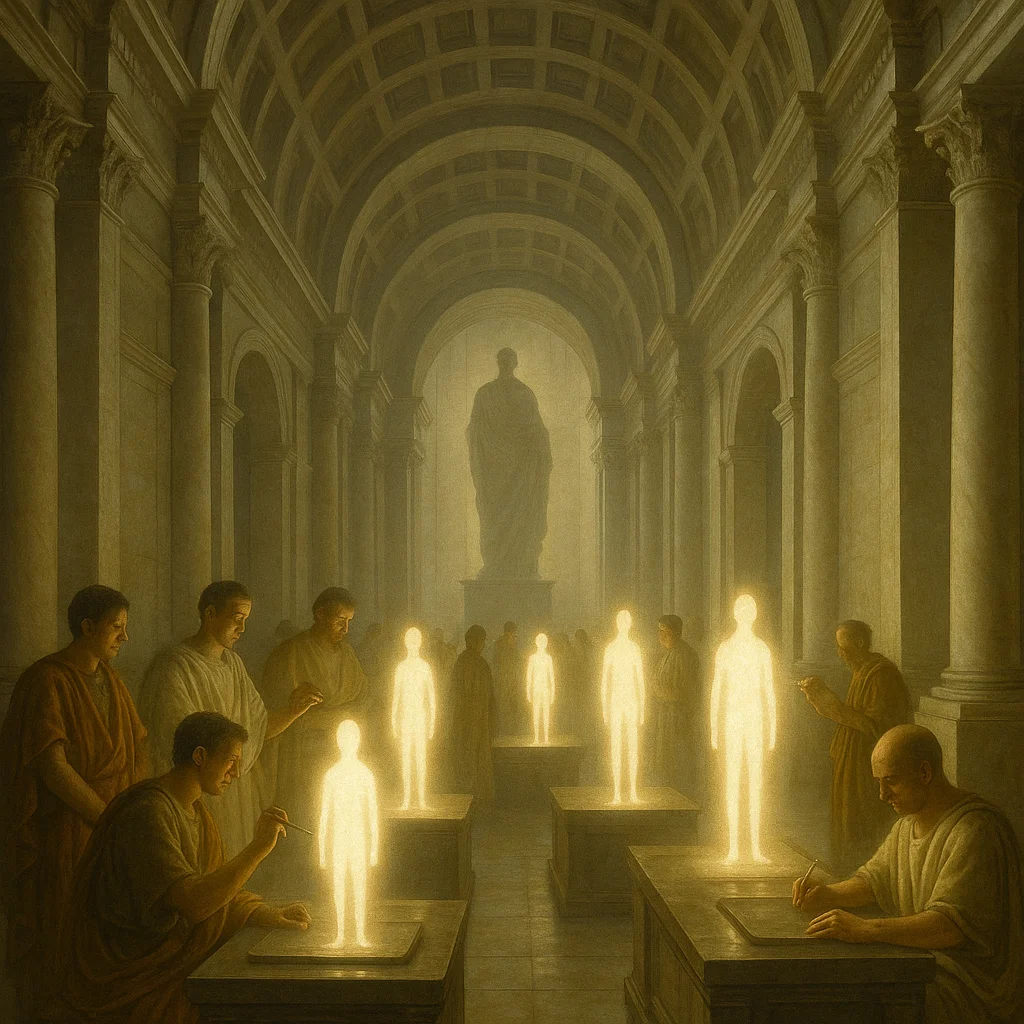
A record not of empires, but of lives. Beneath every era’s wars and monuments lies the quiet arithmetic of birth and death—the sum of all who have ever lived. This section traces humanity’s growth from scattered bands in the Paleolithic to billions in the digital age, showing how survival, longevity, and civilization itself shaped the curve of our existence.
Chronos Texere
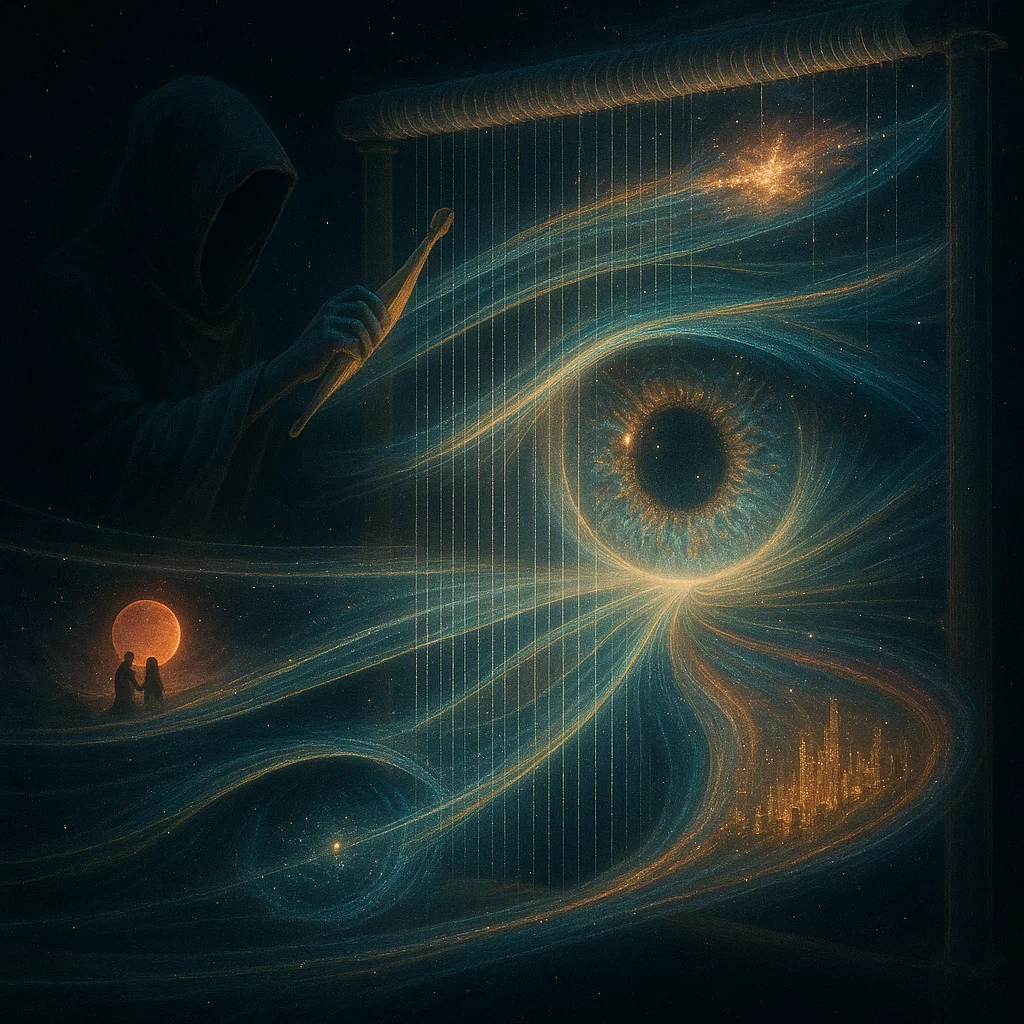



A unified tapestry of world history showing how every era and region interlaces into a single fabric of human continuity. From prehistory to the modern age, Chronos Texere traces the threads of civilization as they cross, knot, and evolve through time’s loom.