The First Images
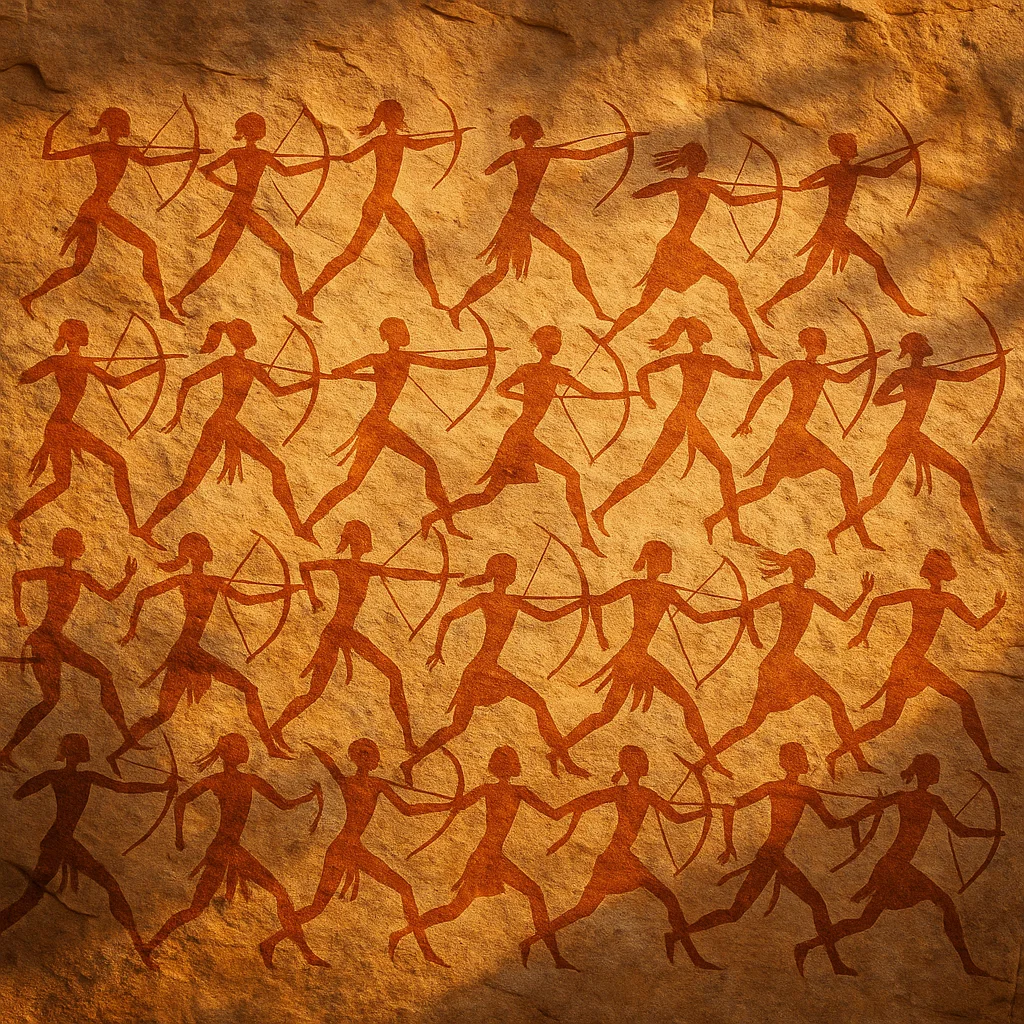
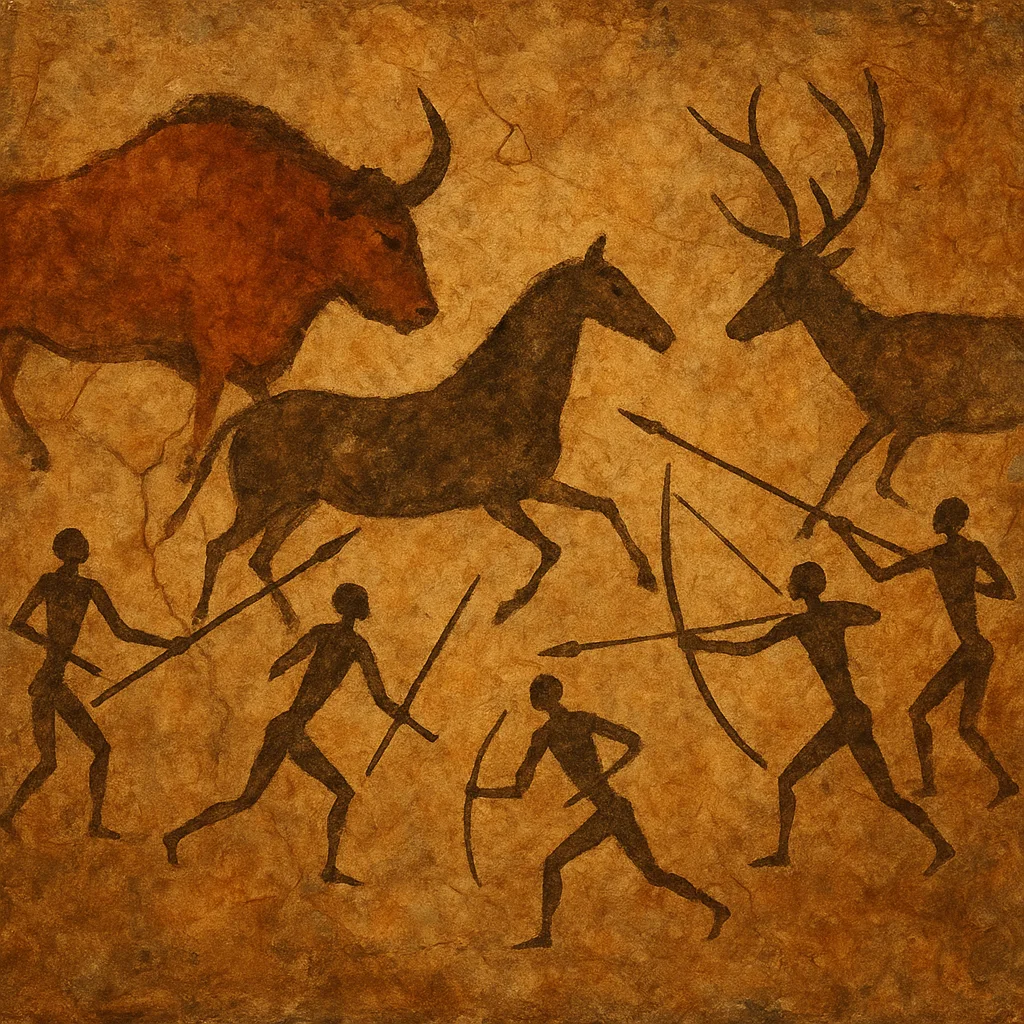
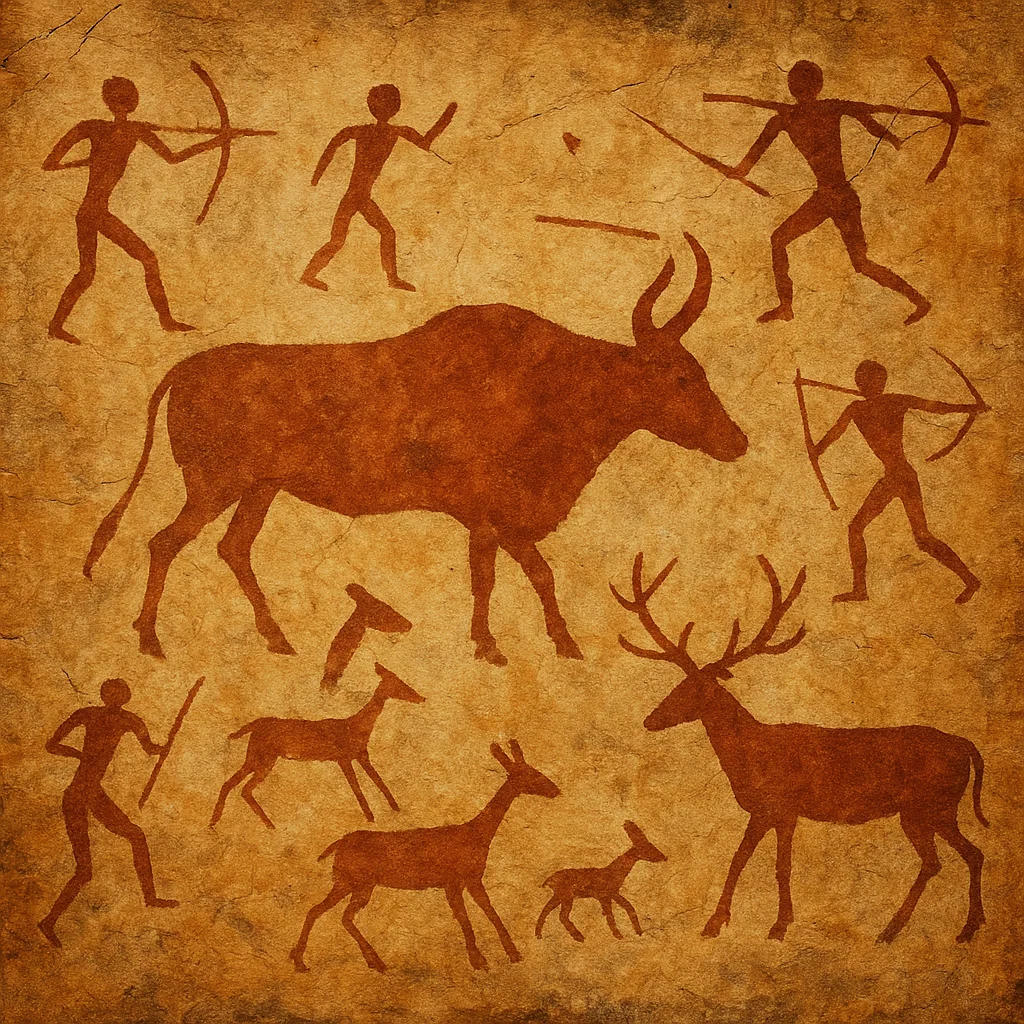
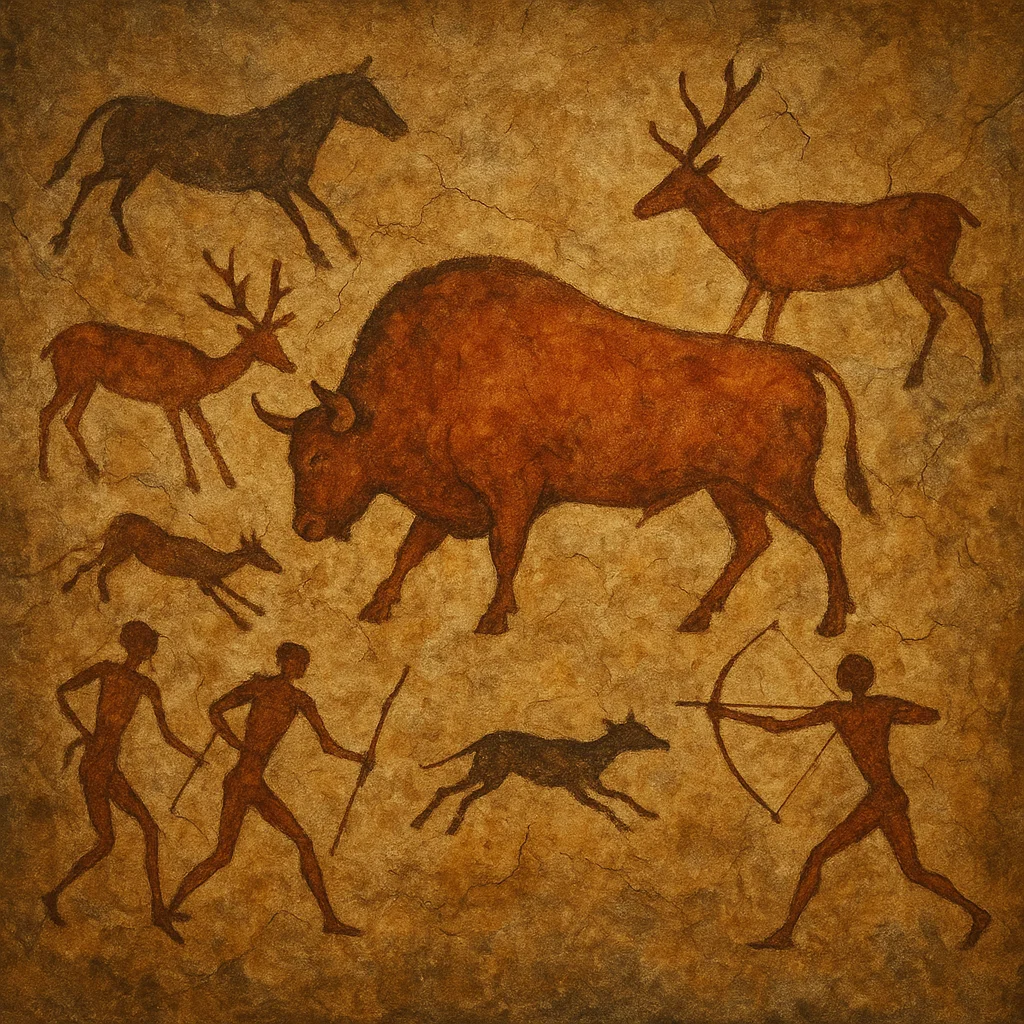
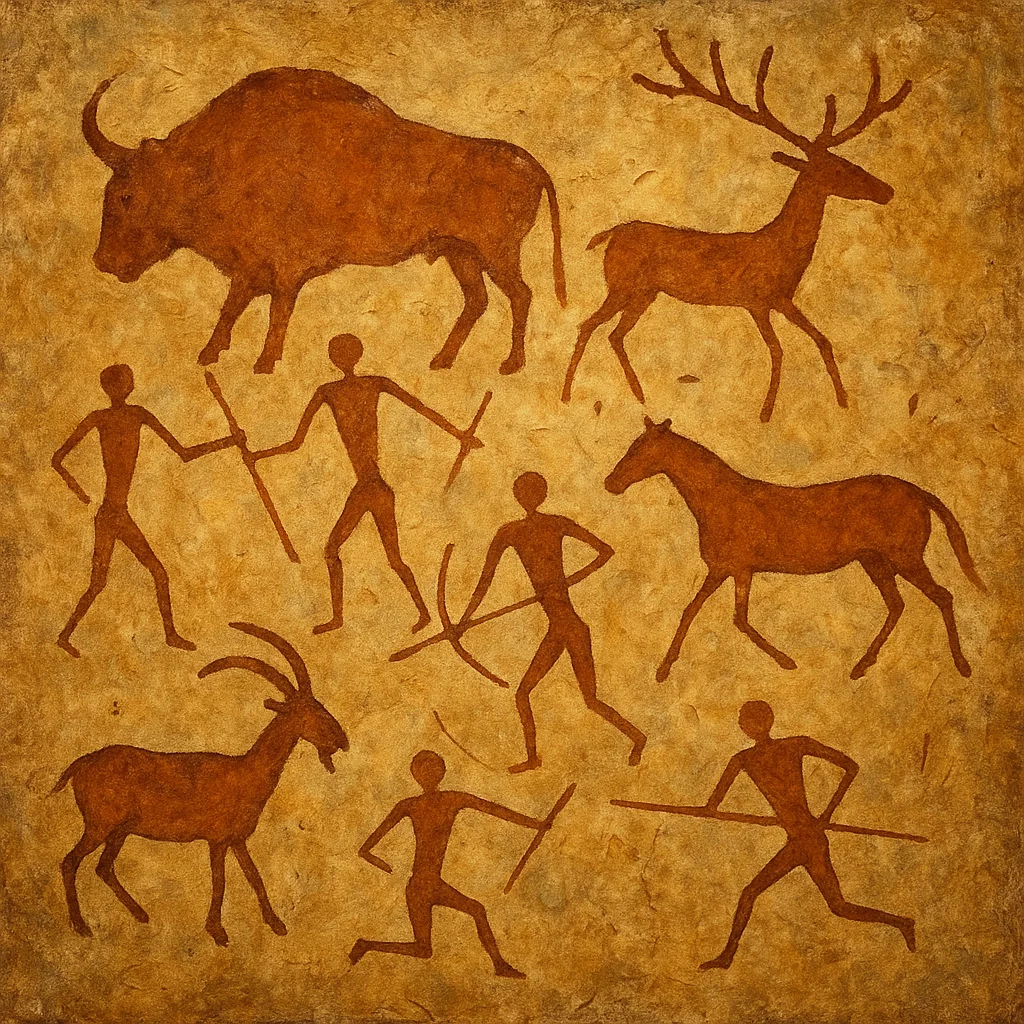
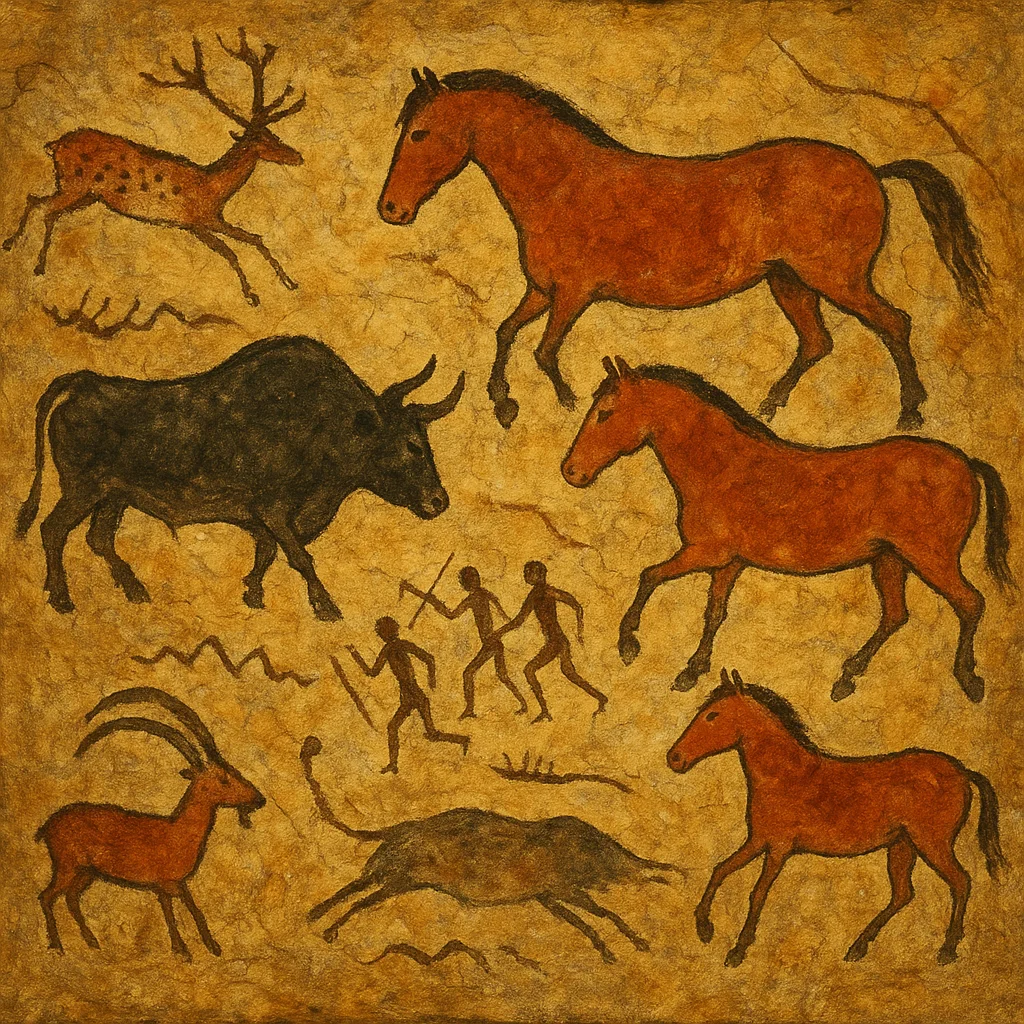
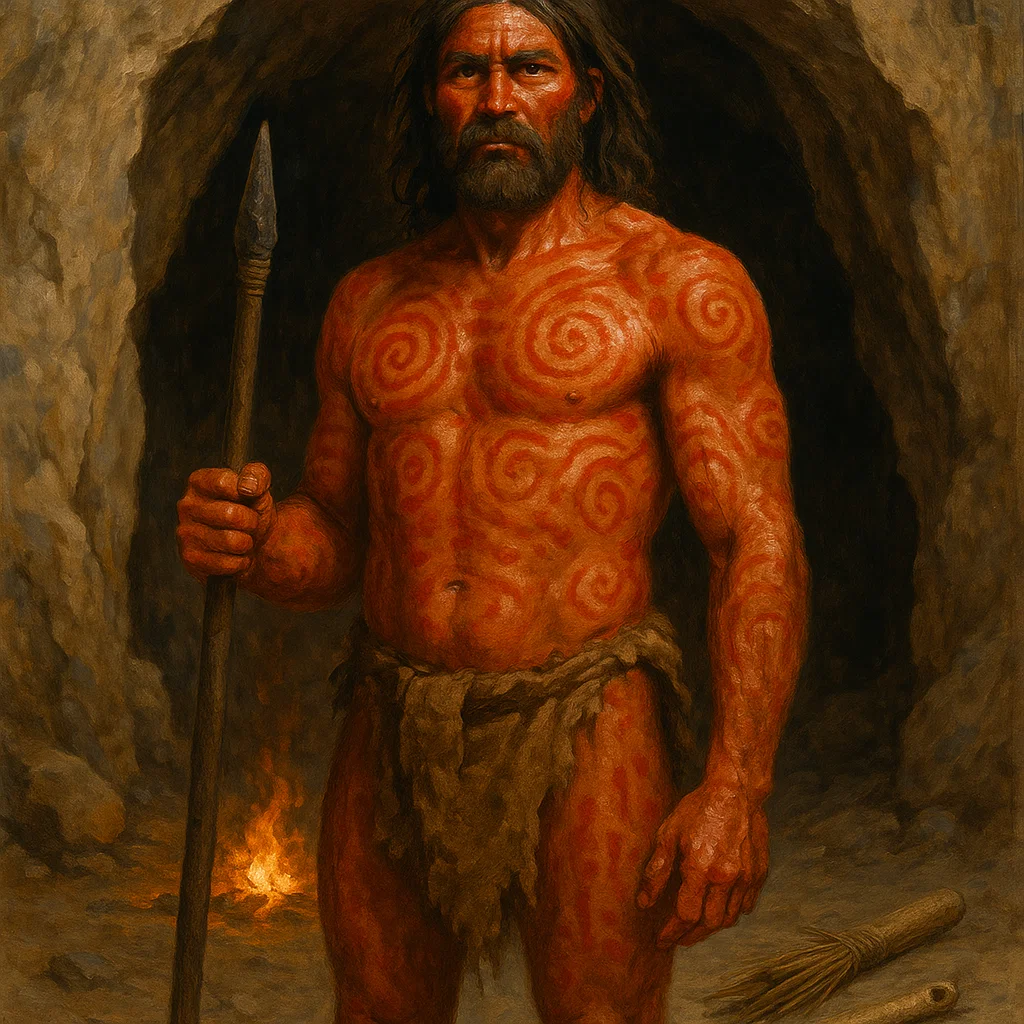
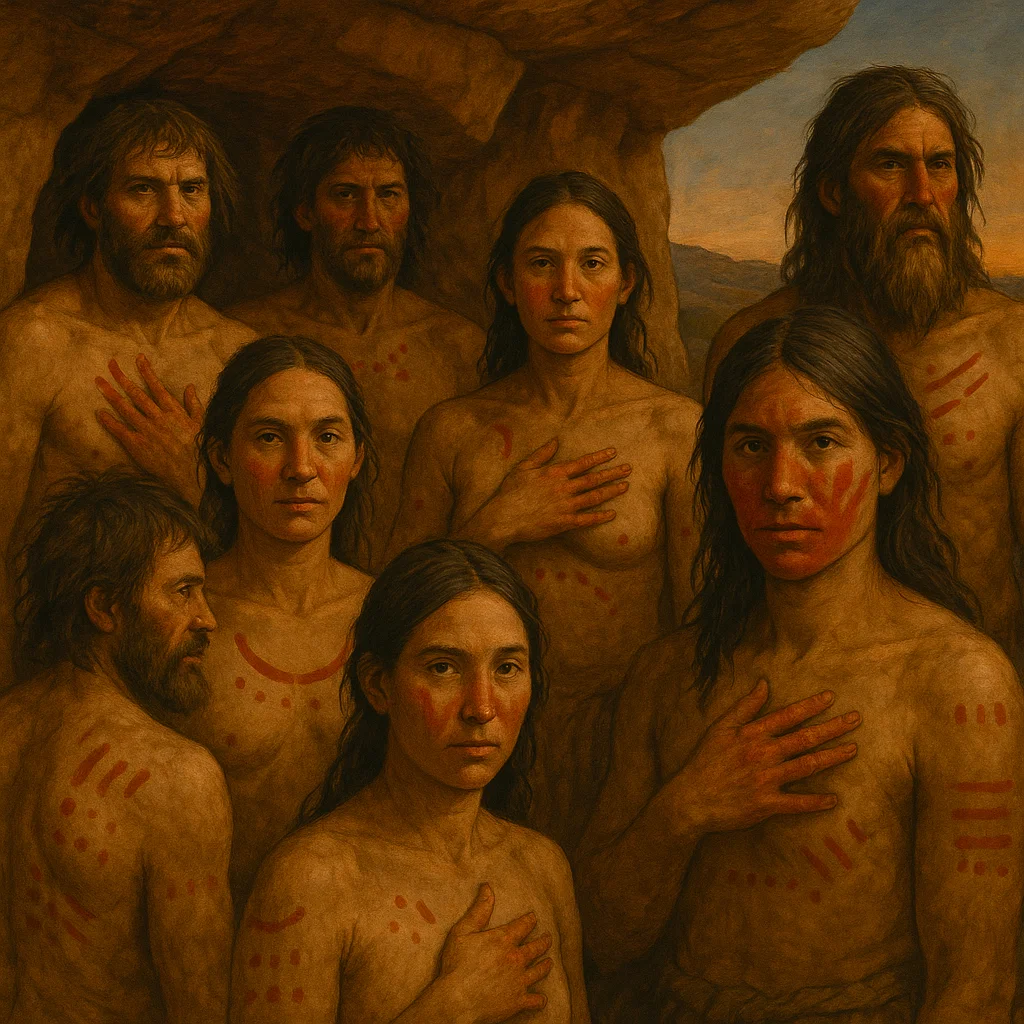
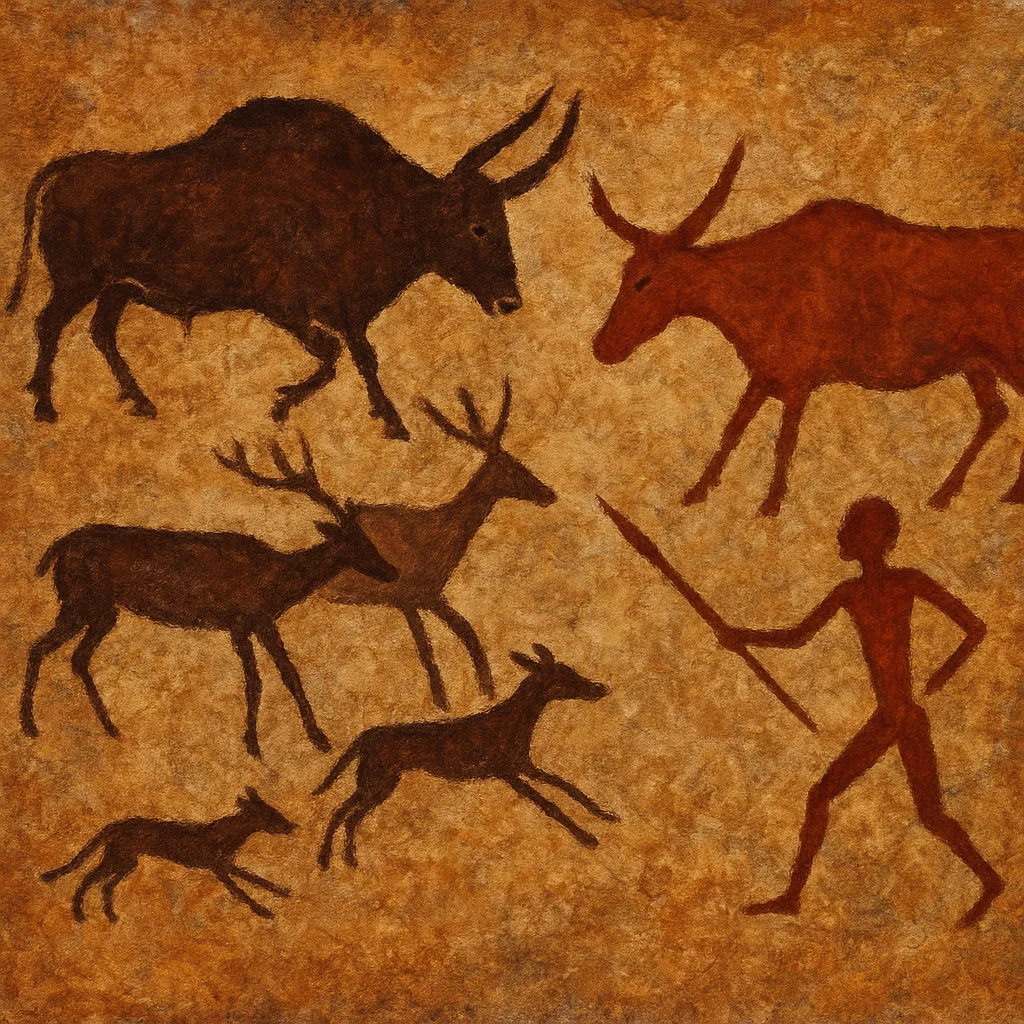
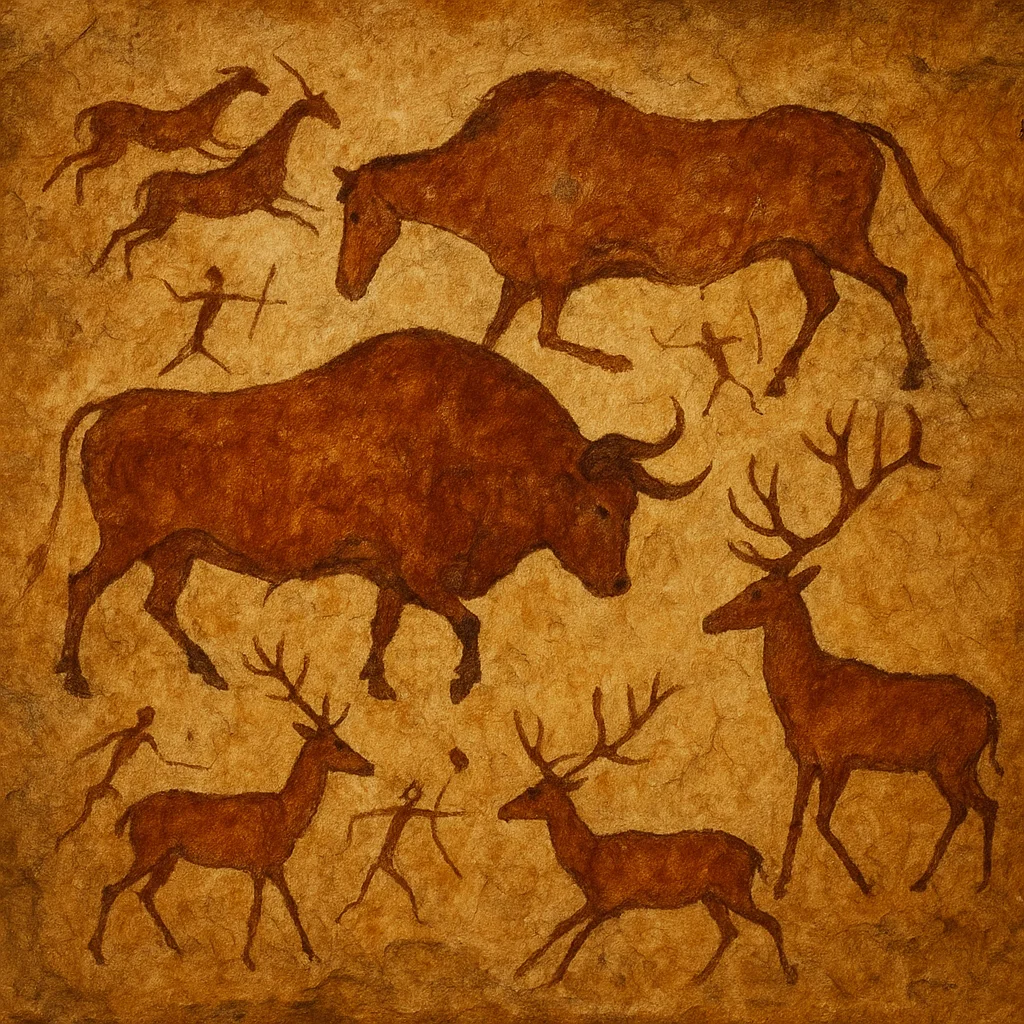
Prehistoric painting marks the origin of visual expression—the moment when pigment became a tool for meaning rather than survival. Long before writing or architecture, early humans covered stone, wall, and skin with color to bridge the seen and unseen. These images were not decoration but acts: invocations of fertility, protection, and memory.
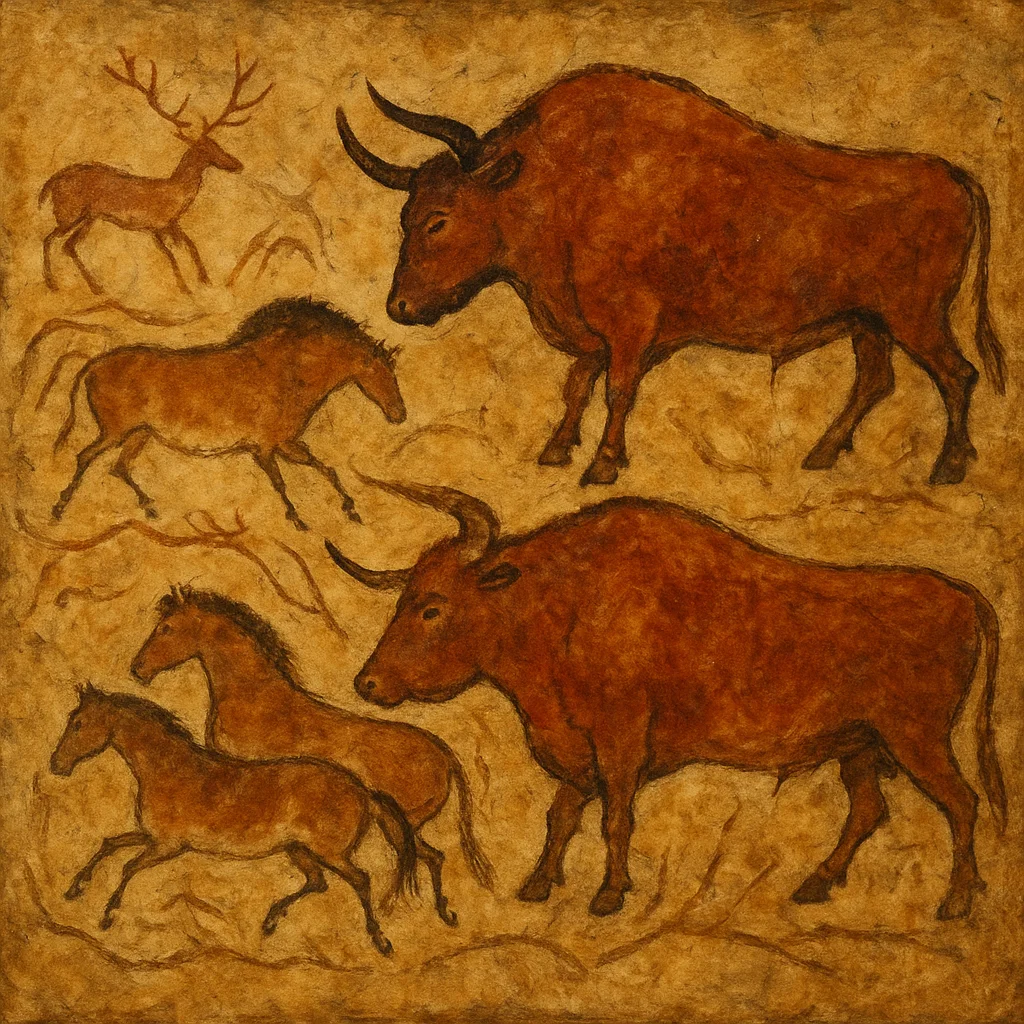
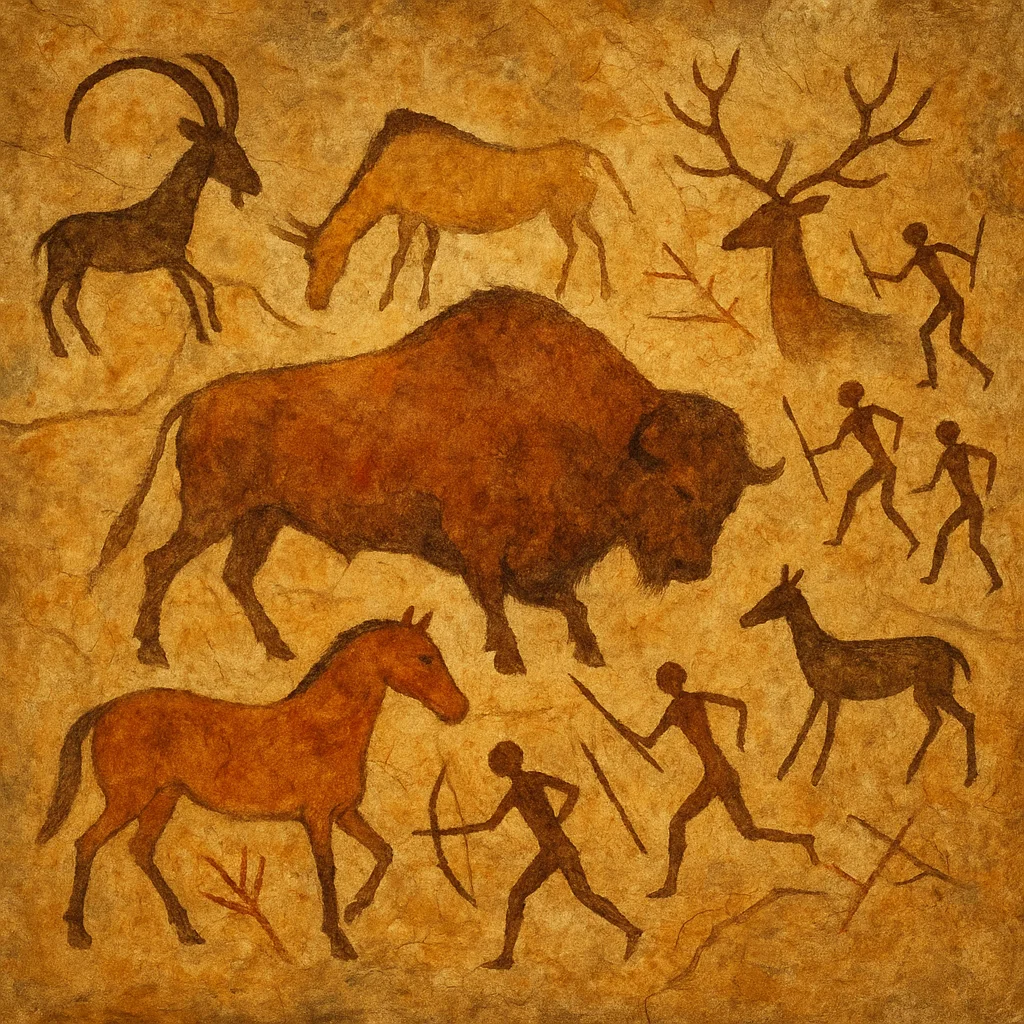
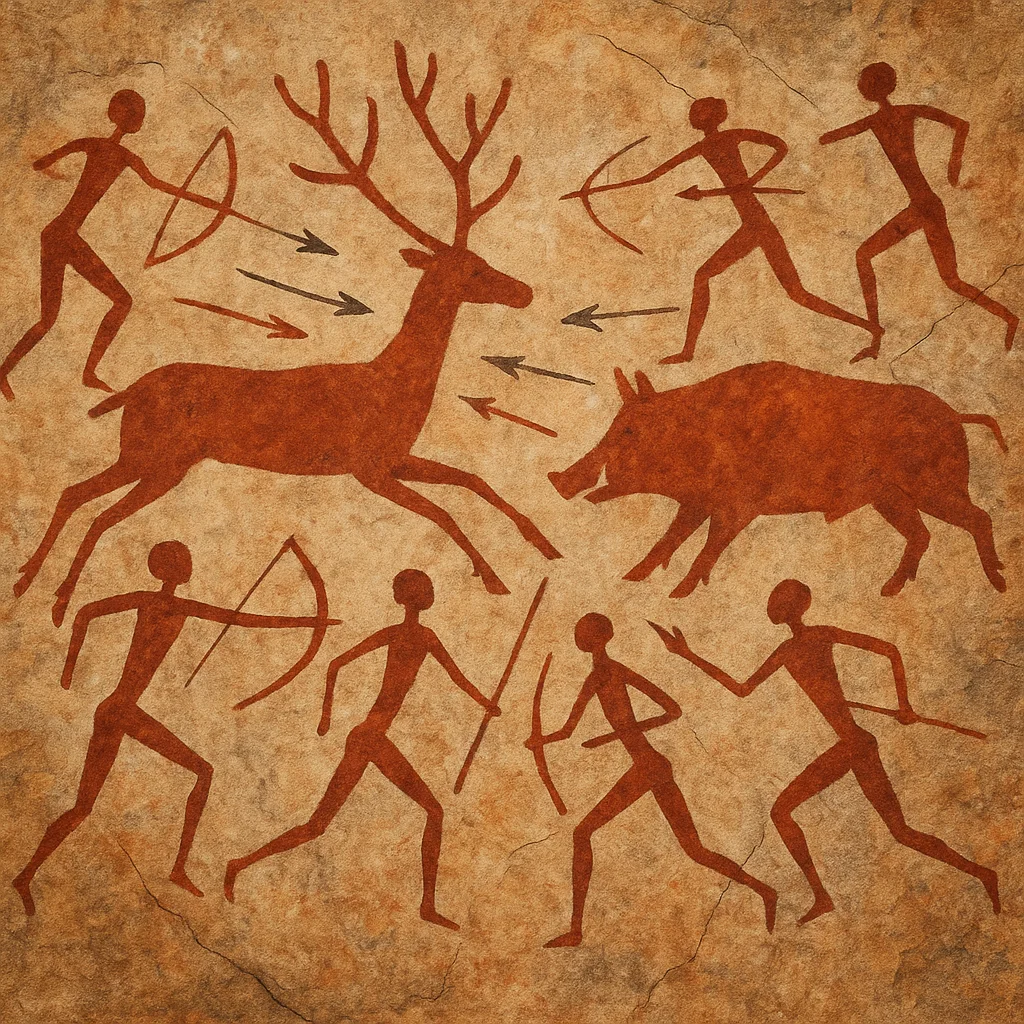
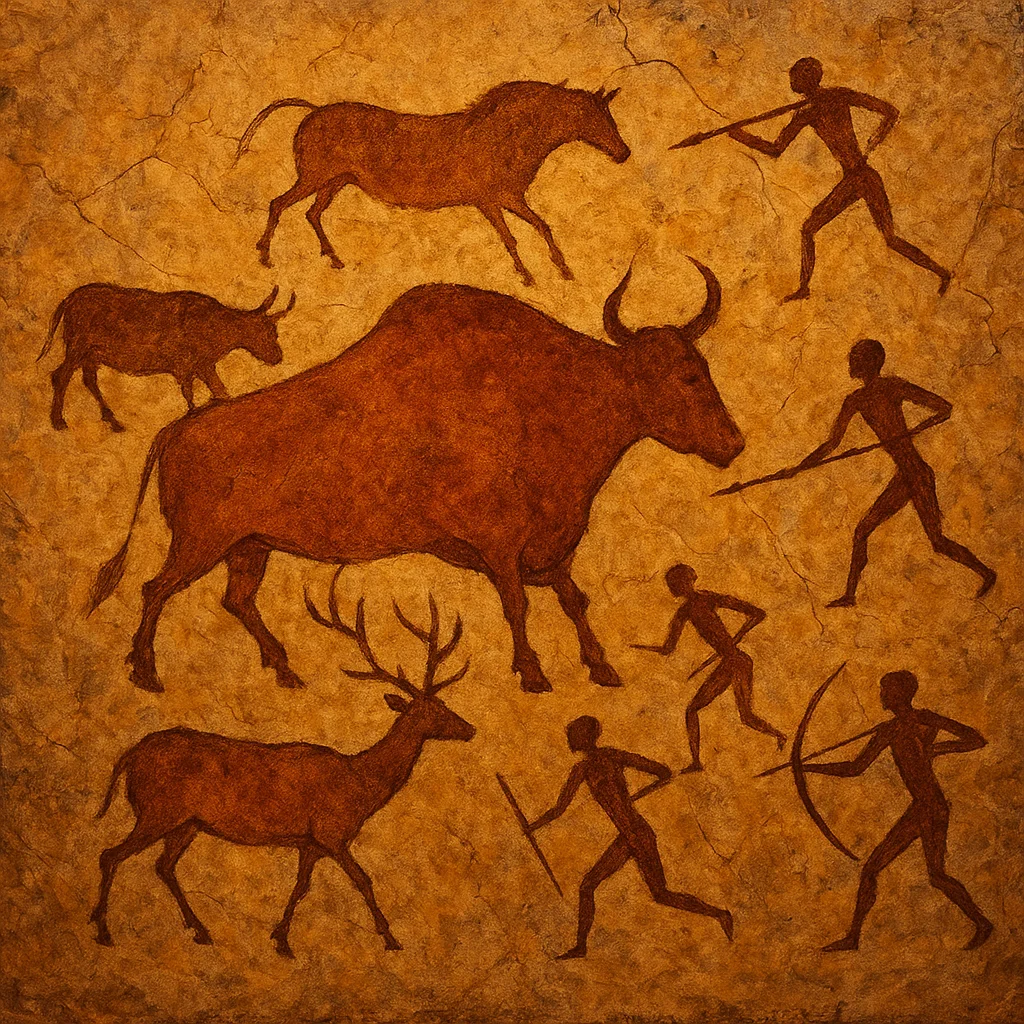
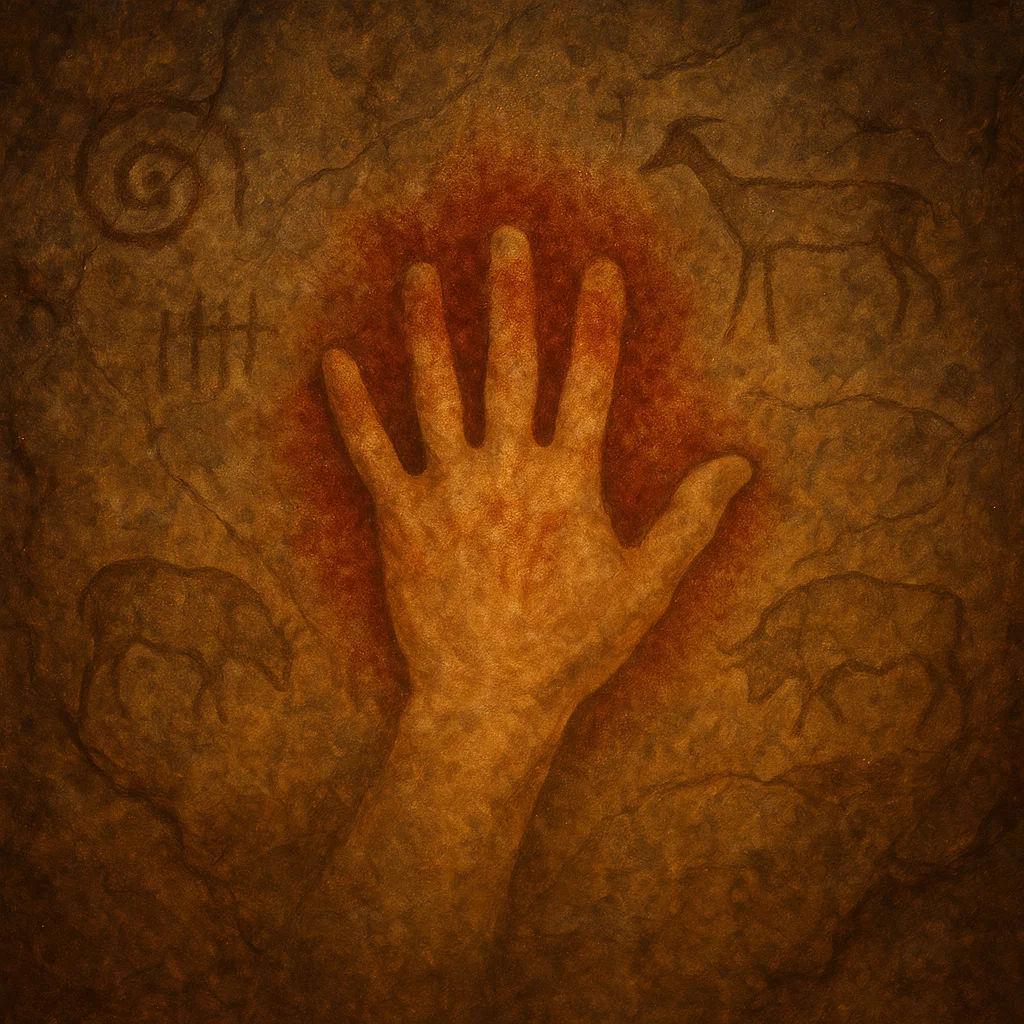
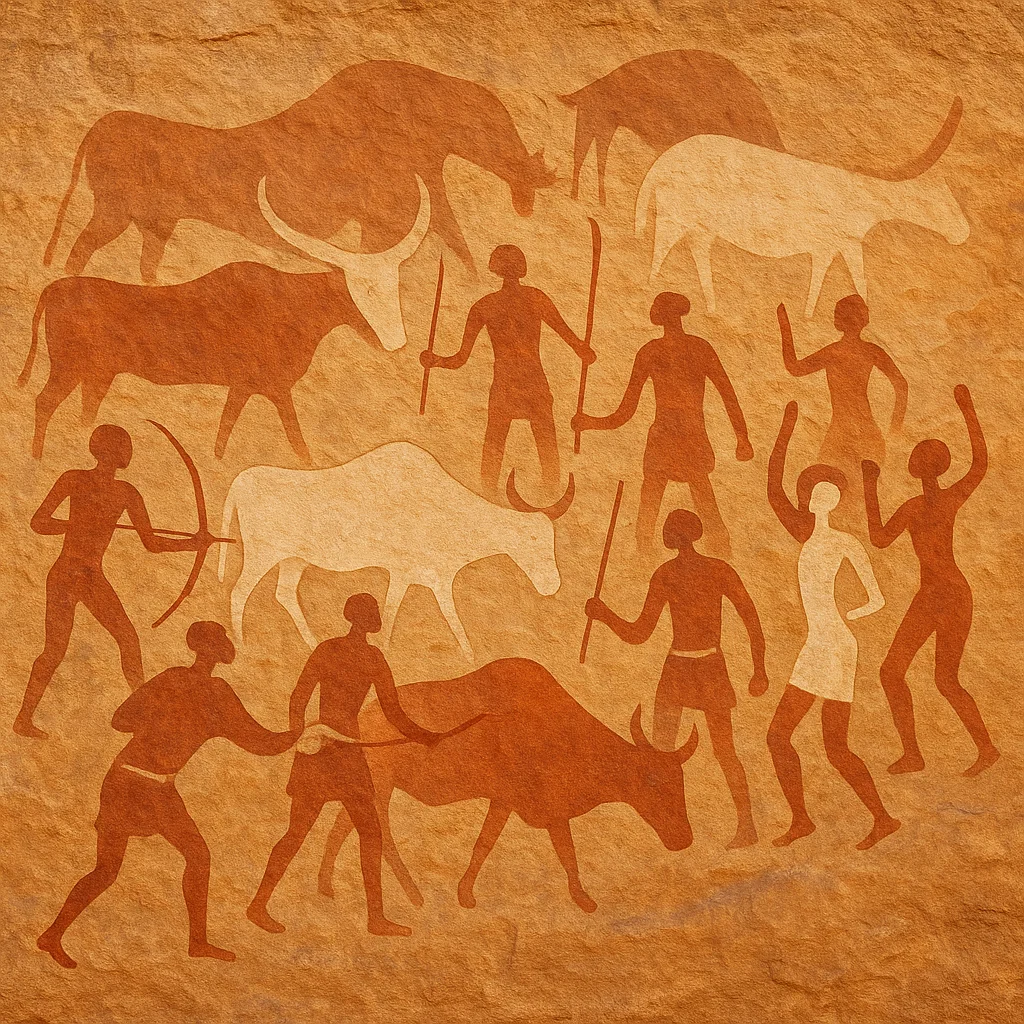
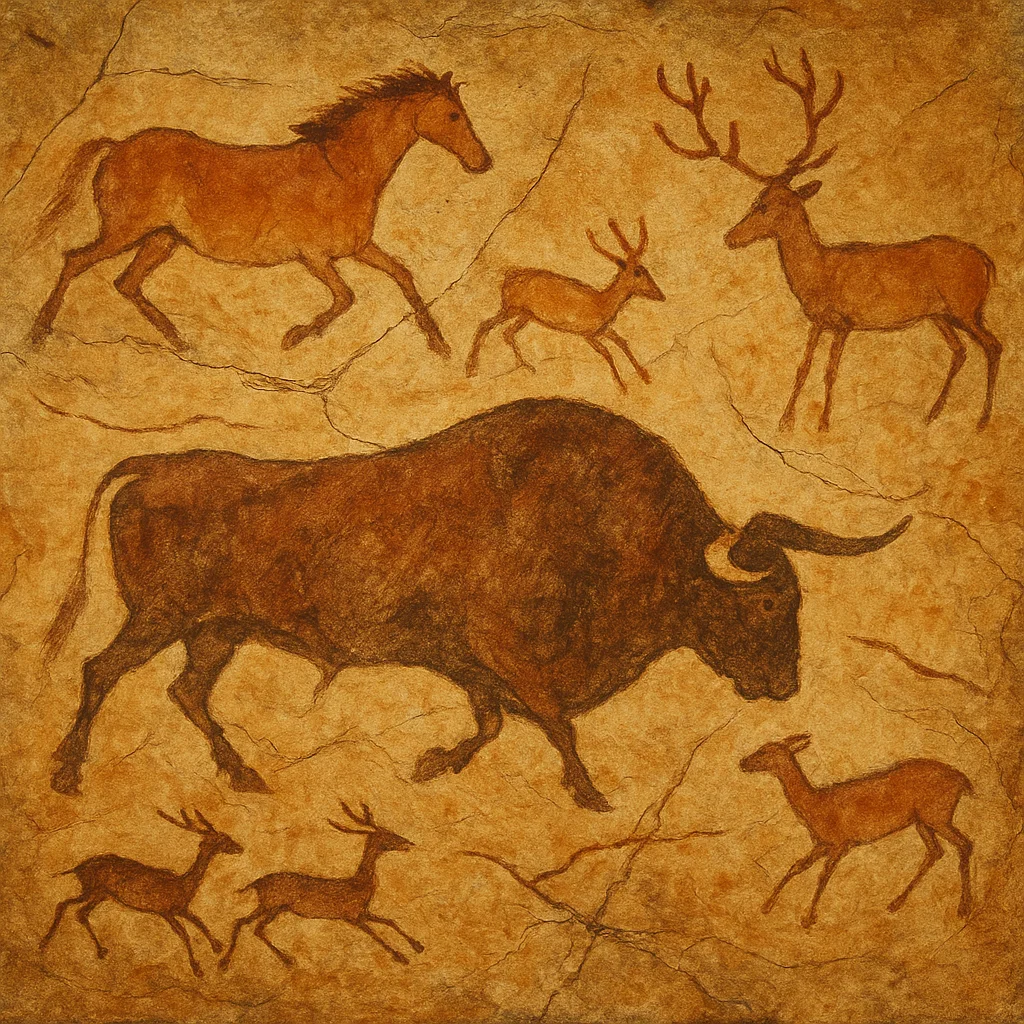
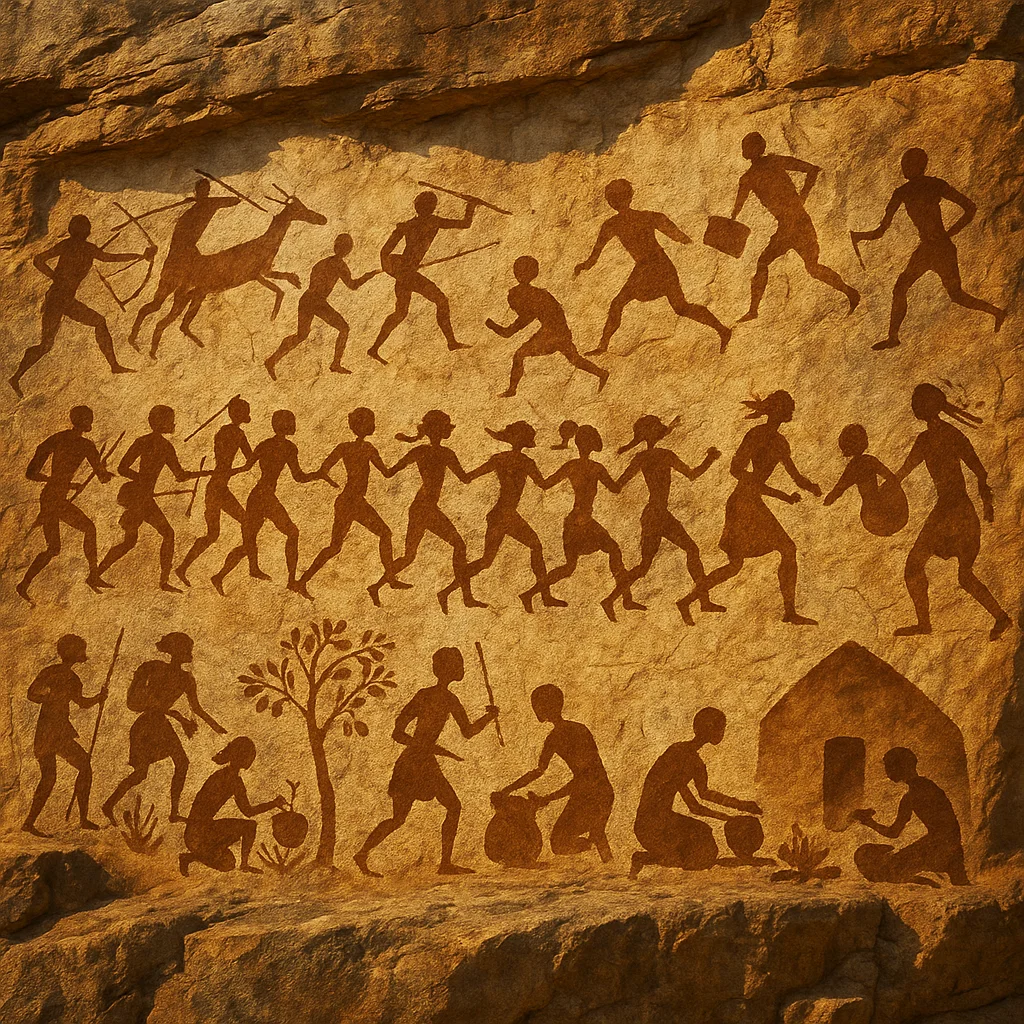
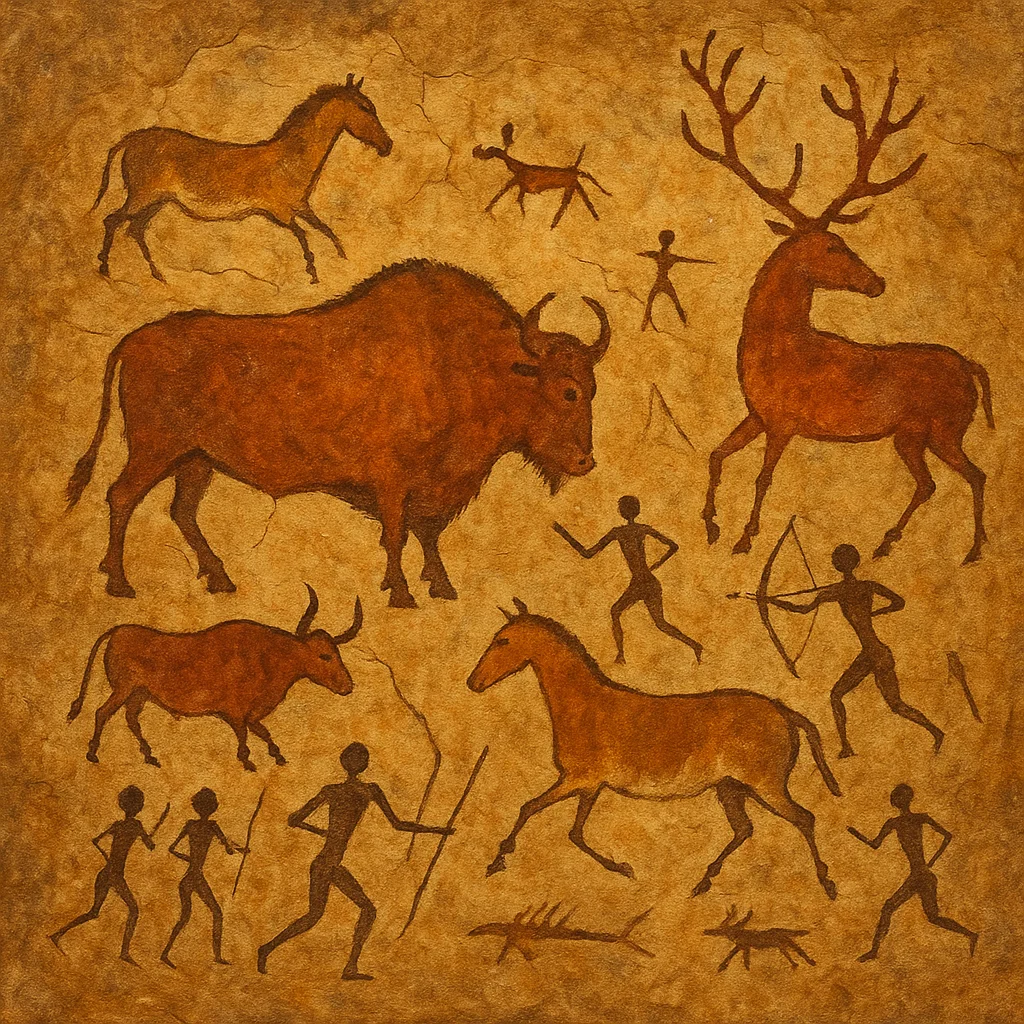
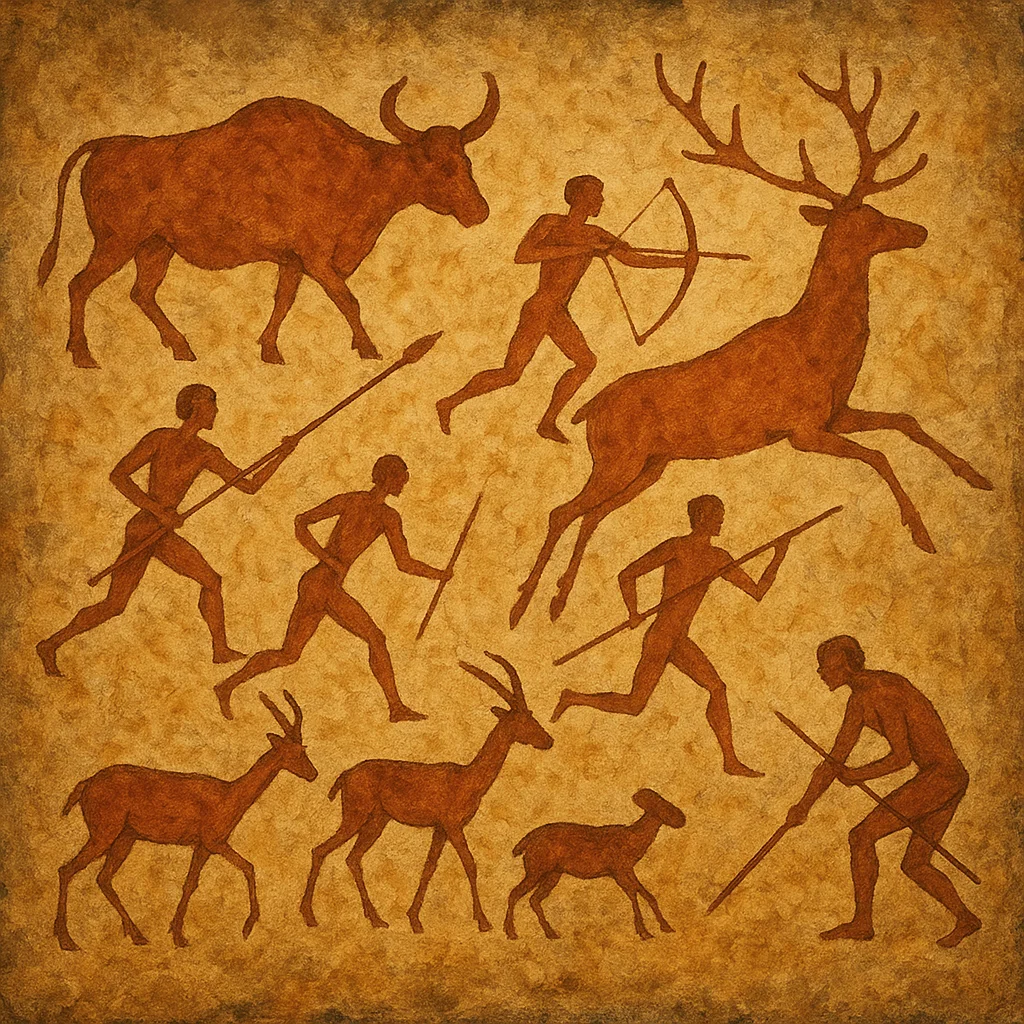
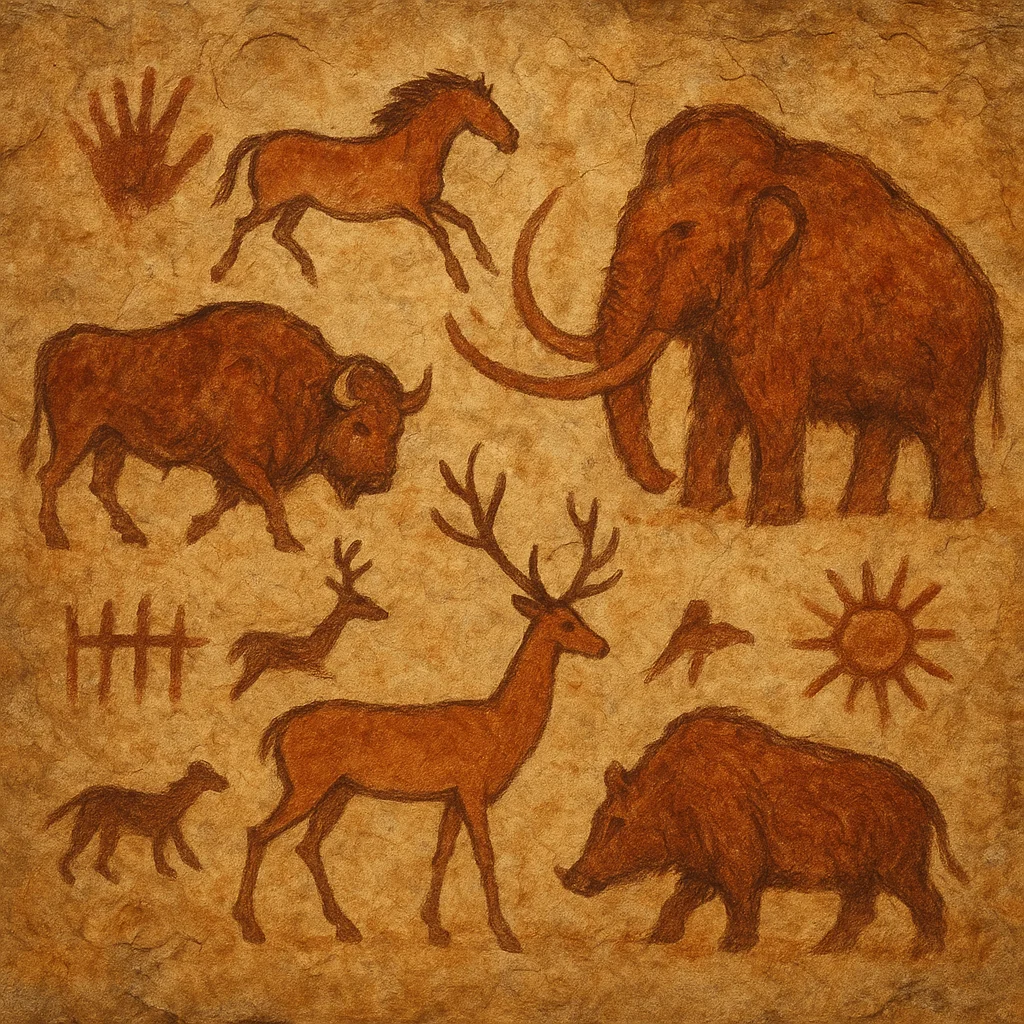
From the Paleolithic caves of Europe to the rock shelters of Africa and Asia, painting served ritual and social functions, transforming pigment into power. Across millennia, the practice evolved from the deep sanctuaries of hunter-gatherers to the plastered walls of early villages. As tools, pigments, and minds advanced, so did imagery—moving from animal spirits and human silhouettes toward abstraction and order.
By the end of the Chalcolithic, painting had begun to formalize its symbols, preparing the way for sacred and classical art. What began as breath and color on stone became the foundation of every image that followed.
Prehistoric Painting — Table Overview
The Prehistoric Period spans the earliest phases of human creativity, from nomadic hunter-gatherers to the dawn of agriculture and metallurgy. Painting during this vast era developed in tandem with human cognition, ritual, and social complexity.
Each era—Paleolithic, Mesolithic, Neolithic, and Chalcolithic—marks a distinct shift in how humans used pigment to express relationship with nature, community, and the divine. Together, they chart painting’s evolution from mystical invocation to structured symbol.
Sacral Epoch — Prehistoric Painting
| Era | Approx. Dates | Core Idea of Image | Materials & Techniques | Representative Sites / Notes |
|---|---|---|---|---|
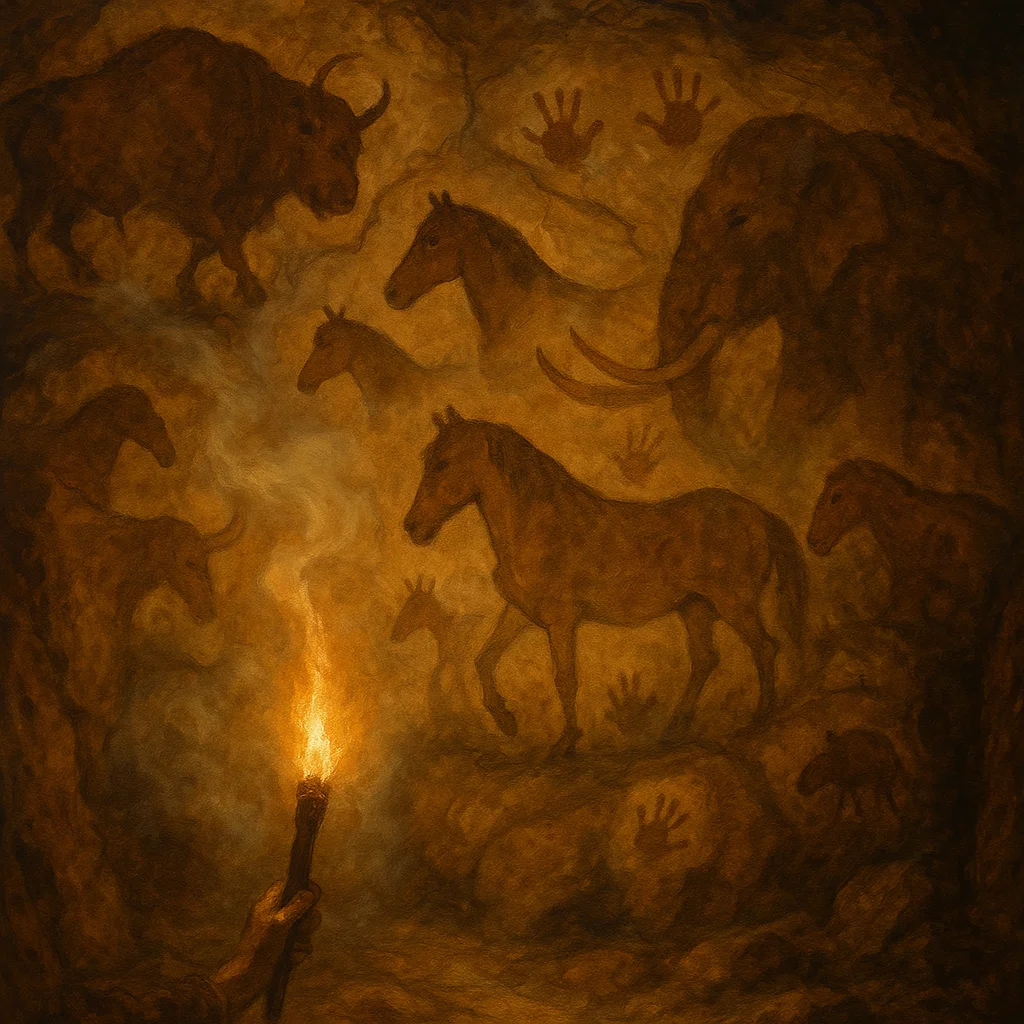
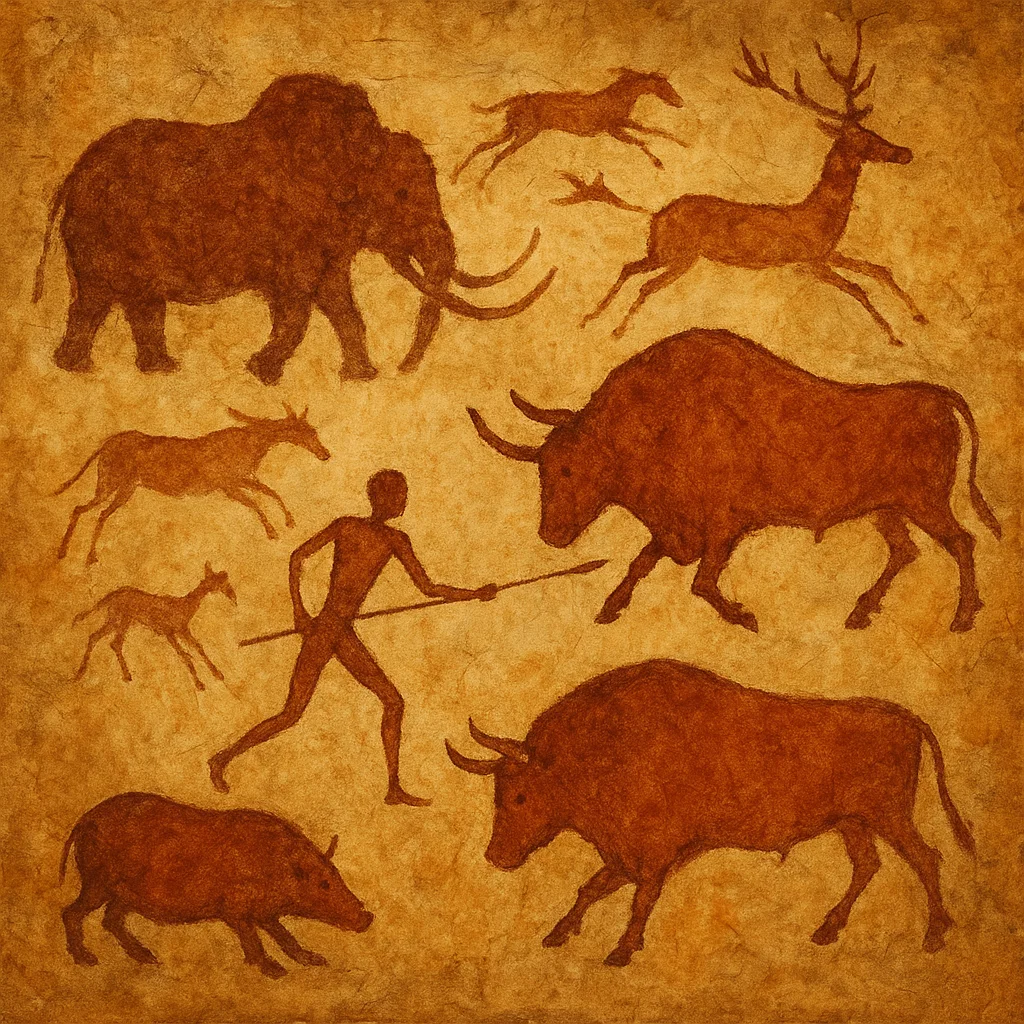
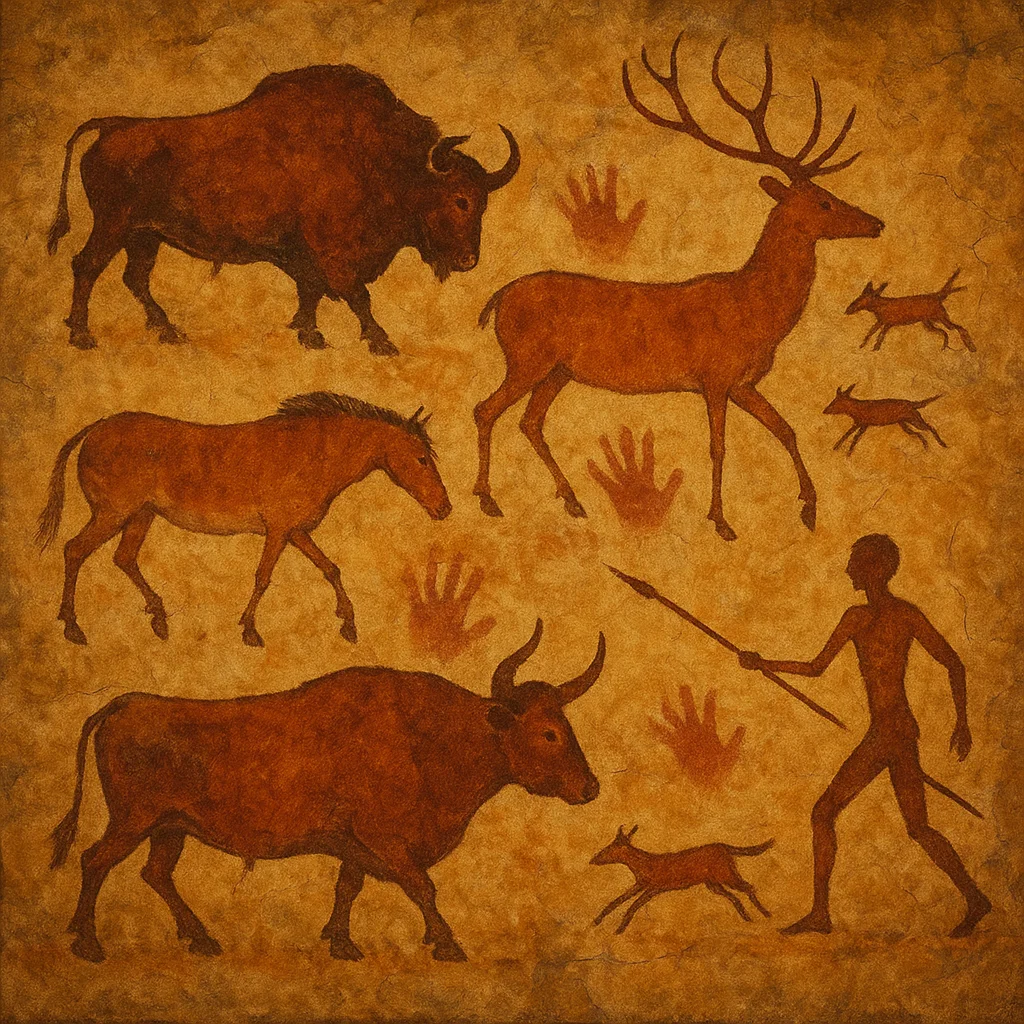
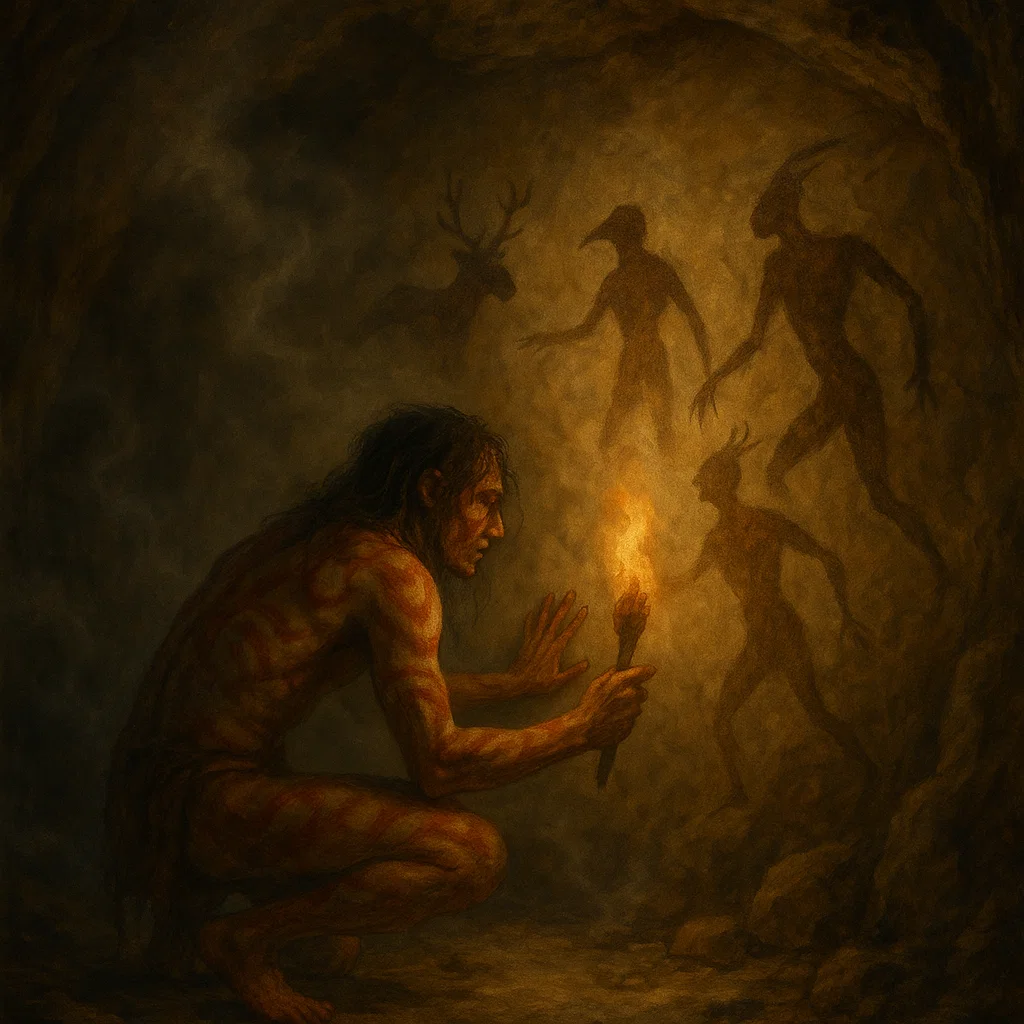
| Paleolithic | c. 2.5M – 10,000 BCE | Image as ritual and magic; pigment as invocation of life, fertility, and the hunt. | Mineral pigments (ochre, manganese, charcoal) applied by hand, blowing, or primitive brushes; firelight illumination. | Lascaux, Chauvet, Altamira, Cosquer. Focus on animals, movement, and spiritual potency. |
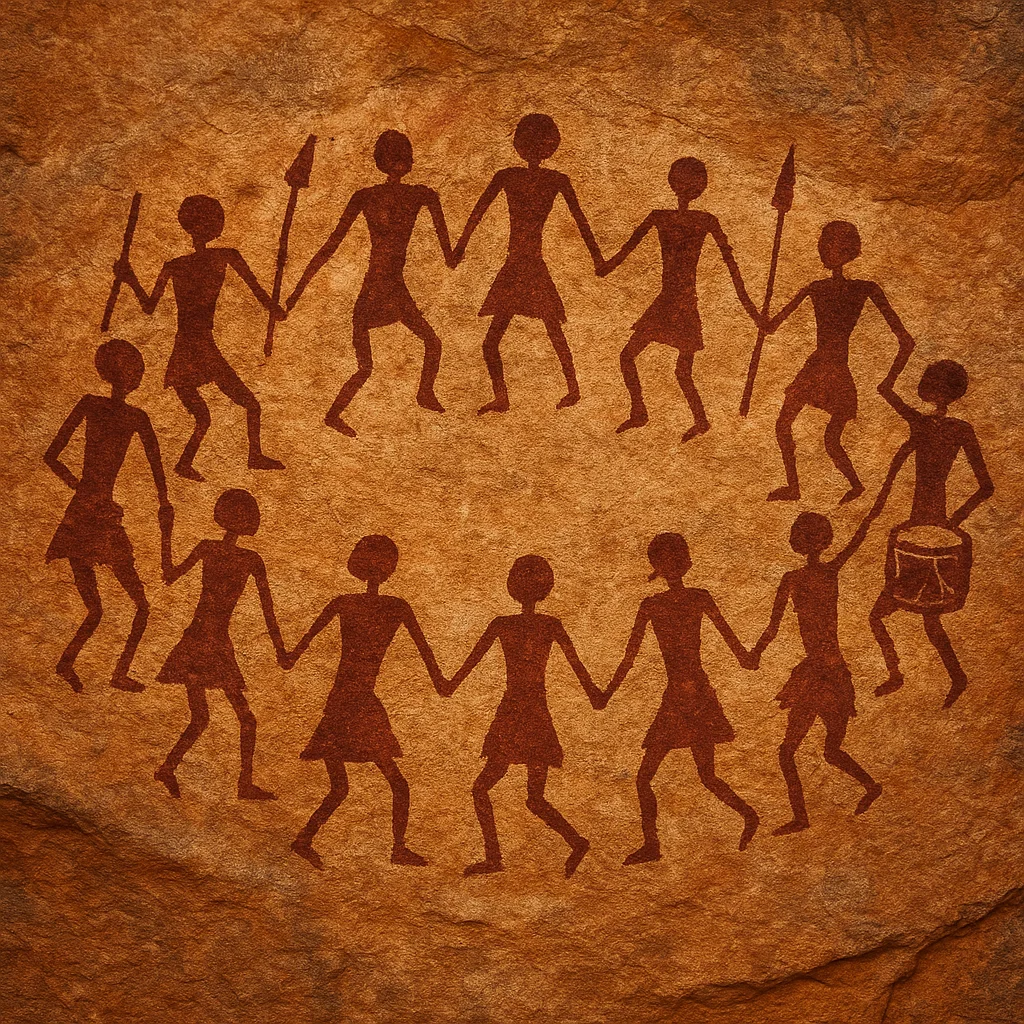
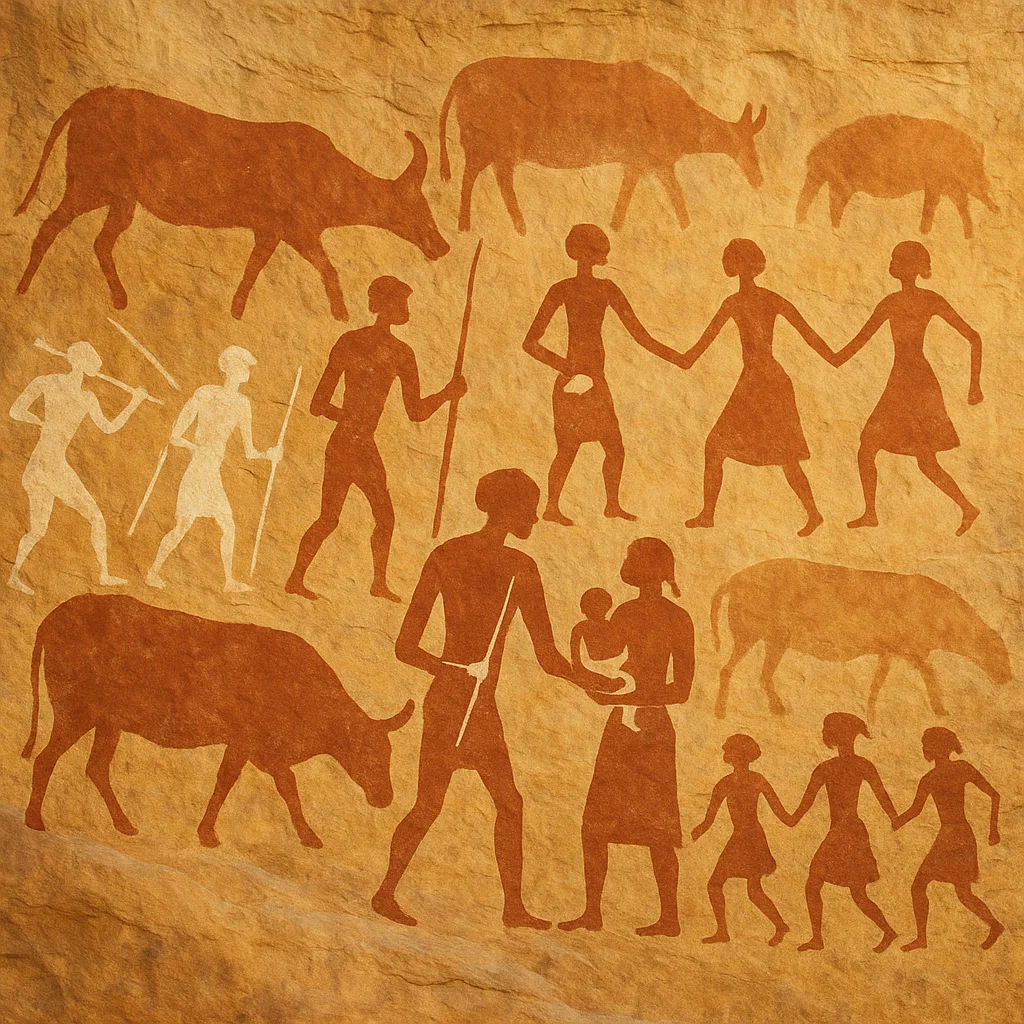
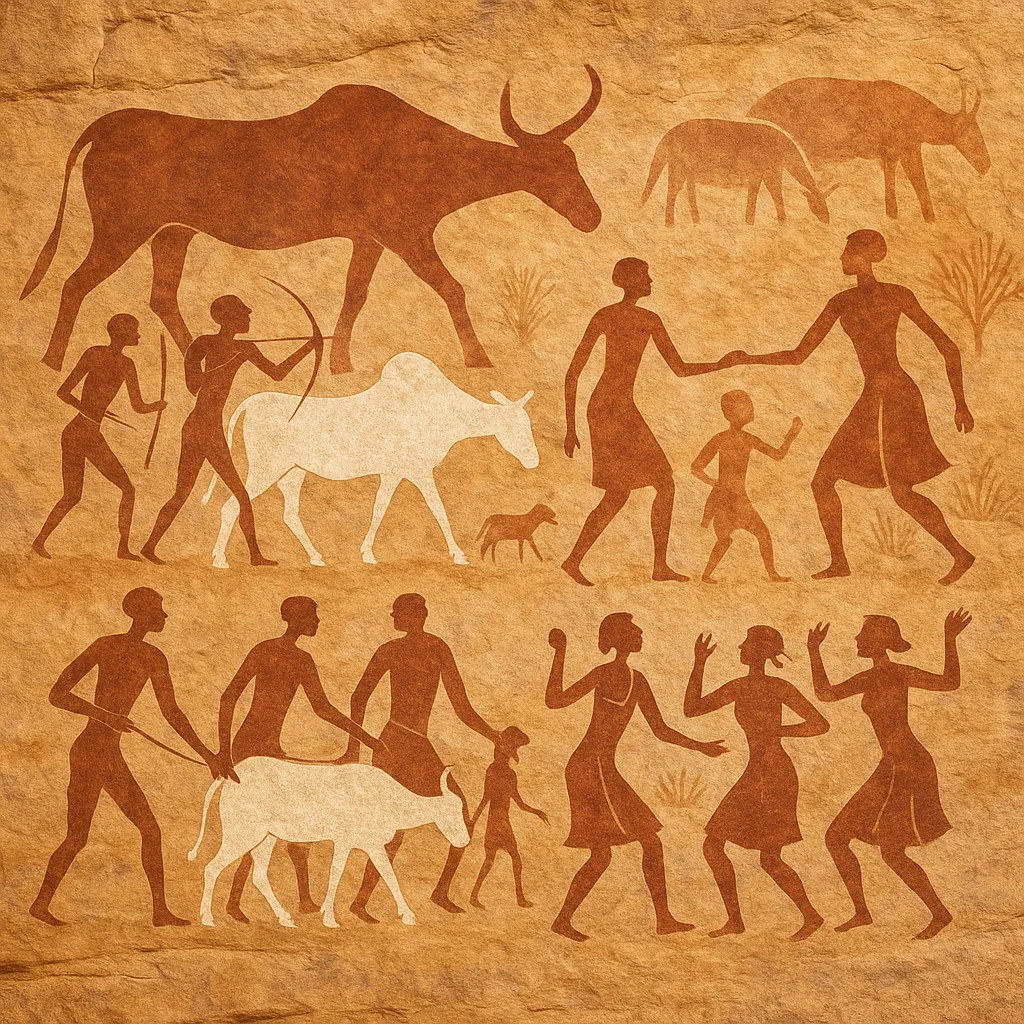
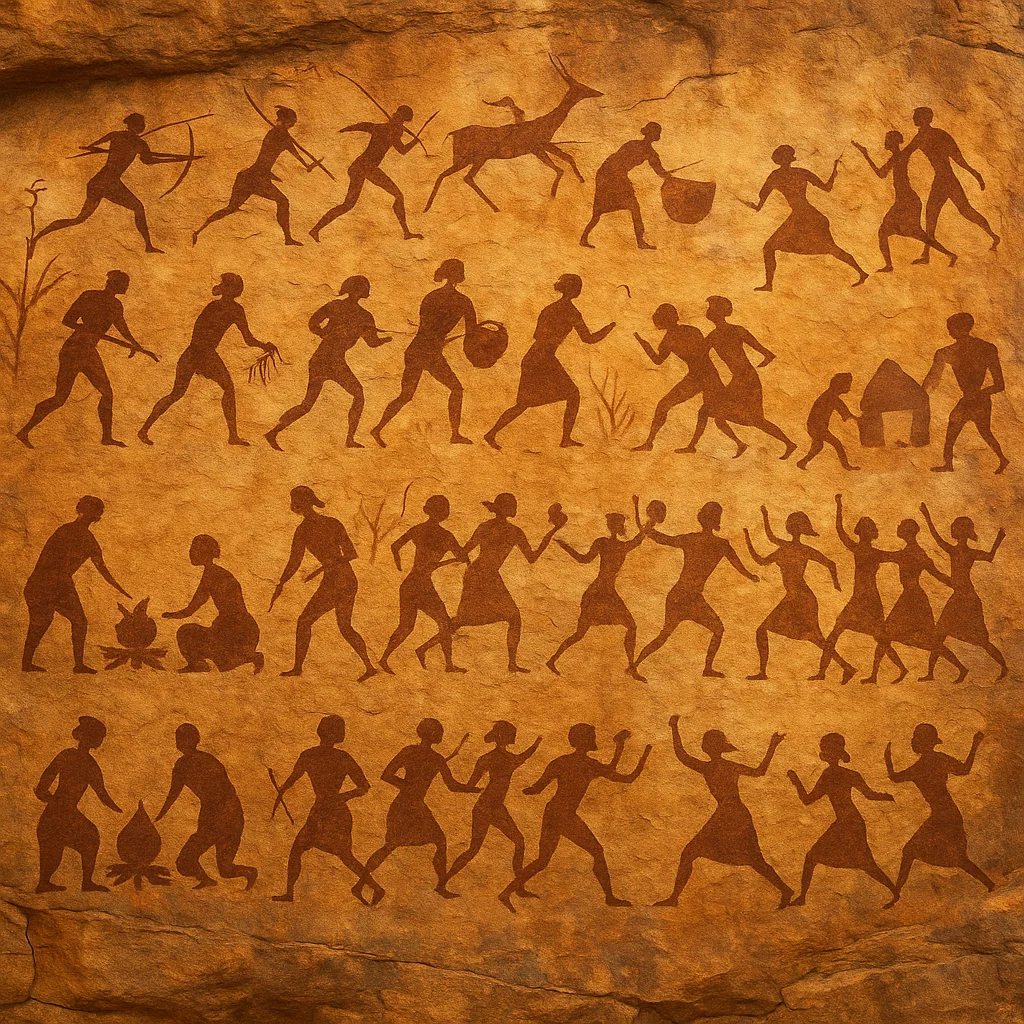
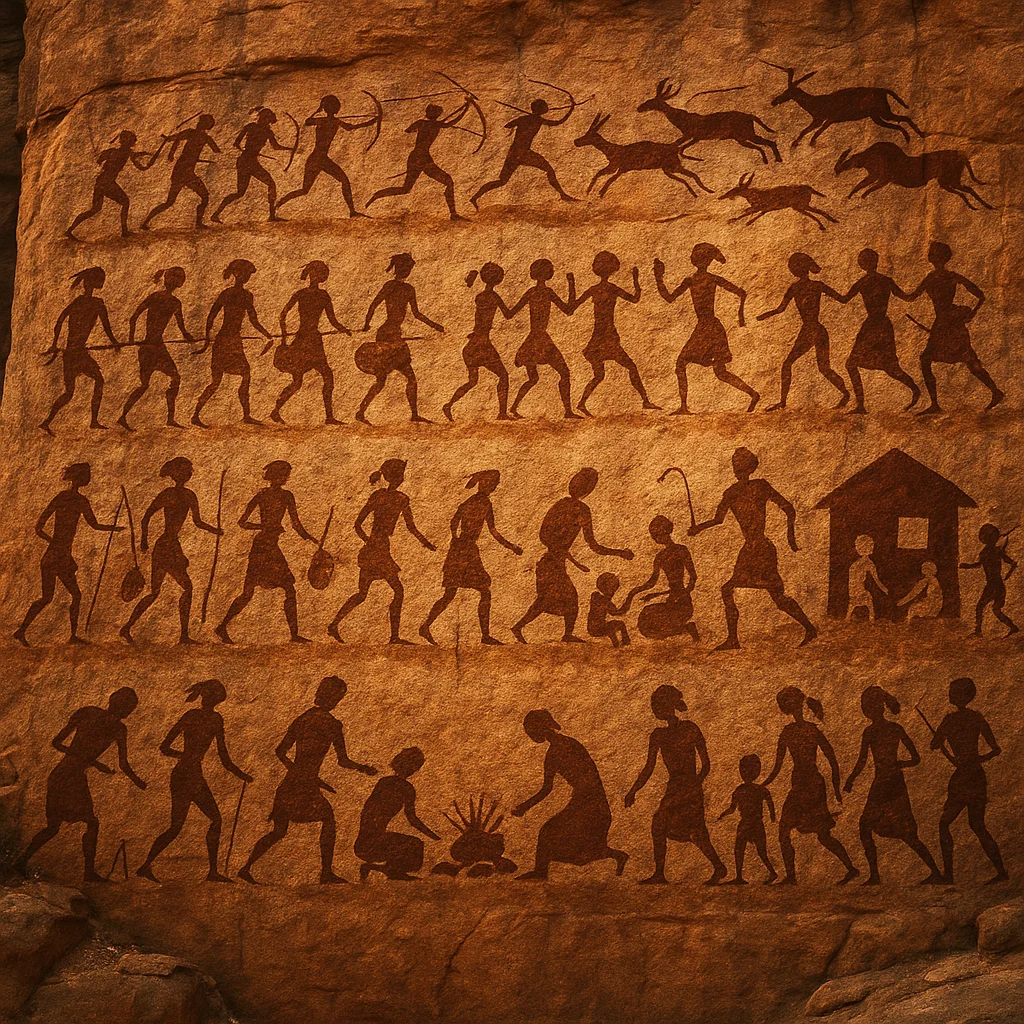
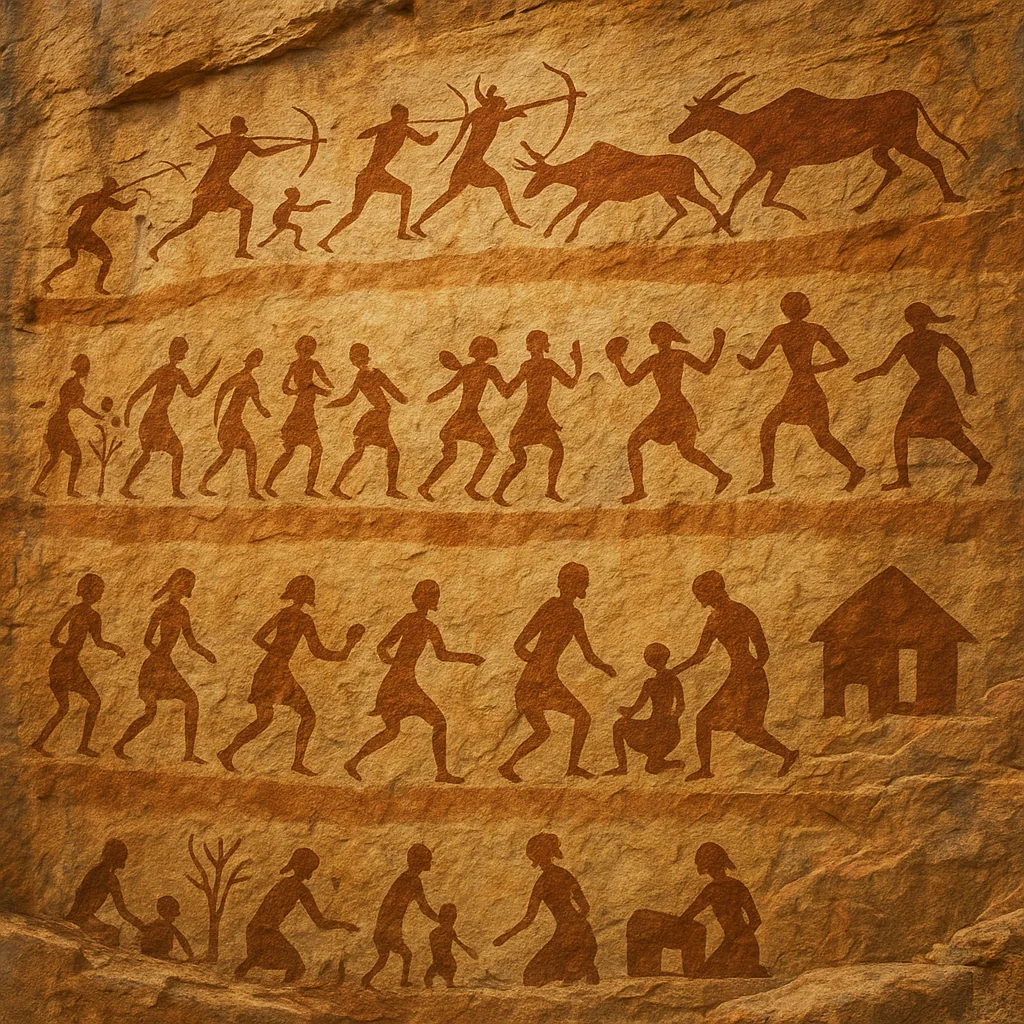
| Mesolithic | c. 10,000 – 8,000 BCE | Image as social memory; narrative of daily life and ritual motion. | Red ochre and natural dyes on open rock shelters; stylized human figures and group scenes. | Bhimbetka (India), Tassili n’Ajjer (Algeria), Spanish Levantine shelters. Transition toward storytelling and communal identity. |
| Neolithic | c. 8,000 – 4,500 BCE | Image as cosmic and domestic; decoration for fertility, ancestors, and the sacred household. | Pigments mixed with plaster; geometric and abstract motifs integrated into architecture. | Çatalhöyük (Anatolia), Tell Halaf (Syria). First organized compositions, spatial awareness, and symbolic structure. |
| Chalcolithic (Copper Age) | c. 4,500 – 3,000 BCE | Image as order and symbol; emergence of formal iconography. | Mineral-based paints on ceramics and shrines; use of solar, animal, and anthropomorphic motifs. | Mehrgarh (Pakistan), Beersheba (Israel). Transition from sacred abstraction to proto-religious imagery of early civilizations. |
Prehistoric painting is humanity’s first visual theology—a dialogue between pigment and spirit. Every later artistic tradition, from Egyptian tombs to Renaissance frescoes, inherits its essential logic: that color can bind the human and the eternal.
In these earliest images, art was not an ornament to life but a way to make life possible—a sacred rehearsal of creation itself.
Mediums of Prehistoric Painting
The material foundations of prehistoric painting reveal an intimate relationship between human ingenuity, environment, and belief. Long before the formal invention of art, early societies transformed natural substances—stone, mineral, fire, and flesh—into instruments of symbolic communication. These materials were not selected for aesthetic value alone; their physical properties and sources embodied meanings related to fertility, vitality, protection, and transformation. The prehistoric painter’s medium thus functioned simultaneously as a chemical process, a ritual act, and an ontological bridge between the human and the natural world.
1. Pigments
| Pigment | Primary Source | Chromatic Range | Functional Role | Symbolic Associations | Archaeological Context |
|---|---|---|---|---|---|
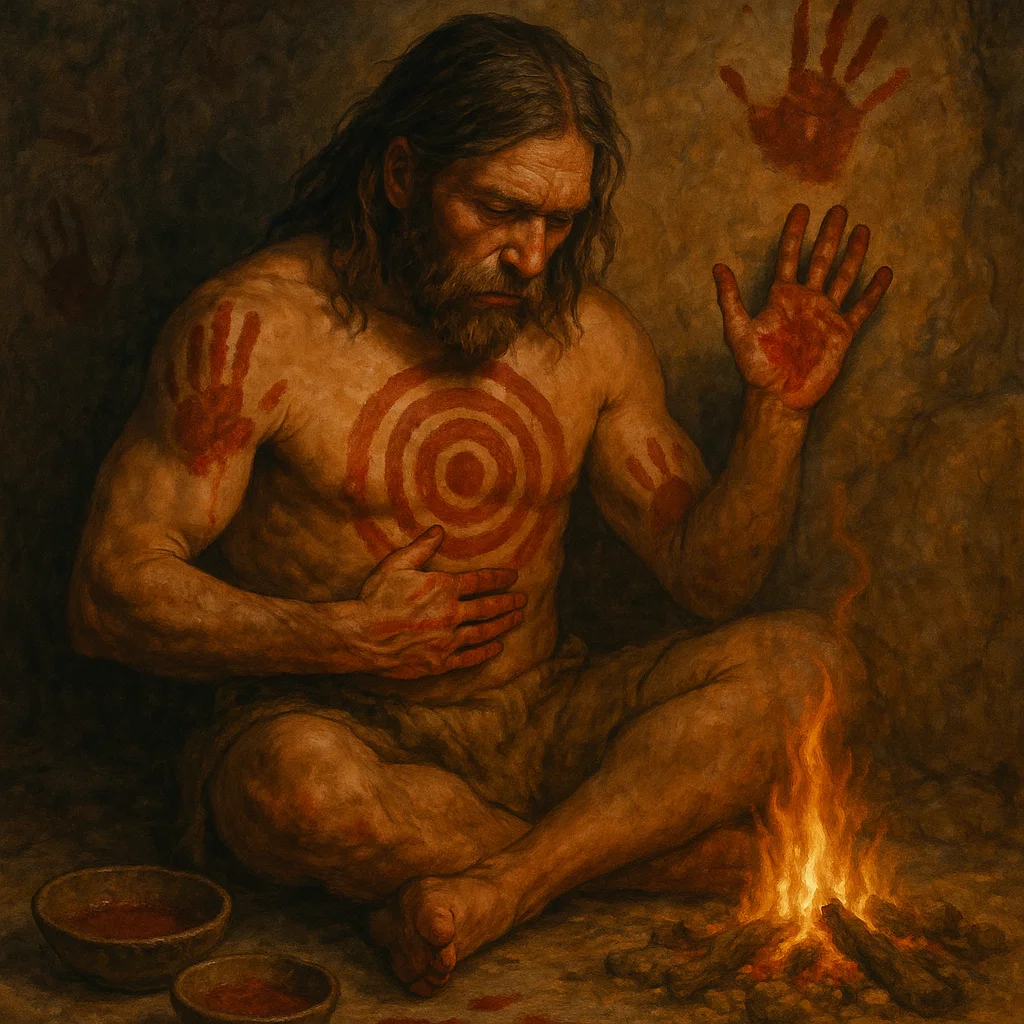
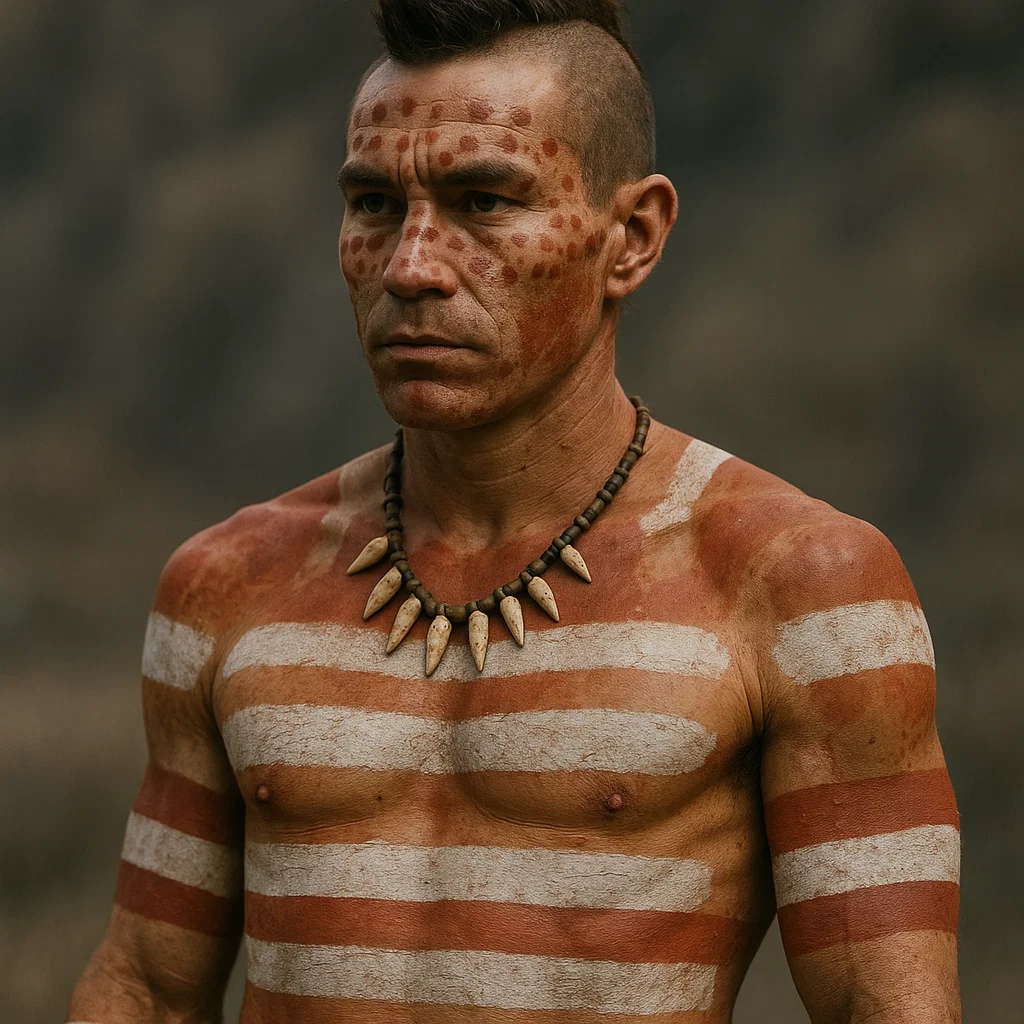
| Ochre (Iron Oxide) | Natural mineral deposits ground to powder | Red, yellow, orange | Base pigment for most paintings; durable and abundant | Blood, vitality, the sun | Found in caves, burials, and habitation sites worldwide (e.g., Blombos Cave, Lascaux) |
| Manganese Dioxide | Oxide nodules or mineral veins | Black, violet-gray | Outlines and shading; mixed for darker tones | Death, night, mystery | Used extensively in Chauvet Cave to define form and contrast |
| Charcoal | Burned wood or bone | Black, gray | Sketching and tonal gradation | Smoke, transformation | Common in Lascaux and Altamira underdrawings |
| Calcite / Kaolin | Chalk and clay minerals | White | Highlights and layering agent | Spirit, purity, bone | Employed to create contrast or luminosity |
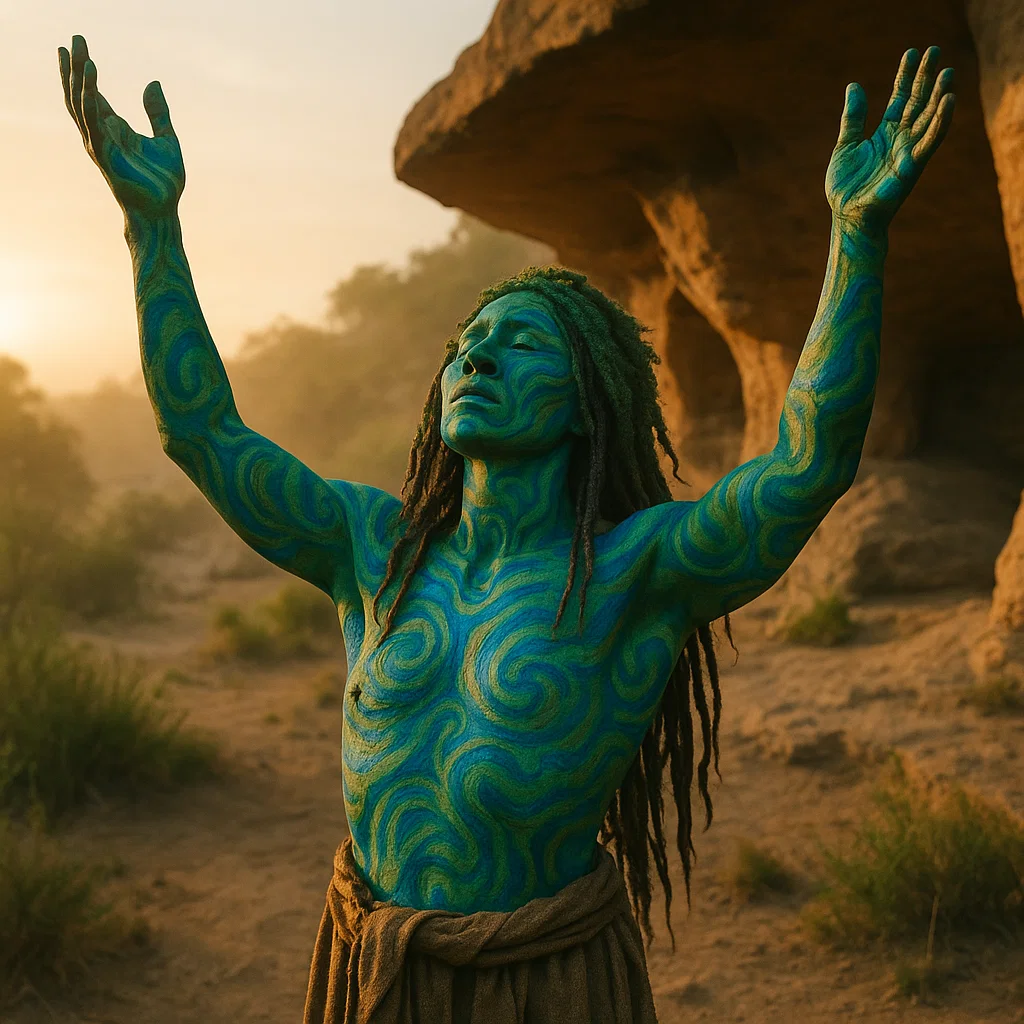
| Malachite / Azurite | Copper carbonates | Green, blue | Rare; used in later phases | Vegetation, sky, divinity | Appears in late Neolithic and Chalcolithic contexts where copper use began |
2. Binders and Carriers
| Substance | Composition | Function | Archaeochemical Evidence | Interpretive Significance |
|---|---|---|---|---|
| Animal Fat | Rendered tallow or marrow | Vehicle for pigment adhesion; increased viscosity | Residues in pigment traces and lamps | Linked to sustenance and sacrifice; life-force medium |
| Plant Resin or Sap | Natural gums and exudates | Adhesive; increased durability and gloss | Detected in binding residues on cave walls | Indicates knowledge of organic chemistry and preservation |
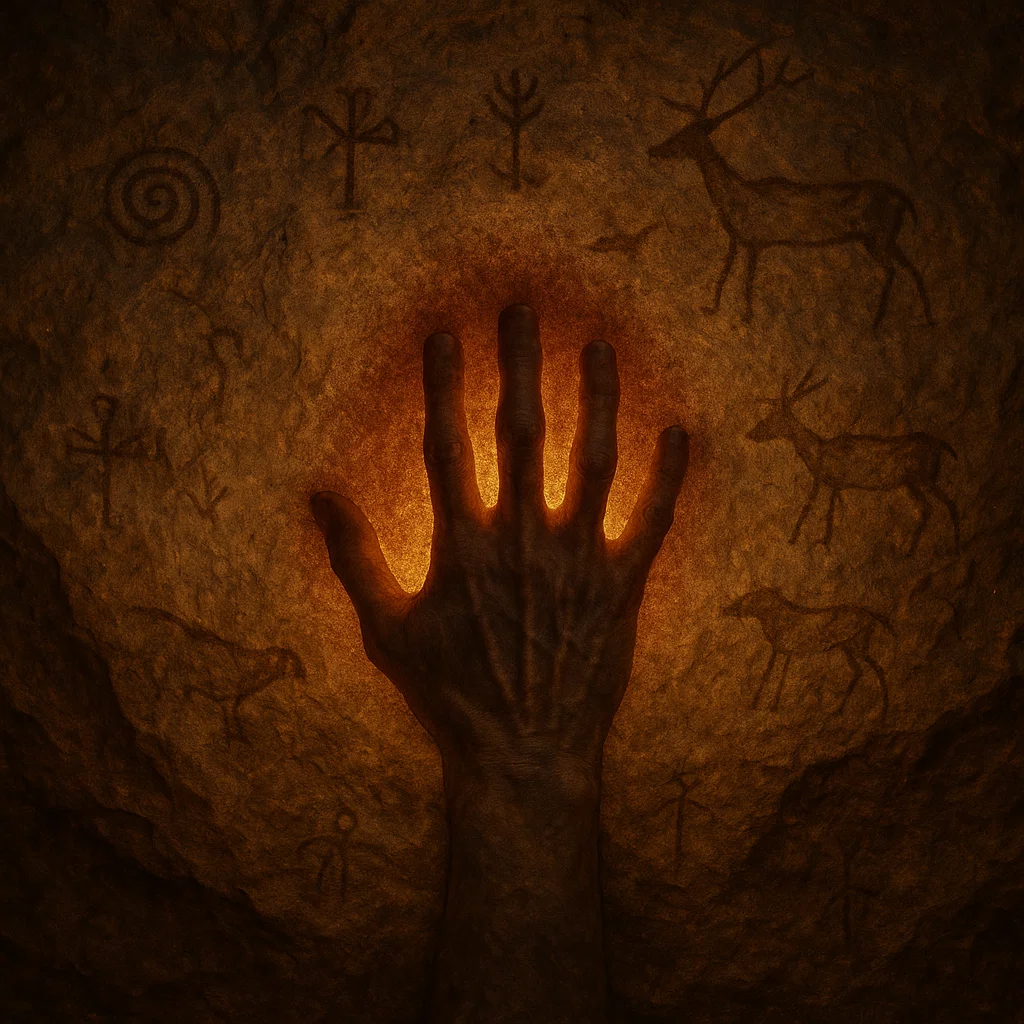
| Water or Saliva | Universal solvent | Dilution or spray application | Spatter and blow marks on stenciled hands | Enabled atomization and ritualized breathing of pigment |
| Blood | Animal or human | Occasional symbolic binder | Difficult to confirm chemically; inferred from ritual context | Represents direct infusion of life essence into the image |
3. Painting Surfaces
| Surface Type | Physical Properties | Method of Preparation | Representative Sites | Function and Context |
|---|---|---|---|---|
| Cave Wall (Limestone, Granite) | Porous, irregular texture | Occasionally smoothed or coated with clay | Lascaux, Chauvet, Altamira | Enclosed sanctuaries used for ritual and symbolic deposition |
| Rock Shelter (Sandstone) | Exposed and weathered | Minimal preparation | Bhimbetka, Tassili n’Ajjer | Public or communal space; narratives of group identity |
| Plastered Wall | Artificial lime or mud surface | Applied in domestic or sacred structures | Çatalhöyük, Tell Halaf | Integration of art with architecture; precursor to fresco technique |
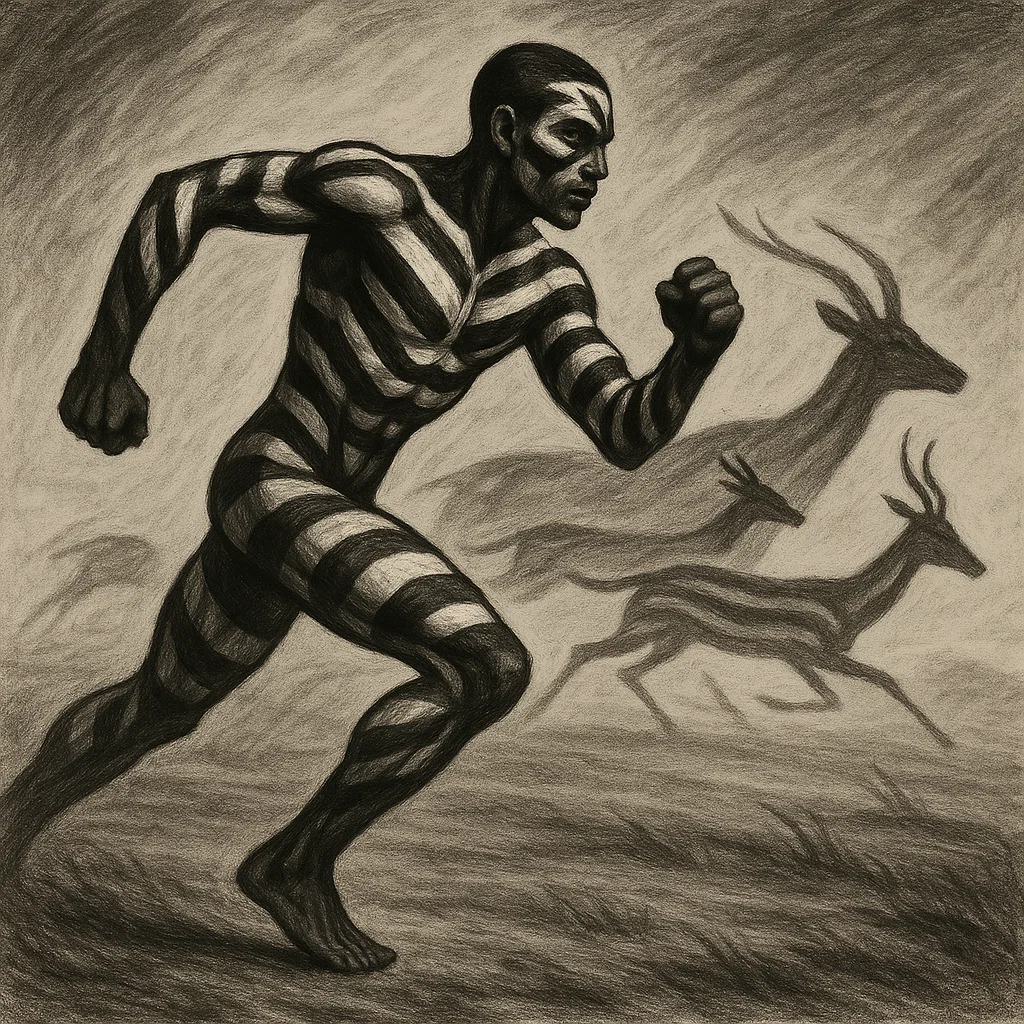
| Body or Object Surface | Organic and ephemeral | Pigment mixed with fat and applied directly | Widespread ethnographic evidence | Mobile form of painting tied to identity, status, and transformation |

4. Tools and Techniques
| Tool / Method | Material | Application Function | Archaeological or Experimental Evidence | Observations |
|---|---|---|---|---|
| Hands and Fingers | Human skin | Direct pigment application and tracing | Finger streaks and palm marks in caves | Primary expressive instrument; intimate control |
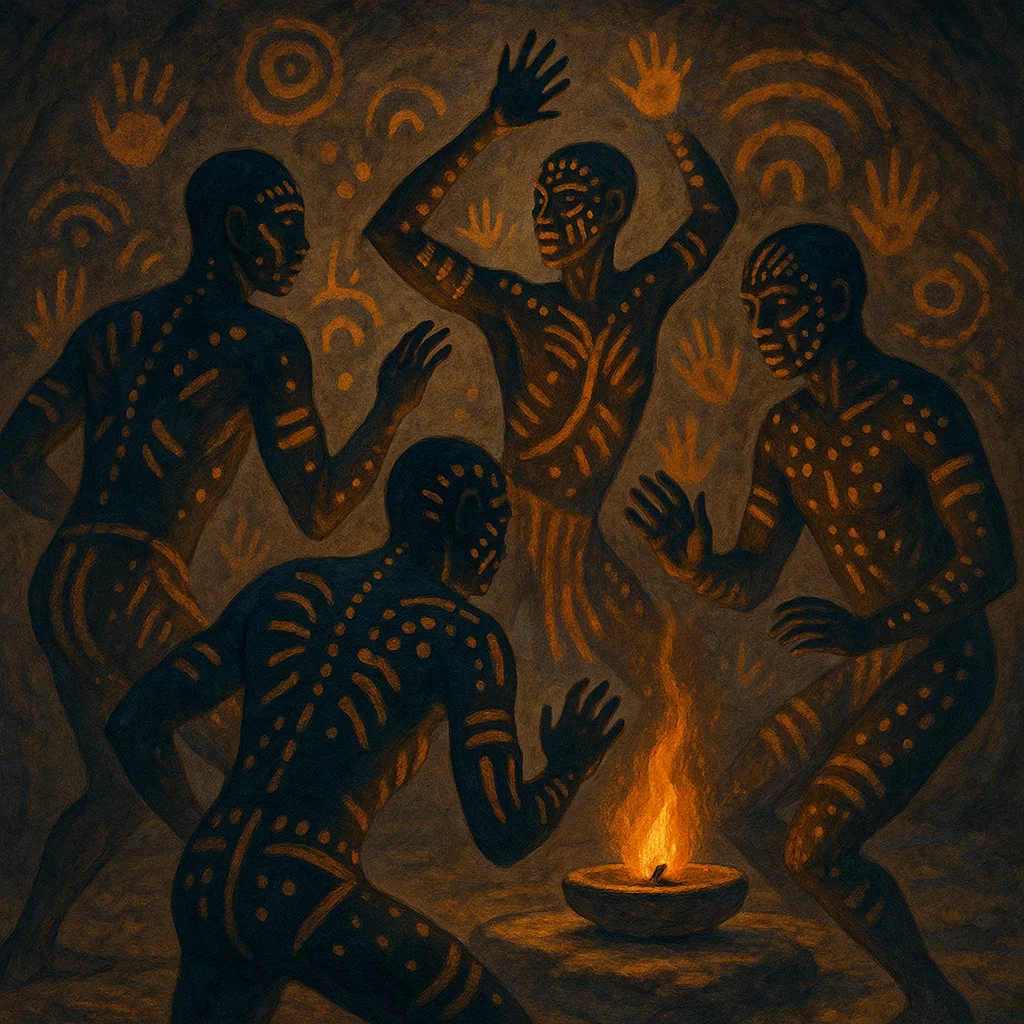
| Blow Tube (Bone or Reed) | Hollow bone, bird radius, or reed | Spray pigment for stencils or shading | Stenciled handprints at Gargas and Pech Merle | Suggests ritual breath symbolism and technical innovation |
| Primitive Brushes | Animal hair, moss, or grass | Controlled linework and fine detailing | Implied by linear stroke traces | Early experiment in tool-mediated gesture |
| Engraving Stylus | Flint or obsidian | Incised outlines preceding pigment fill | Found in conjunction with painted panels | Combination of drawing and painting; dual visual register |
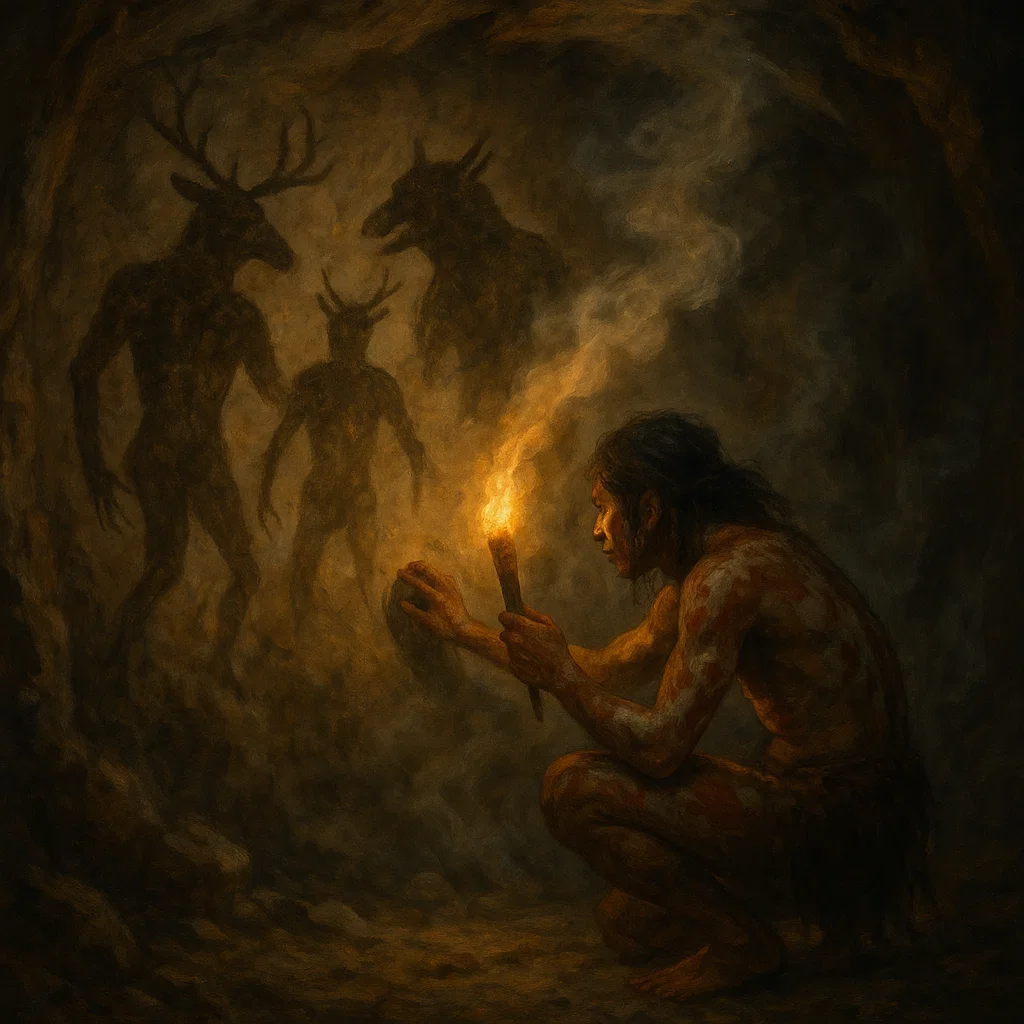
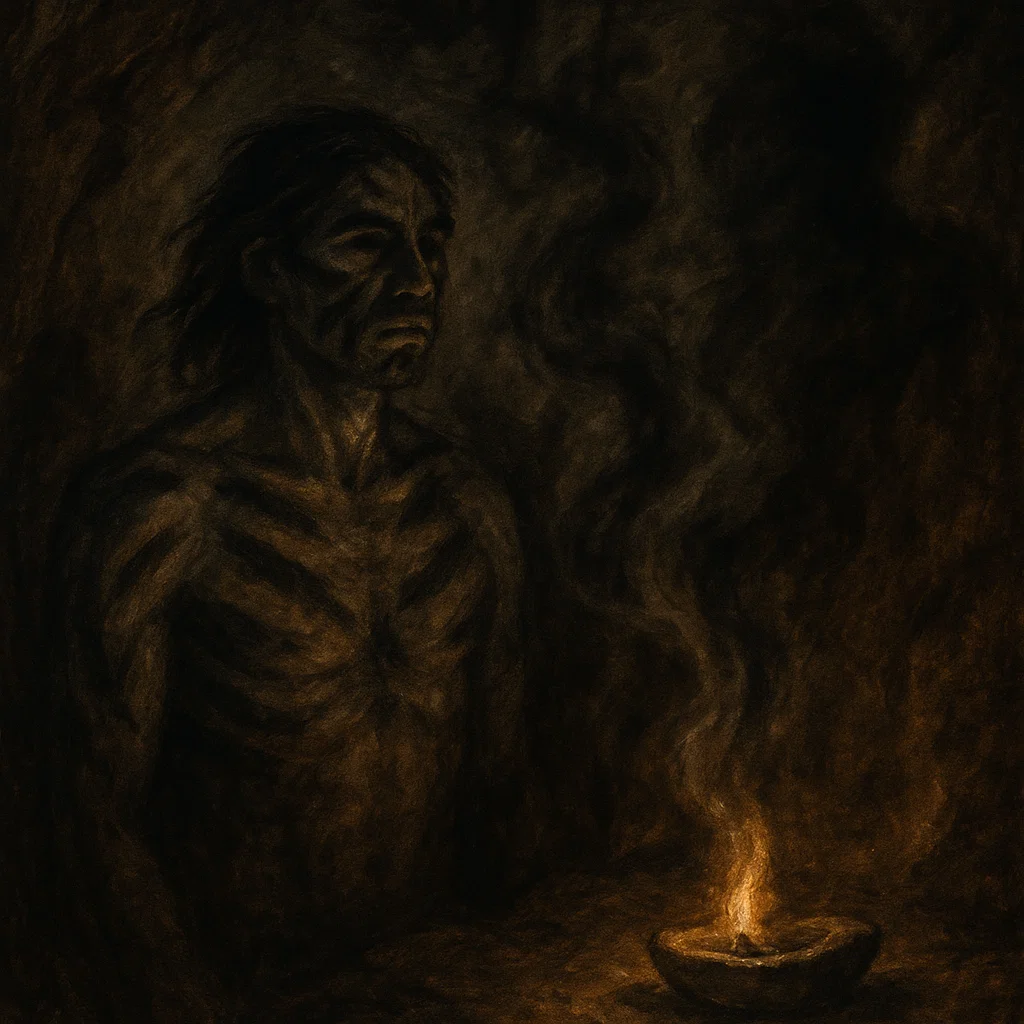
| Oil Lamp / Firelight | Stone lamp fueled by fat | Illumination of deep cave spaces | Residue and soot marks on ceilings | Dynamic interplay of light and image; performative context |
5. Conceptual Integration
The prehistoric painter operated within a holistic system where material, gesture, and meaning were inseparable. Pigments derived from the body of the earth, binders from the flesh of animals, and illumination from fire collectively enacted a cosmology of transformation.
Color was not a decorative property but an ontological statement: to paint was to participate in creation itself. The surface of stone became a membrane between worlds—physical and metaphysical, temporal and eternal. In this synthesis, prehistoric mediums formed the conceptual foundation of all subsequent painting traditions: the belief that matter, when ordered through intention and vision, becomes spirit made visible.