(1200 BC – 500 BC)
 Curent Era Name
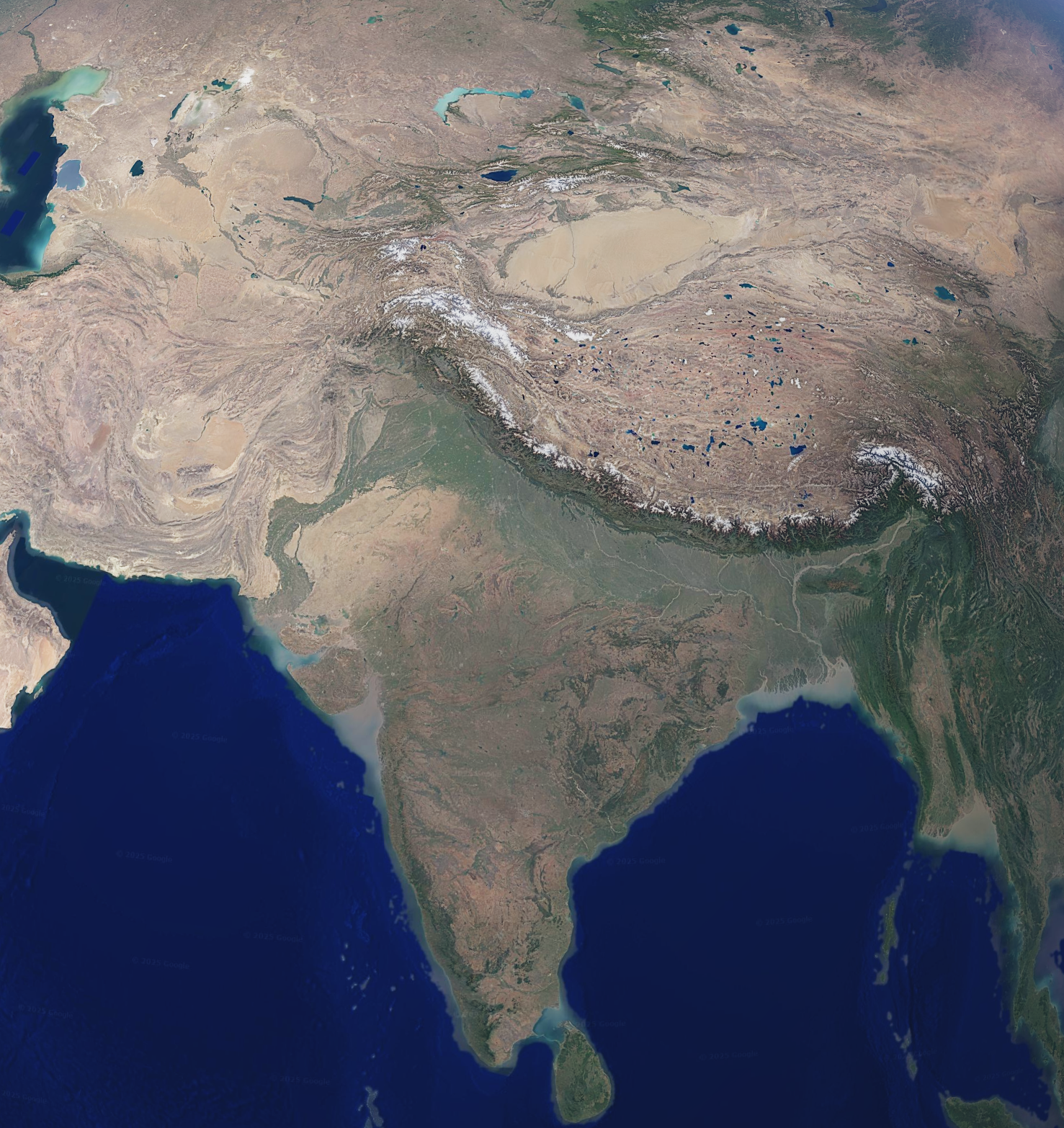
Geography of India & Central Asia
Indo-Gangetic Plain
Deccan Peninsular India
Himalayan South Face
Trans-Oxus Central Asia (Oxiana)
Curent Era Name
Geography of India & Central Asia
Indo-Gangetic Plain
Deccan Peninsular India
Himalayan South Face
Trans-Oxus Central Asia (Oxiana)
| Period Link | Prehistory | Prehistory | Prehistory | Prehistory | Ancient History | Ancient History | Ancient History | Medieval History | Medieval History | Medieval History |
|---|---|---|---|---|---|---|---|---|---|---|
| Start Year | 2,500,000 BC | 10,000 BC | 8,000 BC | 4,500 BC | 3,000 BC | 1,200 BC | 500 BC | 500 AD | 1000 AD | 1300 AD |
| End Year | 10,000 BC | 8,000 BC | 4,500 BC | 3,000 BC | 1,200 BC | 500 BC | 500 AD | 1000 AD | 1300 AD | 1500 AD |
| India and Central Asia | Paleolithic India and Central Asia | Mesolithic India and Central Asia | Neolithic India and Central Asia | Chalcolithic India and Central Asia | Indus & Central Asia (South Asia Corridor) Bronze Age | Indus & Central Asia (South Asia Corridor) Iron Age | Indian Antiquity | Early Medieval India and Central Asia | High Medieval India and Central Asia | Late Medieval India and Central Asia |
| Period Link | Early Modern History | Early Modern History | Early Modern History | Modern History | Modern History | Modern History | Contemporary History | Contemporary History | Contemporary History |
|---|---|---|---|---|---|---|---|---|---|
| Start Year | 1500 AD | 1600 AD | 1700 AD | 1800 AD | 1870 AD | 1914 AD | 1945 AD | 1985 AD | 2026 AD |
| End Year | 1600 AD | 1700 AD | 1800 AD | 1870 AD | 1914 AD | 1945 AD | 1985 AD | 2025 AD | 2065 AD |
| India and Central Asia | Renaissance and Reformation India and Central Asia | Scientific Revolution and State Formation India and Central Asia | Enlightenment and Proto-Industrial India and Central Asia | Industrial Era India and Central Asia | Long 19th Century India and Central Asia | World War Era India and Central Asia | Cold War Era India and Central Asia | Allisonian Era India and Central Asia | Deasy Era India and Central Asia |
Cultural Lineages of the Iron Age Indus and Central Asia
The Iron Age in the Indus and Central Asian region, spanning roughly 1200–500 BCE, was defined by major cultural transitions linking South and Central Asia through migration, metallurgy, and trade. As Indo-Aryan peoples moved into the Ganges plain, the Vedic tradition evolved from pastoral settlements to the early Mahajanapada states, establishing the philosophical and linguistic foundations of Hindu civilization. Meanwhile, the remnants of the Indus Valley culture persisted in village-based economies across Sindh and Punjab, preserving craft and agrarian traditions. In Central Asia, the Bactria–Margiana and Steppe–Iranian lineages bridged nomadic and urban worlds, spreading horse culture, chariot warfare, and early Iranian languages. Coastal and desert trade systems—from Baluchistan to Seistan—linked these regions into a vast corridor of exchange, setting the stage for Achaemenid integration in the following centuries.
[table “491” not found /]By 500 BCE, the Indus and Central Asian world had transformed into a network of emerging kingdoms, fortified city-states, and trade civilizations tied to the Persian Empire’s expanding influence. The Mahajanapadas flourished across northern India, while Bactria and the Iranian plateau became centers of early state formation and Zoroastrian cultural development. Nomadic confederations such as the Saka and Massagetae maintained control of the steppe corridors, facilitating both conflict and commerce between East and West. The enduring village traditions of post-Harappan India, combined with Indo-Iranian and Achaemenid systems of governance and exchange, shaped one of the most interconnected regions of the ancient world—linking the heartlands of South Asia to the imperial and nomadic frontiers of Central Asia.
The Indus and Central Asia in 1200 BC
By 1200 BCE, the Indus and Central Asian region was undergoing profound transformation as Bronze Age urban centers gave way to Iron Age societies defined by migration, metallurgy, and cultural synthesis. In the northwestern plains of India, the Late Vedic or Painted Grey Ware culture reflected the consolidation of Indo-Aryan polities, the spread of iron technology, and the composition of early Sanskrit texts. The vestiges of the Harappan world persisted through small agrarian villages and trade in metallurgy, while the Bactria–Margiana and Andronovo–Fedorovo lineages shaped the highlands and steppe through chariot warfare, fortified compounds, and emerging Indo-Iranian religions. Along the coast and desert corridors, the Baluchistan–Makran and Helmand–Seistan traditions sustained vital trade routes linking India, Iran, and Central Asia, preserving networks of exchange amid a rapidly changing political and ecological landscape.
[table “444” not found /]The Indus and Central Asia at 1200 BCE marked the convergence of fading Bronze Age civilizations and nascent Iron Age cultures. The Indo-Aryan expansion transformed the social and linguistic fabric of northern India, while Central Asian steppe peoples spread new forms of mobility and technology across the region. Even as urbanism declined, trade, metallurgy, and ritual continuity endured through local innovation and cultural adaptation. This era bridged two worlds—the Harappan legacy of order and craftsmanship and the Vedic–Iranian frontier of movement and transformation—laying the foundations for the classical civilizations that would dominate the subcontinent and its northern frontiers for centuries to come.
The Indus and Central Asia in 1100 BC
By 1100 BCE, the Indus and Central Asian world was defined by cultural resilience and transformation as Bronze Age traditions merged with emerging Iron Age societies. In northern India, Vedic communities expanded eastward across the Ganges plain, establishing early tribal monarchies and agricultural settlements supported by iron tools and evolving ritual centers. Post-Harappan villages across Sindh and the Punjab maintained craft production and metallurgy while adapting to new trade realities. Farther north, the Bactria–Margiana and Andronovo traditions restructured into fortified towns and mobile pastoral networks, linking Indo-Iranian migrations with technological and religious exchange. Coastal and desert cultures in Baluchistan and Seistan sustained the transregional trade in copper, shell, and lapis, preserving the connective tissue between South, Central, and West Asia.
[table “487” not found /]The Indus and Central Asia at 1100 BCE marked the slow but steady evolution from the ancient urban systems of the Bronze Age toward new social and political orders. Across river valleys, highlands, and steppes, a mosaic of interconnected traditions persisted—each adapting metallurgy, trade, and spiritual life to local conditions. The Indo-Aryan advance laid the groundwork for India’s Vedic civilization, while fortified towns and nomadic migrations shaped Iran’s emerging cultural landscape. Through continuity and adaptation, the region remained a vital crossroads of innovation, uniting the agrarian economies of the Indus with the mobile frontiers of Central Asia in one of the most dynamic epochs of early Eurasian history.
The Indus and Central Asia in 900 BC
By 900 BCE, the Indus and Central Asian world had settled into new political, cultural, and economic rhythms shaped by the long transition from Bronze to Iron Age civilization. In the Ganges–Yamuna plains, the Middle Vedic kingdoms such as Kuru and Panchala emerged as the first settled monarchies of India, establishing the social and ritual order that would define later Vedic society. Across Sindh and Punjab, small Post-Harappan farming communities persisted, maintaining local crafts and metallurgy. To the north, the Bactria–Margiana region evolved into fortified oasis estates ruled by Indo-Iranian elites, while the steppe frontier became a dynamic zone of nomadic–agrarian interaction that gave rise to early Saka and Iranian cultural layers. Along the coasts and deserts of Baluchistan and Seistan, trade routes revived, linking South Asia with the Iranian plateau and the Gulf through a complex network of copper, shell, and caravan exchange.
[table “488” not found /]The Indus and Central Asia at 900 BCE represented a landscape of transformation and integration. Vedic India was becoming literate and stratified, its rituals codified and its kingship defined, while Central Asian societies fused nomadic mobility with urban and religious innovation. Trade networks—both maritime and overland—ensured the flow of metals, horses, and ideas across vast frontiers, spreading Indo-Iranian languages and Zoroastrian symbolism. Though large-scale cities of the past were gone, regional specialization and cultural continuity endured, forming the backbone of the early Iron Age world. These societies, rooted in both tradition and adaptation, laid the groundwork for the great kingdoms and empires that would follow across South and Central Asia.
The Indus and Central Asia in 700 BC
By 700 BCE, the Indus and Central Asian region had matured into a network of interacting agrarian kingdoms, fortified city-states, and nomadic confederations. In the Ganges plain, the Late Vedic and early Mahajanapada states transformed tribal societies into centralized monarchies, codifying Brahmanical philosophy and expanding iron technology for tools and warfare. Across Sindh and Punjab, the Post-Harappan towns endured as small agricultural centers with localized crafts and metallurgy, while to the northwest, the Iranian plateau and Bactria flourished as Zoroastrian-influenced city-states dominating trade and irrigation networks. On the steppes, the Proto-Saka and Massagetae nomads perfected mounted warfare and became vital intermediaries in trans-Eurasian commerce, as Baluchistan’s coastal routes and Seistan’s desert polities tied South Asia into the emerging Achaemenid world.
[table “489” not found /]The Indus and Central Asia at 700 BCE represented a dynamic convergence of innovation and continuity. Vedic India transitioned toward philosophical depth and urban expansion, while the Iranian and Central Asian highlands fostered theocratic states and fortified trade hubs. Nomadic powers reshaped the military and economic landscape through mobility and metallurgy, and coastal trade with Arabia and Iran integrated the region into broader Afro-Eurasian systems. Despite political diversity, shared technologies—ironworking, irrigation, and horse culture—linked these civilizations in a web of exchange. This age laid the structural and ideological groundwork for both the classical Indian states and the vast imperial systems that would soon unite the Iranian and Central Asian worlds.
The Indus and Central Asia in 500 BC
By 500 BCE, the Indus and Central Asian world had entered a new era of imperial integration, urban expansion, and philosophical transformation. In northern India, the Mahajanapada kingdoms—such as Magadha, Kosala, and Kashi—emerged as powerful, urbanized states with fortified capitals, coinage, and bureaucratic administration. The Ganges plain became a crucible of innovation, witnessing the birth of Buddhism and Jainism alongside advancements in agriculture and irrigation. To the northwest, Gandhara, Bactria, and Arachosia were incorporated into the Achaemenid Empire, creating a vast imperial network that linked India to Persia and Central Asia through standardized systems of taxation, roads, and trade. Meanwhile, nomadic, coastal, and oasis societies continued to sustain the connective arteries of exchange stretching from the Iranian plateau to the Arabian Sea.
[table “490” not found /]The Indus and Central Asia at 500 BCE represented a highly interconnected landscape of empire, commerce, and cultural synthesis. Persian administration unified distant regions under shared economic and linguistic systems, while Indian kingdoms refined governance, spiritual thought, and technological innovation. Zoroastrian fortresses rose across Central Asia, and Persian-linked port cities on the Makran coast bridged maritime routes to Arabia and Africa. At the same time, nomadic Saka and Massagetae confederations maintained the mobility and trade networks that fed the empire’s frontiers. This period marked the full convergence of Indo-Iranian and South Asian civilizations, setting the foundations for the classical empires and trans-Eurasian exchanges that would define the next age.