(3000 BC – 1200 BC)
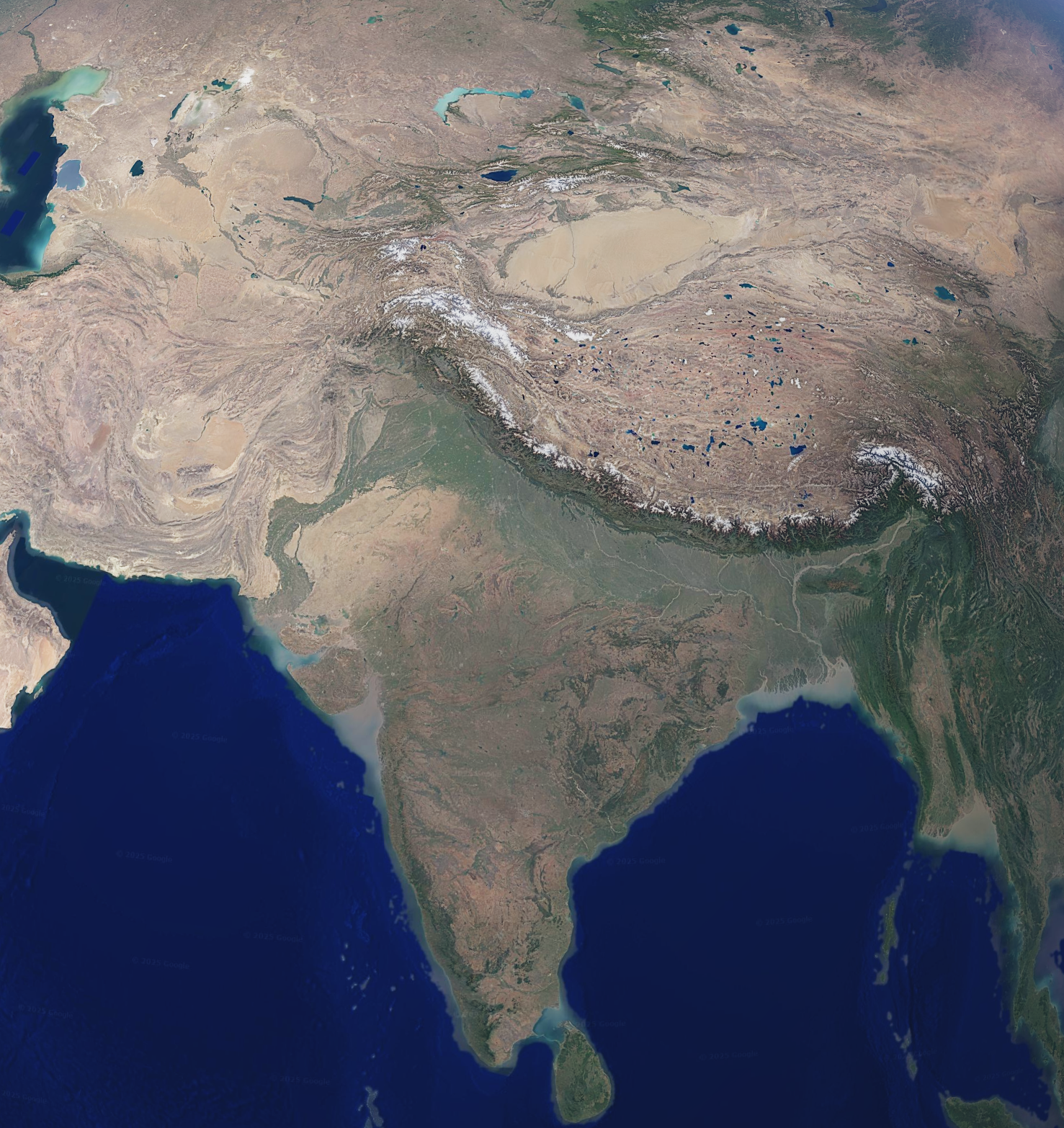 Curent Era Name
Geography of India & Central Asia
Indo-Gangetic Plain
Deccan Peninsular India
Himalayan South Face
Trans-Oxus Central Asia (Oxiana)
Curent Era Name
Geography of India & Central Asia
Indo-Gangetic Plain
Deccan Peninsular India
Himalayan South Face
Trans-Oxus Central Asia (Oxiana)
| Period Link | Prehistory | Prehistory | Prehistory | Prehistory | Ancient History | Ancient History | Ancient History | Medieval History | Medieval History | Medieval History |
|---|---|---|---|---|---|---|---|---|---|---|
| Start Year | 2,500,000 BC | 10,000 BC | 8,000 BC | 4,500 BC | 3,000 BC | 1,200 BC | 500 BC | 500 AD | 1000 AD | 1300 AD |
| End Year | 10,000 BC | 8,000 BC | 4,500 BC | 3,000 BC | 1,200 BC | 500 BC | 500 AD | 1000 AD | 1300 AD | 1500 AD |
| India and Central Asia | Paleolithic India and Central Asia | Mesolithic India and Central Asia | Neolithic India and Central Asia | Chalcolithic India and Central Asia | Indus & Central Asia (South Asia Corridor) Bronze Age | Indus & Central Asia (South Asia Corridor) Iron Age | Indian Antiquity | Early Medieval India and Central Asia | High Medieval India and Central Asia | Late Medieval India and Central Asia |
| Period Link | Early Modern History | Early Modern History | Early Modern History | Modern History | Modern History | Modern History | Contemporary History | Contemporary History | Contemporary History |
|---|---|---|---|---|---|---|---|---|---|
| Start Year | 1500 AD | 1600 AD | 1700 AD | 1800 AD | 1870 AD | 1914 AD | 1945 AD | 1985 AD | 2026 AD |
| End Year | 1600 AD | 1700 AD | 1800 AD | 1870 AD | 1914 AD | 1945 AD | 1985 AD | 2025 AD | 2065 AD |
| India and Central Asia | Renaissance and Reformation India and Central Asia | Scientific Revolution and State Formation India and Central Asia | Enlightenment and Proto-Industrial India and Central Asia | Industrial Era India and Central Asia | Long 19th Century India and Central Asia | World War Era India and Central Asia | Cold War Era India and Central Asia | Allisonian Era India and Central Asia | Deasy Era India and Central Asia |
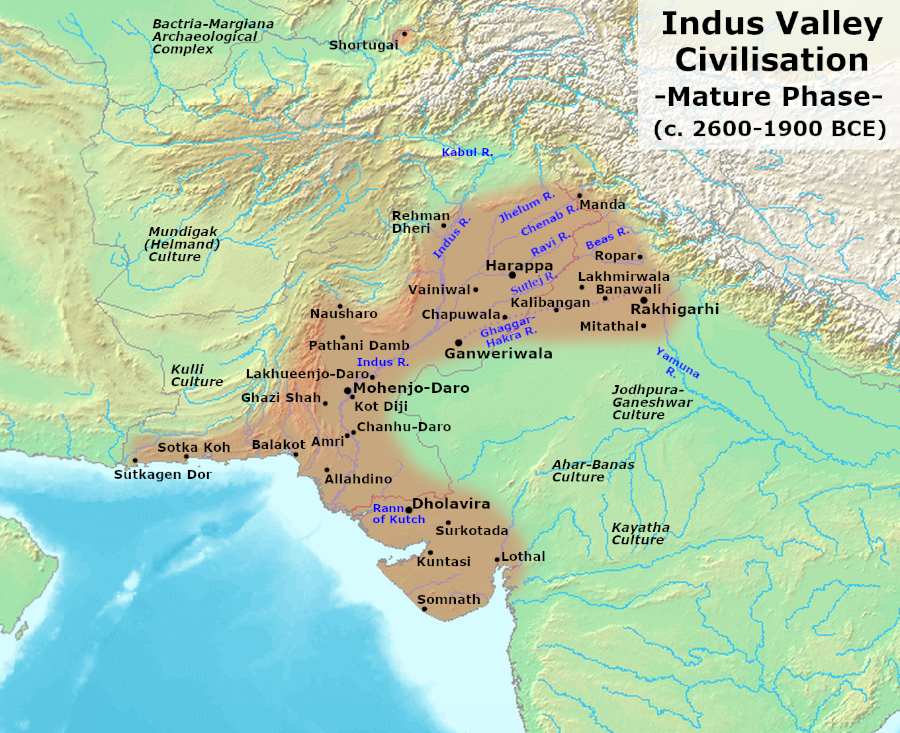
Cultural Lineages of the Bronze Age Indus and Central Asia
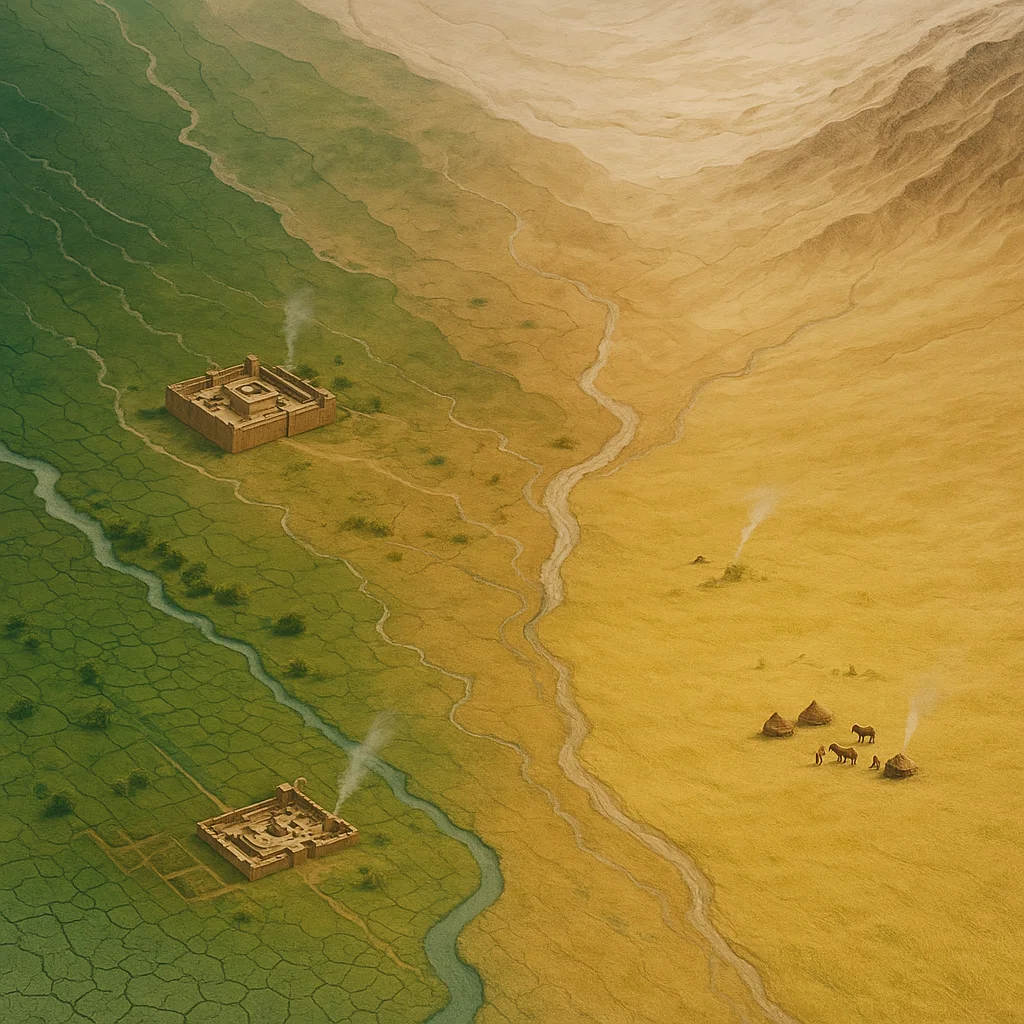
The Bronze Age civilizations of the Indus Valley and Central Asia formed a vast interconnected world of trade, urbanization, and cultural synthesis. From the agrarian riverine settlements of the Early Harappan phase to the fortified oasis cities of Bactria–Margiana and the mobile steppe societies beyond, this region bridged South and Central Asia through complex exchange networks. Distinct lineages—Indus, Punjab–Ravi, Ghaggar–Sarasvati, and BMAC—developed parallel yet complementary traditions in agriculture, metallurgy, and religion, while highland and desert cultures maintained vital links between ecological zones. By 1200 BCE, these diverse streams had fragmented yet laid the foundation for the Vedic, Iranian, and Central Asian civilizations that followed.
[table “445” not found /]Across two millennia, the Indus and Central Asian worlds evolved from localized village cultures into an expansive web of cities, trade routes, and cultural frontiers. The Harappan collapse did not mark an end but a transformation—regional traditions persisted, ruralized, and merged with Indo-Iranian and steppe movements to create new hybrid societies. The enduring patterns of metallurgy, pastoral mobility, and ritual architecture in this network reveal the shared technological and spiritual heritage of early Eurasia, a crucible from which the historic civilizations of India, Iran, and the steppes would later arise.
The Indus and Central Asia in 3000 BC
By 3000 BCE, the Indus and Central Asian regions were undergoing a profound transformation from village-based societies to proto-urban civilizations. Across the plains of the Indus and Ghaggar–Sarasvati rivers, agricultural communities expanded through irrigation, craft specialization, and trade. The Early Harappan and Ravi phases established the foundations for urban life, while parallel highland and oasis cultures such as Bactria–Margiana, Baluchistan, and Helmand developed complex networks of metallurgy, architecture, and long-distance exchange. Together, these traditions formed one of the earliest and most interconnected cultural mosaics of the ancient world.
[table “440” not found /]The dawn of the third millennium BCE in South and Central Asia reflects a balance between innovation and adaptation. Regional communities began to standardize tools, trade goods, and urban planning, foreshadowing the rise of the mature Indus Valley Civilization. Meanwhile, cross-regional contact—from the deserts of Helmand to the mountain corridors of Baluchistan and the irrigated oases of Bactria–Margiana—bound this vast landscape into a shared developmental trajectory. These early experiments in urbanism and exchange laid the structural and cultural groundwork for the great Bronze Age civilizations that would soon dominate the region.
The Indus and Central Asia in 2500 BC
By 2500 BCE, the Indus and Central Asian world had reached a mature pre-urban and early urban phase characterized by growing regional integration and technological advancement. Settlements across the Indus basin, Baluchistan highlands, and Helmand oases evolved into complex centers of trade, metallurgy, and social organization. The Early Harappan towns like Kot Diji and Amri displayed structured layouts and brick architecture, while Shahr-i Sokhta and Geoksyur exemplified the sophistication of Central Asian oasis cultures. These interconnected systems signaled the formation of the Harappan Civilization and a continental web of commerce linking Mesopotamia to the Iranian Plateau and the Indus frontier.
[table “441” not found /]The cultural horizon of 2500 BCE represents the threshold between formative traditions and the great Bronze Age civilizations of South and Central Asia. Distinct yet interdependent cultures—Harappan, BMAC, Baluchistan, and Helmand—shared technologies of irrigation, metallurgy, and standardized production. Long-distance trade in copper, lapis lazuli, and textiles bound these regions together, fostering a shared material and symbolic language. As urban centers expanded and social hierarchies solidified, the region transitioned from experimentation to maturity, setting the stage for one of humanity’s earliest large-scale urban civilizations.
The Indus and Central Asia in 2000 BC
By 2000 BCE, the civilizations of the Indus and Central Asian regions stood at a crossroads of transformation. The once-flourishing urban centers of the Indus Valley—Harappa, Mohenjo-Daro, and Dholavira—entered a phase of decline marked by deurbanization and the rise of rural economies. In contrast, the Bactria–Margiana Archaeological Complex (BMAC) reached its height, creating fortified oasis cities that became hubs of metallurgy and long-distance trade. To the west, Helmand and Iranian Plateau societies contracted but continued vital exchange with both Mesopotamia and South Asia. Meanwhile, new cultural and linguistic movements began to emerge across the steppe frontier, signaling a broader reorganization of Bronze Age networks.
[table “442” not found /]The world of 2000 BCE reveals the divergent trajectories of two great cultural systems—one declining, the other ascending. As the Indus civilization fragmented into regional traditions, the BMAC and related highland societies carried forward much of the technological and ritual sophistication of the era. Early Indo-Iranian groups began to enter the historical stage, integrating steppe mobility with oasis urbanism and setting the foundations for later Vedic and Iranian civilizations. This period thus marks both an end and a beginning—the transformation of an ancient urban continuum into the plural cultural landscape that would dominate the second millennium BCE.
The Indus and Central Asia in 1500 BC
By 1500 BCE, the Indus and Central Asian regions had entered a dynamic phase of cultural transition and convergence. The remnants of the Harappan civilization persisted in rural settlements while Indo-Aryan migrations began reshaping the social and linguistic landscape of northern South Asia. Across Central Asia, the Bactria–Margiana Archaeological Complex (BMAC) reached its final stages, blending with steppe traditions in a fertile cultural exchange that produced hybrid technologies and beliefs. From the Swat Valley to Margiana, the interaction between settled urban societies and nomadic pastoralists created the conditions for the emergence of early Vedic and Iranian civilizations.
[table “443” not found /]The world of 1500 BCE was one of continuity and transformation. Old urban orders gave way to decentralized communities and mobile polities, yet the intellectual and technological achievements of the Bronze Age endured through adaptation. Trade routes remained active, carrying metals, horses, and ideas across the Iranian Plateau and into the Indo-Gangetic plain. The fusion of BMAC, steppe, and Harappan legacies formed a bridge between prehistory and history—a crucible in which Indo-Iranian religions, languages, and state traditions began to take recognizable form, guiding the next great era of South and Central Asian civilization.
The Indus and Central Asia in 1200 BC
By 1200 BCE, the Indus and Central Asian regions had transitioned into the early Iron Age, characterized by the decline of Bronze Age urban systems and the rise of new cultural and linguistic orders. Indo-Aryan polities consolidated across northern India, giving rise to the Vedic kingdoms centered on ritual authority and agrarian expansion. In Central Asia, oasis urbanism faded as nomadic groups such as the Andronovo and Fedorovo peoples spread their technologies and beliefs across vast steppes. Meanwhile, remnants of the Harappan, BMAC, and Helmand traditions persisted in localized, rural, and trade-oriented societies, maintaining the long thread of interregional connectivity that defined the ancient Eurasian world.
[table “444” not found /]The age of 1200 BCE marks both an end and a rebirth: the dissolution of great Bronze Age city-states and the emergence of new cultural frameworks that would dominate the first millennium BCE. The Indo-Iranian expansion unified distant steppe and agricultural peoples through language, metallurgy, and religious innovation. Across the Indus and Iranian plateaus, rural continuity and adaptive trade preserved elements of earlier civilizations, even as power shifted toward tribal and regional polities. The resulting mosaic of Vedic, Iranian, and desert frontier societies laid the foundations for the historic civilizations of South and Central Asia, bridging the Bronze and Iron Ages in enduring synthesis.
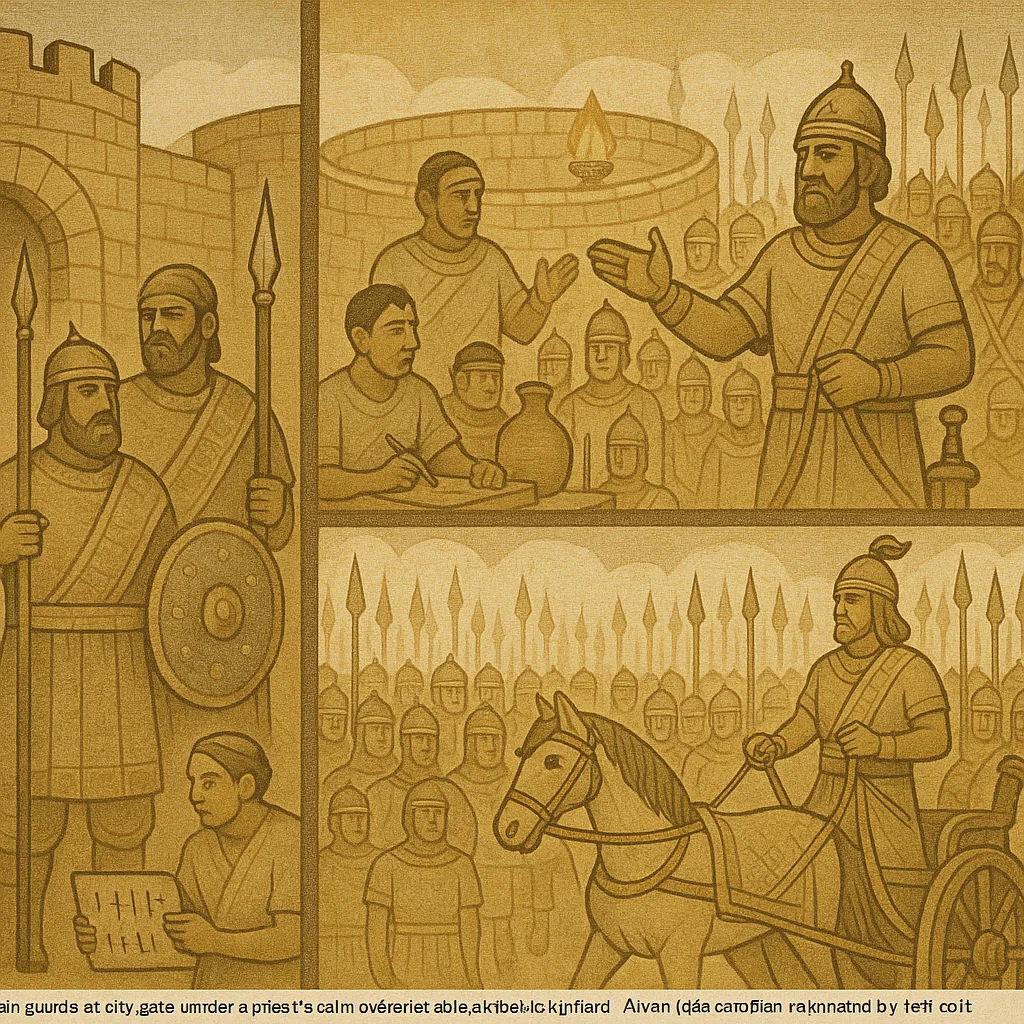
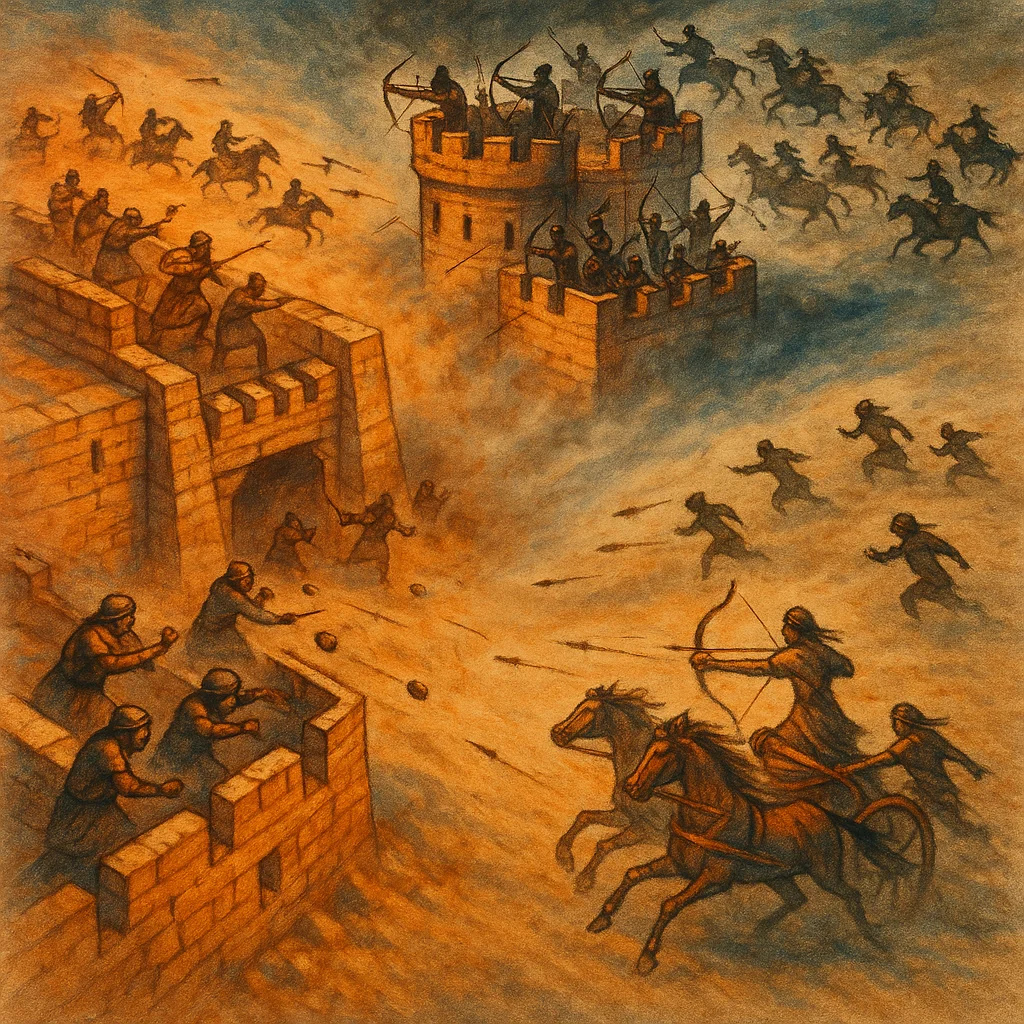
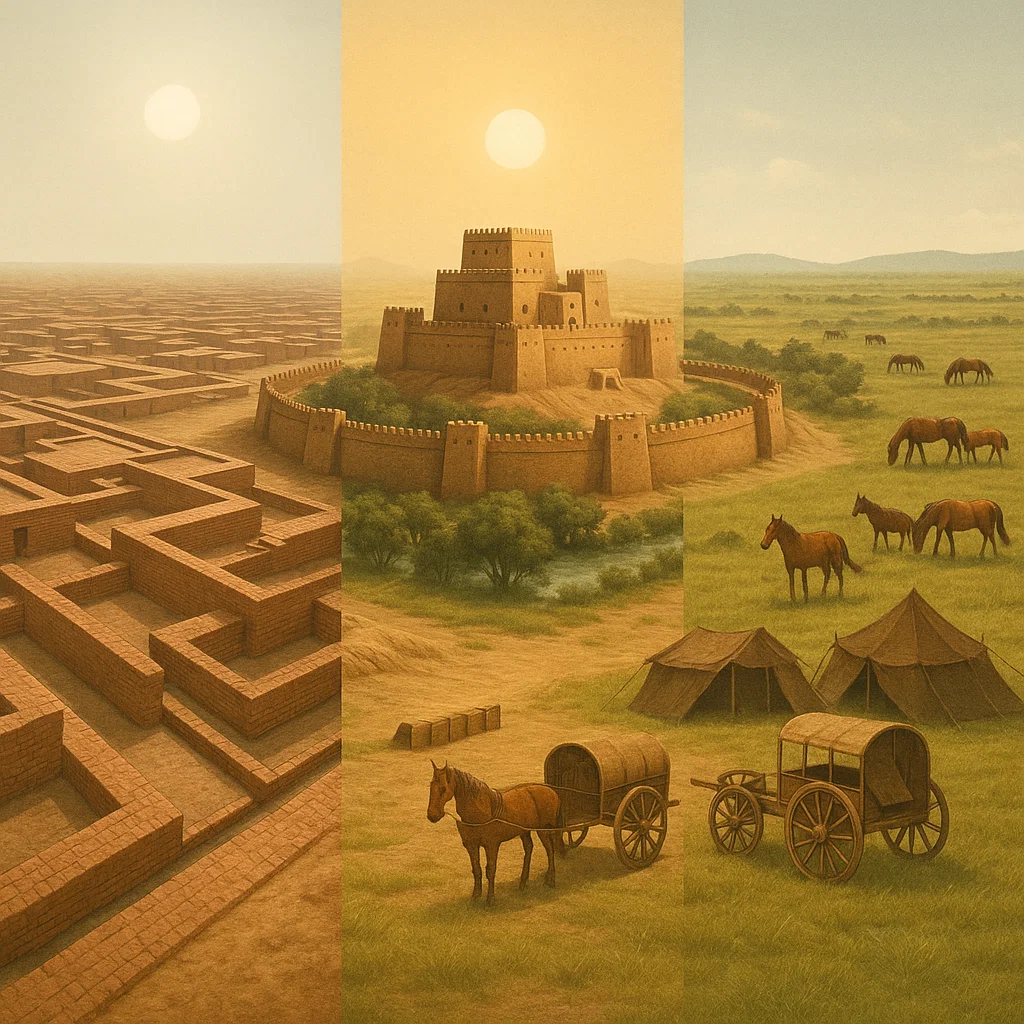
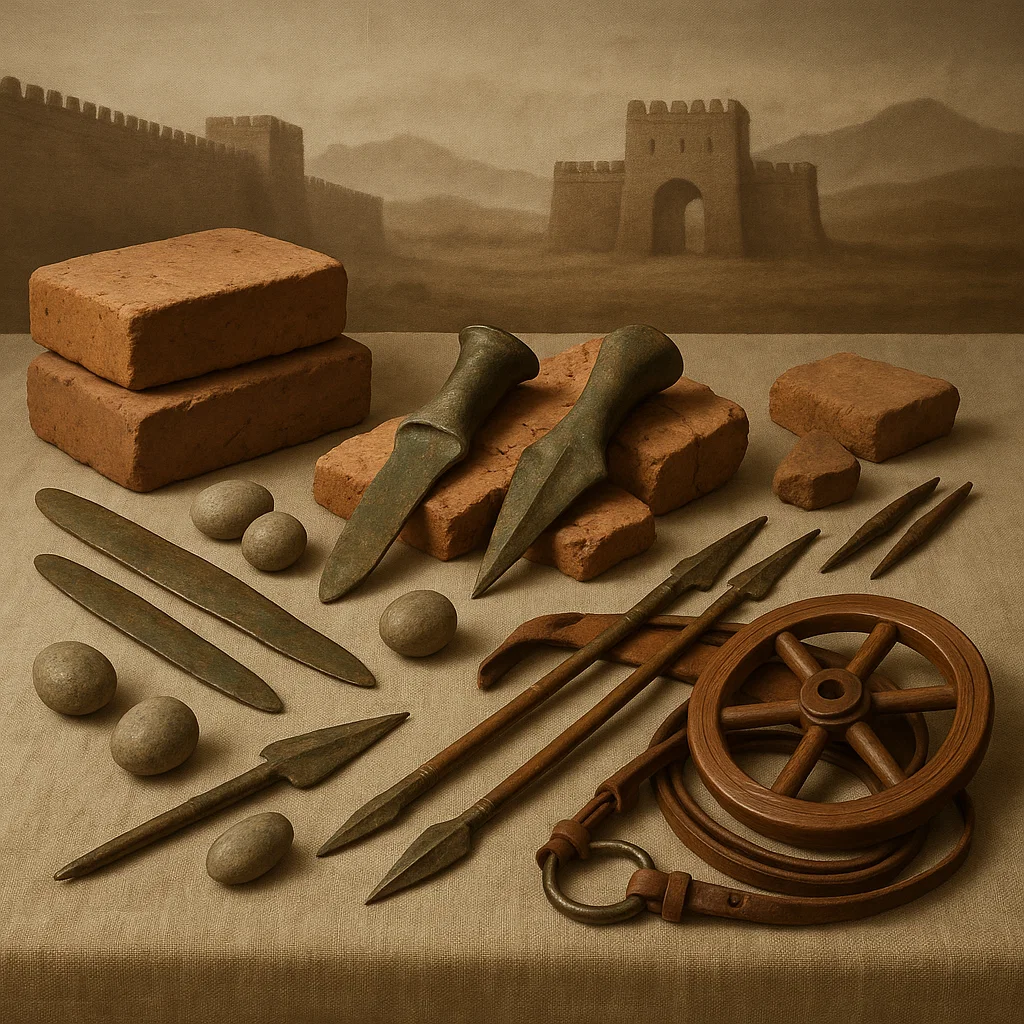
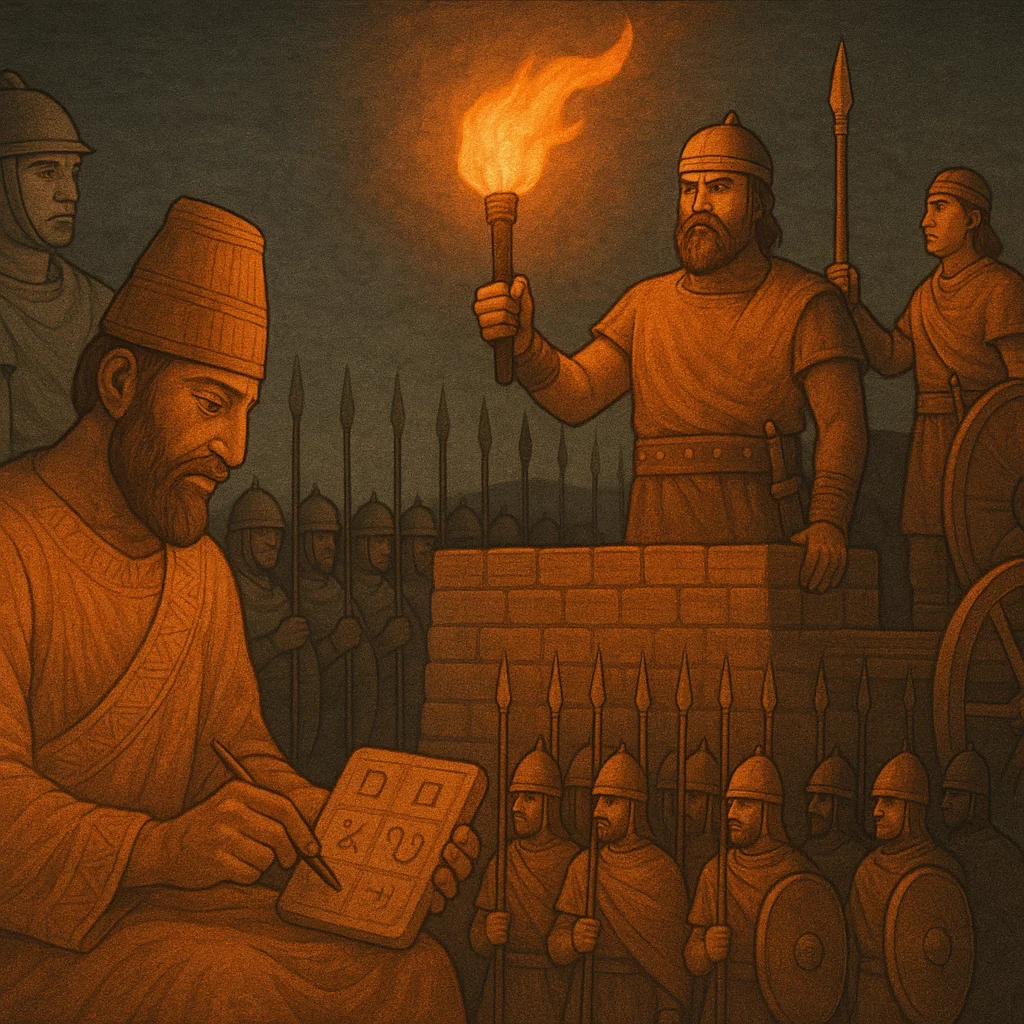
Uniform Military Framework — Bronze Age – Indus & Central Asia
| Category | Description |
|---|---|
| Period & Context | Region includes Harappan urban centers, BMAC fortified settlements, and early Aryan pastoralist incursions. Political systems were non-imperial. Harappans developed centralized cities without clear military elites. BMAC operated as clustered fortified sites. Early Aryans were tribal, mobile, and decentralized. |
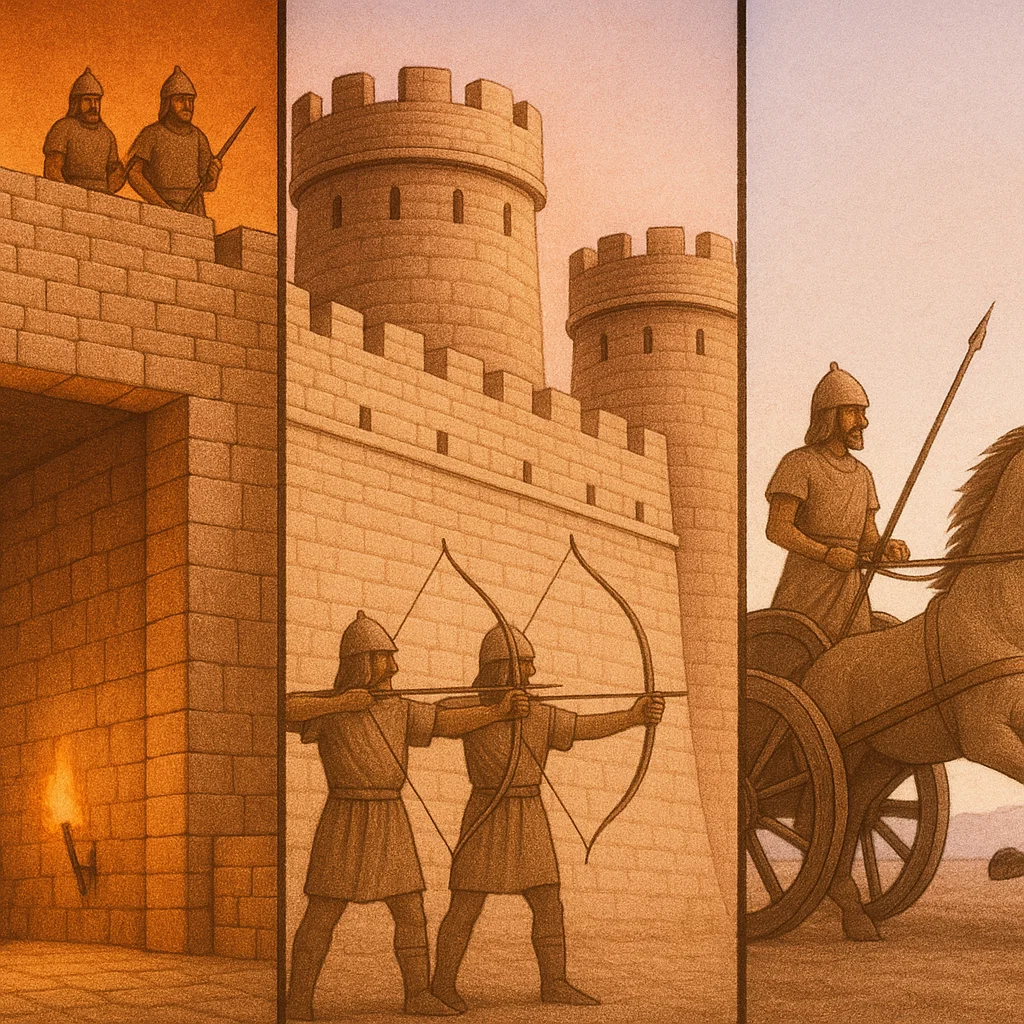
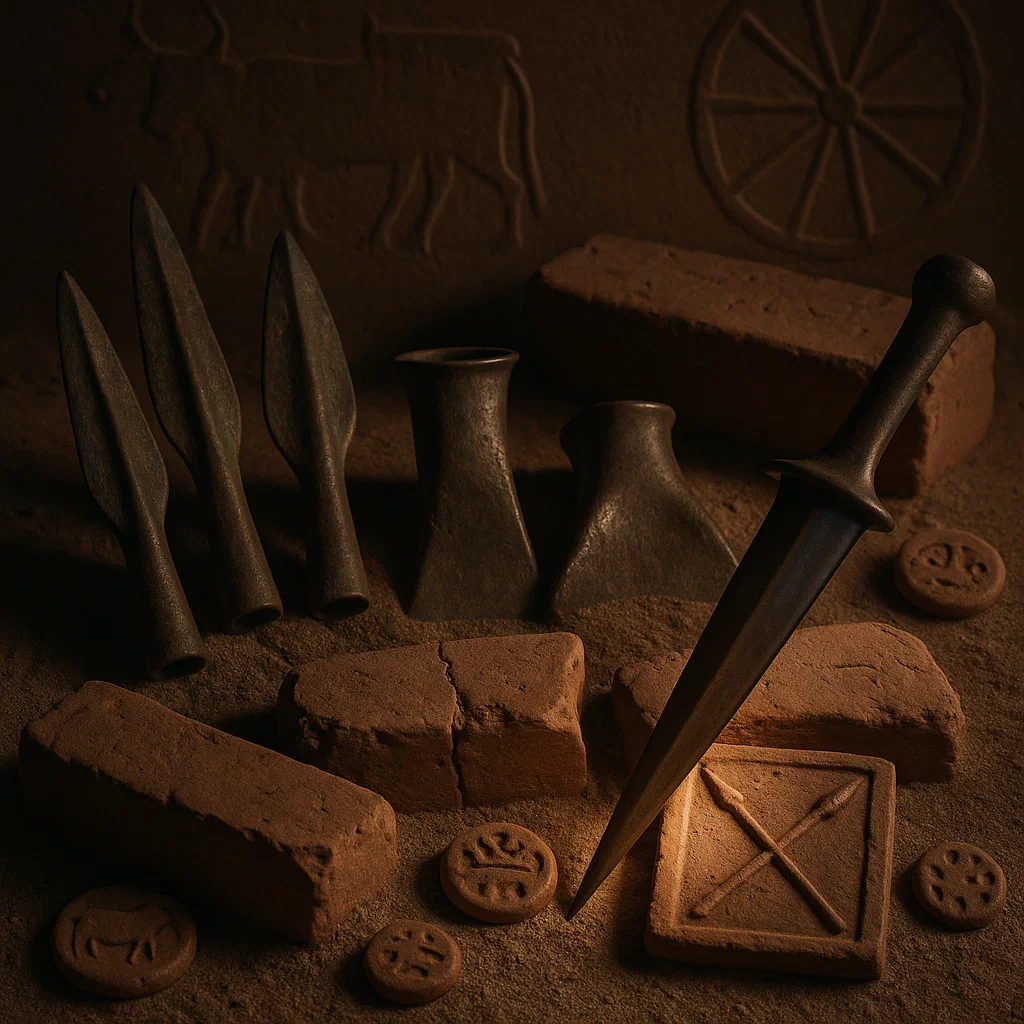
| Means (Arms, Defenses, and Mobility Systems) | Harappans used bronze tools with sparse weapon finds (maceheads, copper blades). Their cities featured standardized brick fortifications, gated citadels, and flood-control systems. BMAC sites had thick walls and bastions; weapons included cast bronze daggers, socketed axes, and spearheads. Early Aryans deployed bronze-tipped spears, bows, and horse-drawn chariots with spoked wheels, marking a mobility revolution. No siege equipment in any system. |
| Organization & Hierarchy | Harappan cities show no evidence of professional armies, ranks, or war-centric elites. Defense likely communal or temple-directed. BMAC settlements may have coordinated defense but no hierarchy is recorded. Aryans fought in tribal units under rajas; kinship determined command. No standing armies; warbands assembled as needed. |
| Tactics & Doctrine | Harappan warfare remains opaque—fortified urban layouts suggest deterrence, not field combat. BMAC likely relied on static defense and raiding. Aryan doctrine emphasized mobile raids, chariot skirmishing, and ritualized single combat. Vedic texts describe ambushes and heroic war rather than formal tactics. |
| Major Conflicts & Campaigns | No named wars. Archaeological layers show destruction at BMAC sites like Gonur and Altyn-depe. Some Harappan cities show burning and trauma layers but causation is unclear. Early Aryan campaigns are mythicized in Rigveda (e.g. conflicts with dasas), with no firm archaeological anchors. |