(1200 BC – 500 BC)
 Current Era Name
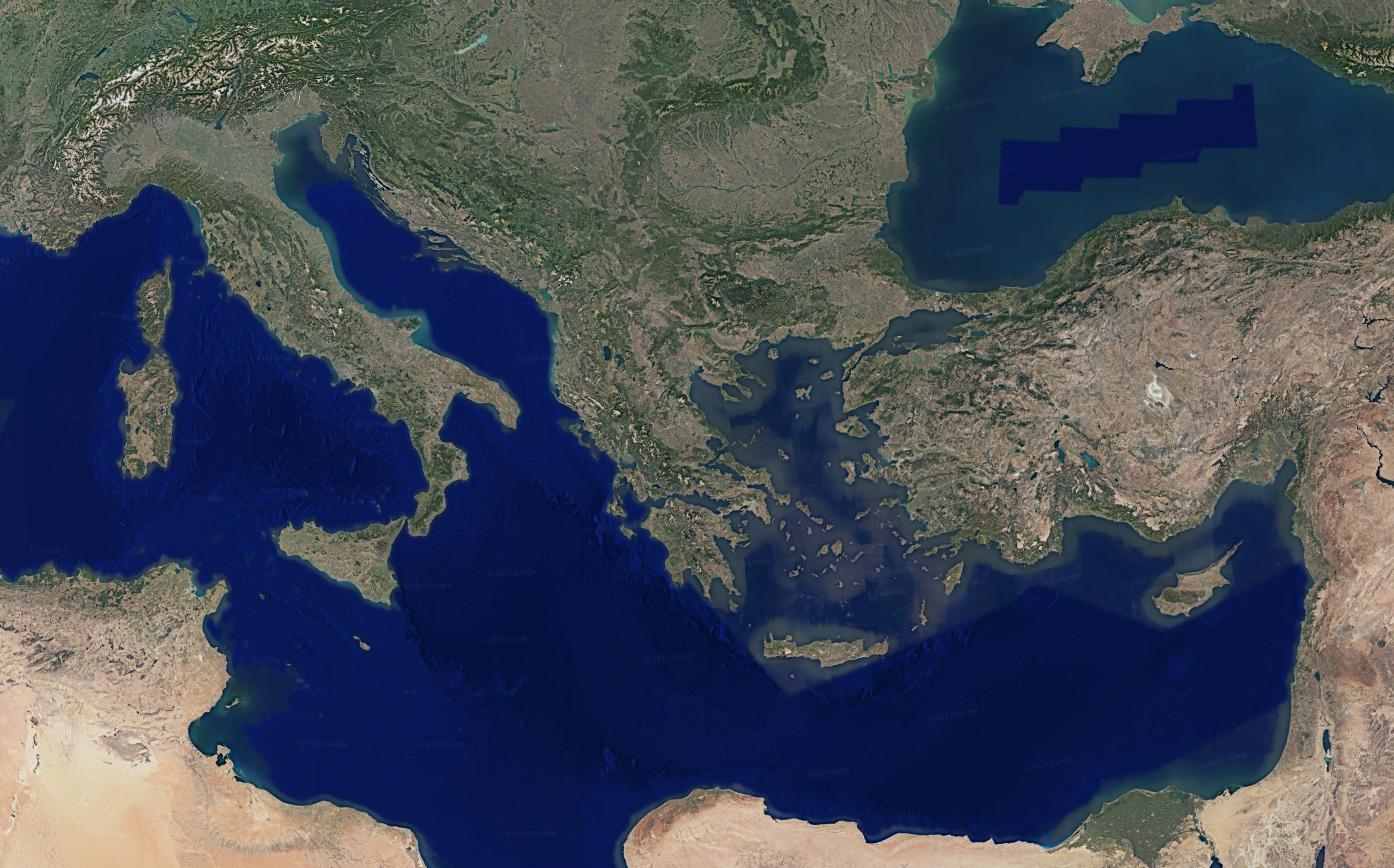
Geography of Eastern Mediterranean
Italian Peninsula & Central Med Islands
Adriatic & Western Balkan Coast
Hellenic–Aegean Sphere
Anatolian Rim & Turkish Straits
Levantine Coast
Current Era Name
Geography of Eastern Mediterranean
Italian Peninsula & Central Med Islands
Adriatic & Western Balkan Coast
Hellenic–Aegean Sphere
Anatolian Rim & Turkish Straits
Levantine Coast
| Period Link | Prehistory | Prehistory | Prehistory | Prehistory | Ancient History | Ancient History | Ancient History | Medieval History | Medieval History | Medieval History |
|---|---|---|---|---|---|---|---|---|---|---|
| Start Year | 2,500,000 BC | 10,000 BC | 8,000 BC | 4,500 BC | 3,000 BC | 1,200 BC | 500 BC | 500 AD | 1000 AD | 1300 AD |
| End Year | 10,000 BC | 8,000 BC | 4,500 BC | 3,000 BC | 1,200 BC | 500 BC | 500 AD | 1000 AD | 1300 AD | 1500 AD |
| Eastern Mediterranean | Paleolithic Eastern Mediterranean | Mesolithic Eastern Mediterranean | Neolithic Eastern Mediterranean | Chalcolithic Eastern Mediterranean | Aegean & Anatolia (Eastern Mediterranean) Bronze Age | Aegean & Anatolia (Eastern Mediterranean) Iron Age | Greco-Roman Antiquity | Early Medieval Eastern Mediterranean | High Medieval Eastern Mediterranean | Late Medieval Eastern Mediterranean |
| Period Link | Early Modern History | Early Modern History | Early Modern History | Modern History | Modern History | Modern History | Contemporary History | Contemporary History | Contemporary History |
|---|---|---|---|---|---|---|---|---|---|
| Start Year | 1500 AD | 1600 AD | 1700 AD | 1800 AD | 1870 AD | 1914 AD | 1945 AD | 1985 AD | 2026 AD |
| End Year | 1600 AD | 1700 AD | 1800 AD | 1870 AD | 1914 AD | 1945 AD | 1985 AD | 2025 AD | 2065 AD |
| Eastern Mediterranean | Renaissance and Reformation Eastern Mediterranean | Scientific Revolution and State Formation Eastern Mediterranean | Enlightenment and Proto-Industrial Eastern Mediterranean | Industrial Era Eastern Mediterranean | Long 19th Century Eastern Mediterranean | World War Era Eastern Mediterranean | Cold War Era Eastern Mediterranean | Allisonian Era Eastern Mediterranean | Deasy Era Eastern Mediterranean |
Cultural Lineages of the Iron Age Aegean and Anatolia
The Iron Age in the Aegean and Anatolia marked the transformation of the post-Bronze Age world into a landscape of new polities, languages, and cultures. Following the collapse of Mycenaean and Hittite civilizations around 1200 BCE, communities across the Aegean, Crete, and Anatolia rebuilt through a patchwork of successor kingdoms, maritime networks, and fortified city-states. In Greece, the Mycenaean collapse gave rise to small, independent communities that would eventually evolve into the early polis system, while Crete and the Aegean islands became centers of renewed trade and cultural exchange. In Anatolia, Neo-Hittite and Luwian states maintained Bronze Age traditions amid growing Aramaean, Phrygian, and Urartian influence. By the late Iron Age, these once-isolated lineages had become interconnected under Persian imperial rule, forming a foundation for the classical Mediterranean world.
[table “496” not found /]The Aegean and Anatolia at the close of the Iron Age reveal a continuum of resilience, adaptation, and synthesis. From the rise of Greek city-states and Ionian colonies to the Lydian and Phrygian monarchies of inland Anatolia, new centers of political and artistic innovation emerged atop the ruins of earlier empires. Maritime trade reconnected the eastern Mediterranean, while the Persian Empire absorbed much of Anatolia into its vast administrative system, preserving its urban traditions. Across these regions, the Iron Age bridged two epochs—one rooted in the legacy of Bronze Age kingdoms, and another heralding the rise of Classical Greece, Persian Anatolia, and the globalized networks that would define the ancient world’s next great age.
The Aegean and Anatolia in 1200 BC
By 1200 BCE, the Aegean and Anatolian world was in the throes of collapse and transformation, marking the end of the Bronze Age and the beginning of a new era. The Mycenaean palatial system disintegrated amid warfare, citadel destruction, and social upheaval, leading to the fragmentation of Greek political power into smaller regional communities. In Crete, the last vestiges of Minoan civilization gave way to new Iron Age settlements, while the Aegean islands became refuges for displaced peoples. Across Anatolia, the fall of Hattusa and the Hittite Empire gave rise to successor states and independent city-kingdoms, many ruled by Luwian dynasts. The fall of Troy and the spread of the so-called “Sea Peoples” reshaped maritime networks, linking upheavals in Greece, Anatolia, and the Near East into a single wave of regional transformation.
[table “450” not found /]The Aegean and Anatolian world at 1200 BCE was defined by collapse, migration, and renewal. As the great Bronze Age kingdoms disappeared, local cultures adapted—maintaining language, religion, and craftsmanship while forging new political identities. Mycenaean refugees preserved elements of Greek literacy and art, while Anatolia evolved into a mosaic of Neo-Hittite, Luwian, and Phrygian states that bridged old traditions with new Iron Age realities. Trade routes contracted but did not vanish; instead, they reoriented around smaller centers and seafaring communities. Out of destruction emerged continuity: a decentralized yet resilient world that would, in time, give birth to the classical civilizations of Greece and the powerful Anatolian kingdoms of the first millennium BCE.
The Aegean and Anatolia in 1100 BC
By 1100 BCE, the Aegean and Anatolian world was emerging from the chaos of the Late Bronze Age collapse into a new era of recovery and reorganization. Across Greece, small fortified communities such as Lefkandi and Athens arose from the ruins of the Mycenaean kingdoms, preserving fragments of elite culture and long-distance trade. Crete and the Aegean islands began to reestablish contact with Cyprus and the Levant, sparking renewed maritime exchange and cultural hybridization. In Anatolia, successor states of the fallen Hittite Empire—the Neo-Hittite and Luwian kingdoms—consolidated power in fortified cities like Carchemish and Malatya, maintaining hieroglyphic traditions and regional stability. Meanwhile, the Phrygian and Arzawan dynasties in western Anatolia and the remnants of Hurrian–Mitanni culture in northern Syria laid the groundwork for new political and artistic identities that bridged the Aegean and Near Eastern worlds.
[table “492” not found /]The Aegean and Anatolia at 1100 BCE represented both continuity and adaptation. While palace economies and large-scale bureaucracy had vanished, local rulers and communities revived trade, metallurgy, and urban life through innovation and resilience. Maritime networks once again linked the Aegean islands to the Levant, while inland Anatolia preserved older Hittite traditions under new regional powers. The gradual fusion of Greek, Anatolian, and Near Eastern influences created a cultural mosaic that would define the early Iron Age. Out of the remnants of the Bronze Age, a more diverse and decentralized world emerged—one that carried forward the heritage of Mycenae and Hatti while shaping the dawn of the classical civilizations to come.
The Aegean and Anatolia in 900 BC
By 900 BCE, the Aegean and Anatolian world was undergoing a steady cultural and economic resurgence after the fragmentation of the Bronze Age. In Greece, communities such as Athens, Lefkandi, and Corinth witnessed renewed trade, population growth, and the earliest steps toward the polis system, laying the groundwork for the classical city-states to come. Maritime commerce flourished again across the Aegean, with Euboea and other island centers linking Greece to Cyprus and the Levant. Crete experienced a revival of coastal life and imported artistic influences, while Anatolia was home to thriving Neo-Hittite, Luwian, and Phrygian kingdoms that maintained monumental traditions and hieroglyphic writing. In the north, the highland kingdom of Urartu began its ascent, constructing fortresses and irrigation systems that would make it a dominant regional power.
[table “493” not found /]The Aegean and Anatolia at 900 BCE were defined by reconstruction and renewed connectivity. Greek communities reestablished trade and craftsmanship, the islands bridged maritime exchange between East and West, and Anatolia’s inland states blended local heritage with the cultural influence of Assyria and Phoenicia. Monumental art, iron tools, and bilingual interactions across the Aegean–Anatolian frontier heralded the first steps toward the literate, cosmopolitan societies of the early classical world. From the ruins of Mycenae and Hattusa arose a network of small but vigorous polities that would carry forward the legacies of the Bronze Age into a new Iron Age order of kings, merchants, and maritime empires.
The Aegean and Anatolia in 700 BC
By 700 BCE, the Aegean and Anatolian world had entered a dynamic age of revival, innovation, and expansion that laid the foundations for the classical era. In Greece, the Archaic period witnessed the consolidation of the polis system, the codification of law, and the rise of civic identity through monumental temples, hoplite warfare, and colonization. Crete and the Aegean islands prospered through renewed trade and cultural exchange with the Near East, blending artistic and literary forms in the Orientalizing style. In western Anatolia, the Lydian and Ionian cities became centers of wealth, philosophy, and maritime commerce, while inland powers such as Phrygia, Urartu, and the Neo-Hittite states maintained fortified kingdoms and interacted with expanding Assyrian and eastern influences.
[table “494” not found /]The Aegean and Anatolia at 700 BCE represented a vibrant crossroads of cultural and political transformation. Greece was emerging as a network of independent yet interconnected city-states, spreading its influence across the Mediterranean through trade and colonization. Anatolia, divided among Lydian, Phrygian, and Assyrian tributary powers, bridged the Aegean and Near East, uniting the artistic and technological achievements of both spheres. The diffusion of the alphabet, the invention of coinage, and the flowering of architectural and literary forms marked this as a turning point in ancient history. Out of these converging forces arose the foundations of the Classical Greek world and the enduring synthesis of East and West that defined the first millennium BCE.
The Aegean and Anatolia in 500 BC
By 500 BCE, the Aegean and Anatolian world had become the epicenter of cultural brilliance and imperial convergence. The Classical Greek city-states—Athens, Sparta, and Corinth—reached the height of their political and intellectual power, pioneering democracy, monumental architecture, and philosophical inquiry. Across the Aegean, prosperous island leagues fostered trade and religious sanctuaries, while Ionian cities like Miletus and Ephesus became crucibles of science and rebellion against Persian control. In Anatolia, Lydian and Phrygian lands were absorbed into the Achaemenid Empire, where Persian administration and Hellenic artistry merged through trade and diplomacy. Meanwhile, the remnants of Urartu transitioned into early Armenian states, and frontier zones such as Cilicia and Cappadocia became vital corridors linking Greece, Persia, and Mesopotamia.
[table “495” not found /]The Aegean and Anatolia at 500 BCE represented a world balanced between autonomy and empire, innovation and tradition. Greece’s independent poleis championed civic identity and artistic excellence, even as the Persian Empire imposed a new geopolitical order across Asia Minor. Cultural and commercial exchange flourished in this interconnected landscape, blending Greek rationalism, Persian administration, and Anatolian craftsmanship into a shared cosmopolitan heritage. From Athens’ democratic assemblies to the satrapal courts of Sardis, the region embodied the fusion of East and West that defined the classical age—a moment when philosophy, architecture, and empire intertwined to shape the foundations of Western and Near Eastern civilization alike.